 |
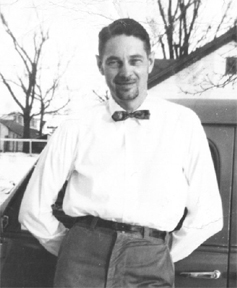
| Martin Benjamin Diephuis (Personal Photo) |
Everyone said my tall, thin dad looked like Abraham Lincoln. So when he started growing a beard and began looking for a tall top hat, everyone was sure he would win the prize for the best costume in our town's centennial celebration. But Daddy's resemblance to "Honest Abe" went much further than that.
As a teenager, Daddy had suffered from scarlet fever and rheumatic fever, leaving him with faulty heart valves and frail health. He had to drop out of high school because he couldn't climb the steep steps to his classes. However, he was able to convince his doctor to let him do "light work," and he got a job as a timekeeper at a local factory.
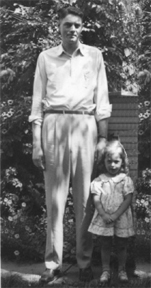 |
| Marilyn and her daddy (Personal Photo) |
As Daddy grew older, he found that the minimum wage he earned was not enough to support a family, but his heart condition and lack of education kept him from getting a better job. To stretch his income, he planted and tended a huge vegetable garden. Mom, my sister and I would help plant and harvest. We canned corn, shelled peas, picked raspberries and rooted in the soft soil for potatoes. Most of what we produced went into the cellar to feed us through the winter, and we sold the rest.
During the year of the centennial celebration, though, we weren't able to harvest our crop. A railroad track ran behind our property. A tanker car carrying a poisonous liquid sprang a leak and sprayed its contents on the vegetation all along that stretch of track. The railroad company issued a warning not to eat any of the produce from our gardens. They sent a notice to homeowners asking them to list the types and quantities of plants they had lost, so they could be reimbursed.
The day after we received our notice, we heard a knock on the door. Several neighbor men appeared, asking to talk to Daddy. They were afraid that the reimbursements would be far less than their actual losses, so they had decided to turn in claims three times bigger than they really were. These neighbors were aware of our financial situation and our dependence upon our garden. They had come to share their decision with Daddy, so he would not be left out.
That night, Mom and Daddy discussed the neighbors' suggestion. But even though Daddy did not know how we would survive without the garden, he was not able to lie to the railroad. On the insurance form, he honestly and accurately reported the plants he had lost. That decision left a huge burden hanging over my parents, yet Daddy had faith that honesty was always the best way.
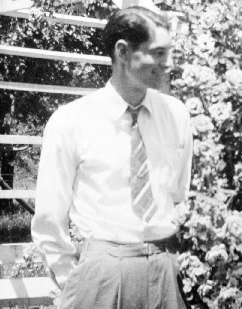 |
| Martin Benjamin Diephuis (Personal Photo) |
And it was. I remember the excitement at our house the day the mailman delivered the check from the railroad company. Not only had we been paid for the cost of the seeds and plants we had purchased, but we were also paid for all the food we could possibly have harvested, plus a lot more.
As the town's centennial celebration drew closer, my dad began to look more and more like "Honest Abe." The neighbors who knew how he had refused to lie for his own gain began calling him "Honest Mike." But Daddy didn't live long enough to win that centennial costume prize. His injured heart gave out just a few weeks before the celebration. My sister and I, just eight and nine, cried as we buried Daddy with the candy bar and shaving cream we had planned to give him as birthday gifts.
But we did not bury his beliefs. To this day, whenever I am tempted to change the truth--even just a bit--I remember Daddy's garden and the seeds of honesty he planted there.
As published in the book Chicken Soup for the Gardener's Soul 2000
Page created on 2/8/2010 12:00:00 AM
Last edited 2/8/2010 12:00:00 AM