 |
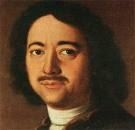
Peter the First was the first Russian emperor, a statesman, a general and a diplomat. He widened his state, created regular army and navy, built a beautiful city of Saint-Petersburg, brought Russia in the row of great state. He was an educational man, knew German, Dutch, learned English and French languages.
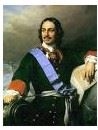 |
Peter the First was born in 1672. He was only the fourteenth child in the tsar family but became the Russian emperor. Being a child he was physically strong, very active and able, had an inquiring mind and good memory. Peter studied easily and willingly, Using the help of palace skilled workmen he learned many trades such as joiner, turner, arm, black smith, tinker, watch-marker, printer. Moreover he was fond of military games and navigation. During his life Peter the First filled up his knowledge paying special attention to military affair. He learned to build ships, finished theoretical course of shipbuilding in England. Peter the First ordered to buy books instruments, arms in other countries for Russia. He invited foreign masters and scientists in his country. Young noblemen were sent to study abroad. Peter the First was elected an honourable member of Paris Academy of Sciences. As a talented military general Peter the First not only organized and armed brilliantly regular Russian Army and Navy, which won many battles, he paid much attention to development of military industry and elaborated new military tactics of leading the war.
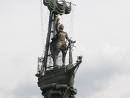 |
And as a result of all these actions, Peter's Army defeated talented Swedish King Karl 12 under Poltava, took Azov and finished the war with Turkey. After the victory in the North War, Russia became one of the great European states. Peter the First introduced a new calender with the 1st of January as the beginning of the year in 1700. The first Russian printed newspaper "vedomosty" appeared in 1703. Many of Peter's reforms were directed at getting over the backwardness of Russia compared to advanced countries and using Russia's great natural resources. A great deal of manufactures and mining enterprises appeared in Russia's time of Peter the First. Though characteristic traits of Peter the First were his great mind, strong will-power, energy, wideness of views, purpose, an inquiring mind and a great capacity for work, he was hot-tempered, cruel and pitiless. He signed the death sentence for his own son, Alexey, in 1718. In spite of the contradictions of his nature, Peter the First entered history as a progressive state and military public figure.
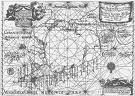 |
In autumn of 1724 a ship-wreck took place in Finsky Gulf. Peter, who was a witness, rushed into the icy cold water to save drowning people. He caught a cold and his body couldn't handle the strain. In January 28 (February 8), 1725, the Russian emperor Peter the First died.
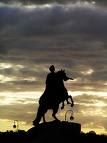 |
Peter the First is called Great and he really is a great man. He made so much for his country that you are not able to compare him with anybody else in history and may only be astonished and admire this great person.
Page created on 6/30/2008 12:00:00 AM
Last edited 6/30/2008 12:00:00 AM