| "All that is not eternal is eternally out of date." --C. S. Lewis |
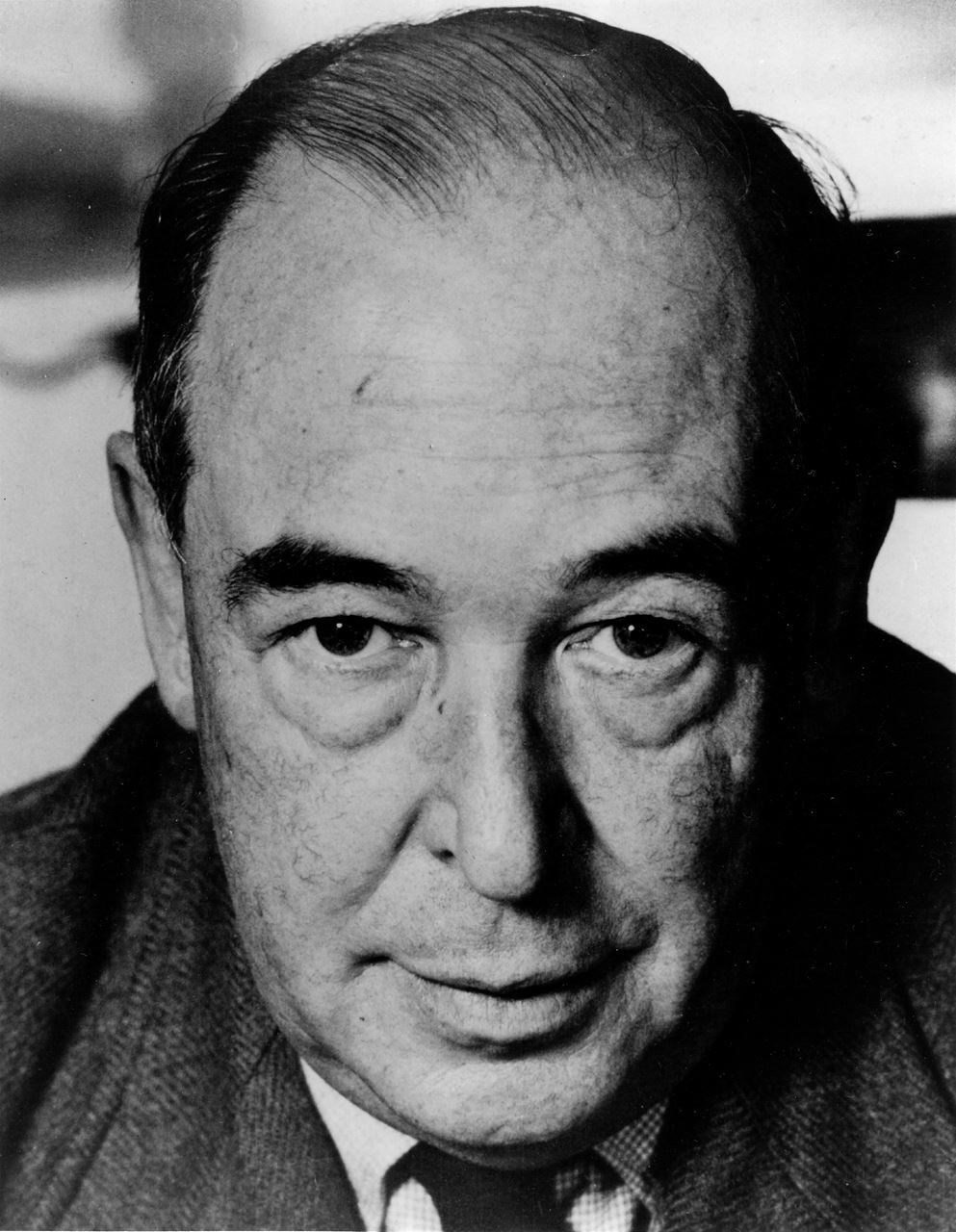
Depth of faith and keen reason being the wellspring of his inspiration, Clive Staples (C. S.) Lewis stands as one of the greatest intellects of the twentieth century. Dr. Bruce L. Edwards, author of "C.S. Lewis: A Modest Literary Biography and Bibliography," notes that in his "varied and comprehensive writing career Lewis carved out a sterling reputation as a scholar, novelist and theologian for three very different audiences." His published works, all still in print today, are truly diverse: literary criticism, poetry, science fiction, children’s literature, and Christian apologetics. C.S. Lewis (or “Jack” as he chose to be called) was born in Belfast, Ireland, on November 29, 1898. Edwards provides insight into Lewis’ happy childhood days where he had variety of books to read in the family library. Jack and his older brother, Warren, loved to read and in fact “were more at home in the world of ideas and books of the past, than the technological world of the 20th Century” (Edwards).
At ten years of age, Lewis’ life changed when his beloved Christian mother died of cancer. Three years later, in 1911, he was sent to Cherbourg School in Melvern, England and became an enthusiast of Norse mythology. He had also given up his Christian faith (Dr. Zeus).
Having been awarded a scholarship to University College at Oxford in 1916, Lewis undertook his studies there for some months before voluntarily joining the British army during World War I. He was wounded but recovered and later returned to his studies at Oxford where he received, in successive years, top awards honoring his achievements in Greek and Latin literature, philosophy and ancient history, and English. In 1925, Lewis became a Fellow of Magdalen College at Oxford and tutored students in literature and English. A year later he met another faculty member who would become one of his closest friends-- J. R. R. Tolkien, future writer of The Hobbit and The Lord of the Rings.
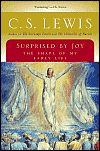
September 28, 1931, marked a milestone in Lewis’ life. While walking on a tree-lined path on Oxford’s campus called Addison’s Walk, he had “a long talk on Christianity with J. R. R. Tolkien (a devout Roman Catholic) and another friend, Hugo Dyson” (Dr. Zeus). On the next day, Lewis became a Christian. Bruce Edwards notes that Lewis had recovered his childhood joy through his adult conversion to Christianity. His book, Surprised by Joy, recounts his experience.
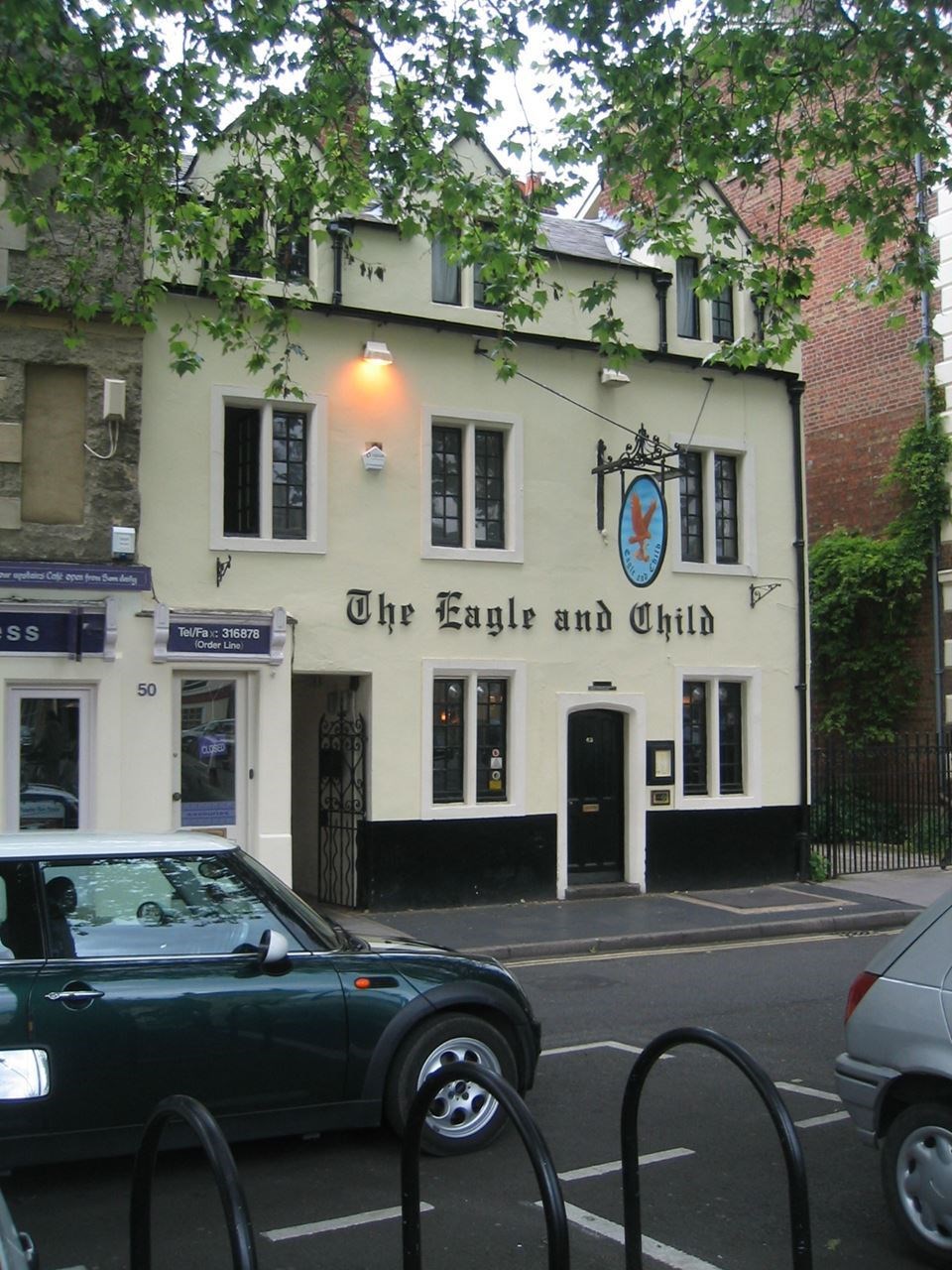
In the fall of 1933, Lewis started a group consisting of close Christian friends called the Inklings. Among the members were J. R. R. Tolkien, Lewis’ brother, Warren, Hugo Dyson and others. The group met twice a week in different locations. One such place was an Oxford pub called the Eagle and Child (or “Bird and Baby” as they liked to call it). Members read and discussed their compositions and encouraged one another. Any criticism was constructive although one gets the feeling that lively debates were not uncommon among such great minds. Through the Inklings, a deep bond of friendship between Tolkien and Lewis was forged. British author Colin Duriez, who wrote Tolkien and C. S. Lewis: The Gift of Friendship, discusses the love that both men had for the mythic stories of old, for such stories revealed deep truths concerning the universal questions of life. However, as Duriez notes, Tolkien and Lewis realized that these stories had become “marginalized as children’s stories” in recent times and that “…there was a need to create a readership again for these books—especially an adult readership” (Duriez). Soon after, J. R. R. Tolkien would complete The Hobbit and a few years later, Lewis would go on to publish the first book in his science fiction series, Out of the Silent Planet, in 1938. Perelandra and That Hideous Strength followed in later years. However, before starting the science fiction series, Lewis wrote the textbook on 16th Century English literature for Oxford's English literature series. It became a classic (Dr. Zeus). Two years after World War II began, Lewis’ The Screwtape Letters was published. It concerned the correspondence between two demons: a senior and his apprentice. The senior offers advice on how the apprentice can deceive and tempt his earthly “patient” in keeping him away from “the enemy”--or God. Lewis actually hit upon the idea for the book when listening to a speech by Adolph Hitler, another great deceiver. The Guardian published Lewis’ Screwtape Letters. He was paid two pounds for each of the thirty-one letters but gave the money to charity (Dr. Zeus). In 1944, Lewis gave seven radio talks, which were later published as Mere Christianity. According to Bruce Edwards, these talks “explained and defended the Christian faith.” Lewis became known as “the apostle to the skeptics.” Lewis' extraordinary ability to reach a wide audience is noted by author Robert C. Stroud of "C.S Lewis Chronicles: A Compendium of Information about this Great Writer" who writes:
"The fact that Lewis, a professor at both Oxford and Cambridge, possessed a keen intellect strengthens his credibility in many circles. That this brilliant agnostic came to recognize the validity first of Theism, and then of Christianity, provides an amazing testimony. That he could also communicate the gospel so effectively to the "common person" is an additional evidence of his skill. Lewis, a faithful member of the Anglican communion, was no defender of denominational particulars. His calling was to promote a profound vision of "mere Christianity," which was nothing less than the heart of the faith. His theology was thoroughly incarnational--focusing always on Jesus Christ." In all, Edwards notes that Lewis published at least eight books on Christian apologetics and “is arguably the most important Christian writer of the 20th century.”

In 1950, the first in seven books of his popular and critically acclaimed fantasy series, The Chronicles of Narnia, was published. The Lion, the Witch and the Wardrobe is the story of four children who enter a fantasy world through a wardrobe in the home of their relative. The central character, Aslan, is a Christ-like figure, and the delightful characters of Narnia are talking animals. Lewis published the series between the years of 1950 to 1956. In 1952, Lewis met an American woman named Joy Davidman Gresham. The two were married in 1956. Joy almost died of bone cancer but had a remission. She survived until 1960. The movie, Shadowlands, is based (perhaps loosely) on this time in Lewis’ life. On November 22, 1963, C. S. Lewis died in his home (the Kilns) of failing health (the same day president John F. Kennedy was assassinated) and is buried in the yard of the Holy Trinity Church in Headington Quarry, Oxford. His classic works are as popular today as they ever were and will, no doubt, stand the test of time for generations to come. "Even in literature and art, no man who bothers about originality will ever be original: whereas if you simply try to tell the truth (without caring twopence how often it has been told before) you will, nine times out of ten, become original without ever having noticed it." -- C.S. Lewis
|
|
Written by
Dana from Laguna Beach
|
|
C. S. Lewis and the Inklings: resources website is a great web site for further research into the life of C. S. Lewis. The C. S. Lewis Foundation "advance[s] the renewal of Christian thought and creative expression throughout the world of learning and the culture at large." Into the Wardrobe: A Web site devoted to C. S. Lewis is another very good web site for research on C. S. Lewis. "J. R. R. Tolkien and C. S. Lewis: A Legendary Friendship." From Christianity Today "C. S. Lewis: A Modest Literary Biography and Bibliography." |
|
--This small bio just scratches the surface of the rich life of C.S Lewis. I hope it will interest young readers to learn more about this wonderful hero of faith and brilliant writer. --A very special thank you to Simon Ho and Andrew McMurry for being so kind as to grant me permission to use their photos in this biography.

|
RECOMMENDED
READING | |
![]() A Grief Observed by C. S. Lewis |
![]() Surprised by Joy: The Shape of My Early Life by C. S. Lewis, C. S. Lewis (Preface by) |
![]() | ![]() | ![]() | |
| Abraham is considered the father of Judaism, Christianity and Islam. | Amy Biehl gave her life to ending apartheid in South Africa. | Archbishop Oscar Romero was a passionate voice of hope, peace and justice in war-torn El Salvador. | Bahá'u'lláh believes in the importance of meditation and prayer... |
![]() | ![]() | ||
| Buddha : Siddartha Gautama founded Buddhism. | Cheikh Ahmadou Bamba Mbacké was a beloved Senegalese spiritual leader and guide. | Clark and Melinda Vaughn founded For His Children to care for abandoned children in Ecuador. | Corrie Ten Boom risked her life to help hundreds of Jews escape during WWII. |
![]() | ![]() | ||
| David Livingstone was a famous missionary of the nineteenth century. | Dr. Benjamin Elijah Mays mentored Reverend Calvin O. Butts, who is now pastor of the Abyssinian Baptist Church in Harlem, NY. | Enoch was so faithful according to the Bible that God summoned him to heaven. | Eric Liddell was an Olympic champion who held fast to his Christian beliefs. |
![]() | ![]() | ![]() | |
| Erik Weihenmayor inspires those who have discovered his heroic journey. | Fateme was the prophet Mohammad's daughter and a leader to the people. | Father Joseph DeVeuster selflessly helped the leprosy patients in Moloka`i. | Florence Nightingale revolutionized nursing. |
![]() | ![]() | ![]() | |
| Gladys Aylward led 100 orphaned Chinese children to safety during the Second Sino-Japanese War. | Guru Nanak was the founder of Sikhism. | Immaculee Ilibagiza demonstrates the power of forgiveness. | James Yee promotes diversity, tolerance and religious freedom. |
![]() | ![]() | ![]() | ![]() |
| Jesus Christ was a prophet and is venerated as the Son of God in the Christian religion. | Joan of Arc was poet Christine de Pisan's hero. | Kathy Eldon inspired by her son, works for peace and tolerance. | Krishna is one of the most beloved figures in the Hindu religion. |
![]() | ![]() | ![]() | ![]() |
| Mary Baker Eddy was the founder of Christian Science. | Mary McLeod Bethune used education to help in the fight for racial and gender equality. | Moses led the Jews from slavery and gave them religious laws. | Mother Teresa gained international prominence as a modern-day saint. |
![]() | ![]() | ||
| Muhammad the Prophet is the religious leader of Islam. | Native American Spirituality comes in myriad forms. | Regina Jonas was the first woman ever to be ordained as a rabbi. | Rev. James Reeb worked for equal rights for all |
![]() | ![]() | ![]() | |
| Reverend John Harper was a pastor who died trying to save others on the Titanic. | Reverend Peter Nguyen Van Hung works to end human trafficking of Vietnamese women workers and brides. | Roshi Bernie Glassman finds peace in using Zen to help others. | Roxanne Kremer works with the Mestizo Indians of the Peruvian rainforest to save pink dolphins. |
![]() | ![]() | ![]() | ![]() |
| Saint Frances Xavier Cabrini became the first American citizen to be canonized. | Saint Francis of Assisi was a true example of harmonious existence on Earth | Shri Yogeshwarji was a poet and spiritual leader | Sister Margaret Scheetz founded Beatitude House for homeless women and children. |
![]() | ![]() | ![]() | |
| Sor Juana Inez de la Cruz couldn't live without learning. | Swami Vivekananda was a Vedanta sage, prophet and teacher. | The Dalai Lama is the religious leader of Tibet and an emblem of Tibet's hopes for freedom. |
![]() | ![]() | ||
| Alexander Pushkin is one of Russia's greatest writers. | Alexander Solzhenitsyn was a Russian novelist and dissident who won the Nobel Prize for Literature. | Amy Tan is a novelist and advocate of Lyme disease research. | Anne Frank : 'When I write, I can shake off all my cares.' |
![]() | ![]() | ![]() | ![]() |
| Anne Lamott is an acclaimed novelist whose work mirrors life. | Ariel Durant was a writer, scholar and philosopher. | Bruce Coville first wanted to become a writer when he was in the sixth grade. | Carl Sandburg wrote poems, stories and nonfiction about Americans and American life. |
![]() | ![]() | ||
| Christine Quintasket was the first published Native American woman author. | Daniel Pearl was a Wall Street Journal reporter who reported the news with courage, integrity, and intelligence. | Deborah Ellis donates royalties from her books to organizations helping women and children in Afghanistan. | Dith Pran let the world know of the genocide in Cambodia through his work as a reporter. |
![]() | ![]() | ![]() | ![]() |
| Dr. Seuss was an artist who also wrote charming, absurd rhymes. | Elizabeth Jane Cochrane (Nellie Bly) was a journalist who went around the world in 72 days. | Frances Ellen Watkins was a prolific author and poet who devoted her life to speaking out against slavery. | Gabriel Garcia Marquez received the Nobel Prize in Literature for his novels and short stories. |
![]() | ![]() | ||
| H.G. Wells wrote science fiction novels that made people interested in science and space. | Harriet Beecher Stowe wrote Uncle Tom's Cabin to expose the injustice and inhumanity of slavery. | Helen Adams Keller wrote about her own life and education. | Henry David Thoreau was a naturalist, social philosopher and writer. |
![]() | ![]() | ![]() | |
| Henryk Sienkiewicz was a Polish writer who is revered for his epic novels. | J.K. Rowling is the author of the Harry Potter books. | J.R.R. Tolkien created a complete fictional world in The Lord of the Rings. | James Baldwin was a famed novelist and essayist. |
![]() | ![]() | ![]() | |
| James Herriot inspired Sarah Cowan to become a veterinarian. | James Joyce was an Irish writer famous for his epic, Ulysses. | Jane Austen in her short life wrote several classic novels. | Joanne Kathleen Rowling is the writer of the Harry Potter books and has inspired children around the world to read. |
![]() | ![]() | ![]() | ![]() |
| Jorge Luis Borges : his fiction imagines alternative realities. | Josephine Ruffin served as the editor and publisher of the first newspaper published by and for African-American women. | Judy Blume : her novels depict life's problems with insight and gentle humor. | Jules Verne predicted the future of science. |
![]() | ![]() | ![]() | ![]() |
| Ken Saro Wiwa was a Nigerian writer, environmentalist and human rights activist. | Langston Hughes was nicknamed the Poet Laureate of Harlem. | Laura Ingalls Wilder offered young readers a glimpse of American life in the 1800s. | Leo Buscaglia wrote many inspirational books about his work in counseling. |
![]() | ![]() | ![]() | |
| Louisa May Alcott wrote Little Women, Little Men, Jo's Boys, and many others. | Madeleine L'Engle , the award-winning author of A Wrinkle in Time inspired young people with her books. | Mark Twain was a prolific author and beloved American humorist. | Maya Angelou is a beloved female author and poet. |
![]() | ![]() | ![]() | ![]() |
| Michael Crichton is the father of the 'techno thriller.' | Naguib Mahfouz was the first Arab to receive the Nobel Prize in Literature. | Nawal El Saadawi continued writing while in prison, her words could not be silenced. | Nikki Tate writes books for kids who like horses. |
![]() | ![]() | ![]() | |
| O. Henry stories are filled with humor and compassion. | Oriana Fallaci was an important Italian journalist. | Pearl S. Buck was a Nobel and Pulitzer Prize-winning writer founded the first international, inter-racial adoption agency. | Plato 's writings have influenced Western thought for almost 2500 years. |
![]() | ![]() | ![]() | ![]() |
| Pramoedya Ananta Toer wrote his Buru trilogy inside the walls of an Indonesian prison. | Ray Bradbury reaches out across time and space to touch readers. | Robert Penn Warren was the first Poet Laureate of the United States. | Sequoyah invented the Cherokee alphabet, which enabled Cherokees to record their history. |
![]() | ![]() | ||
| Stephen King is one of the best known horror writers | Studs Terkel The author who captured the stories of everyday people celebrates his 95th birthday. | Terry Goodkind is the author of the Sword of Truth Series. | Vaclav Havel despite censorship, wrote plays that helped keep the hope of freedom alive.... |
![]() | |||
| Willa Cather was Pulitzer Prize-winning author and a pioneer in the women's rights movement. | William Shakespeare wrote plays & poetry that continue to have a lasting effect on readers all over the world. |
Last changed on:9/29/2007
|
|