No One Is an Island, directed by David Bunting and James McKay, is the recipient of the Animation Award (presented by Wacom) at the 21st Annual MY HERO International Film Festival.
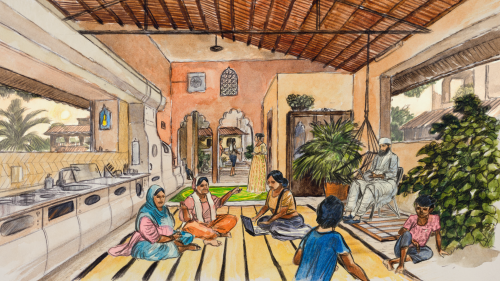
No One Is an Island is an animated short that brings scientists together to explore whether humanity can live well without harming the environment. The film highlights how hope, creativity, research, and collaboration can inspire meaningful change, showing that a sustainable future is not only possible - but closer than we may think.

The award was announced during Part Two of the MY HERO International Film Festival Awards Ceremony during activist and longtime MY HERO supporter Eva Haller’s renowned weekly salon series.
No One Is an Island is the brainchild of James McKay, manager of the Centres for Doctoral Training in Low Carbon Technologies, Bioenergy, and Water-WISER at the University of Leeds, and James McKay, manager of Centres for Doctoral Training (Low Carbon Technologies, Bioenergy and Water-WISER) in the Faculty of Engineering & Physical Sciences, not only contributed to the story but also created the illustrations that bring the research to life.
McKay contributed to the story and created the illustrations for the film and Bunting who produced and directed the documentary, alongside a team of animation professionals.
In the film, the animated conversation features voices from the Sustainability Research Institute—alumni Julia Steinberger, Joel Millward-Hopkins, Jefim Vogel, and Martha Baltruszewicz. James was also supported by PhD researchers Hannah Robinson, Angela Bayona, and Spurthi Kolipaka from the School of Civil Engineering, who gave feedback and guidance on the artwork.
The documentary is based on the Living Well Within Limits project, led by Professor Julia Steinberger and supported by a Leverhulme Research Leadership Grant. This research asked: What do humans really need to live well—and how can we achieve this with fewer resources?
MY HERO interviewed David and James about the making of the film.
Could you please tell us about yourselves in relation to the film:
DAVID: No One is an Island is an animated documentary based on a conversation between artist James McKay and a team of scientists. I produced and directed the documentary, working very closely with James, who also illustrated the film to ensure the way we told the story was always authentic.
How long have you been making films? What are some of your other films?
DAVID: I've worked professionally in animation for 25 years. I started my career as a Disney effects animator on The Tigger Movie and transitioned into story, storyboarding iconic children's television series, including Shaun the Sheep. James and I first worked together to create a unique animated adaptation of A Christmas Carol with Lawrence Batley Theatre during lockdown, bringing their Christmas production to an audience when theatres across the country were shut due to the COVID lockdowns. It was James' first foray into animation, coming from a background as a fine artist and illustrator of graphic novels. We loved working together and resolved to make a film of our own. No One is an Island is the result and marks a big step change for us as filmmakers.
Why were you drawn to making this film?
DAVID: A fortuitous set of circumstances brought us to this film. James and I were exploring a few stories about climate change when Professor Julia Stienburger got in touch with James, who was exploring ways to bring the findings of their research, which the film is based on, to the public. As soon as James and I listened to Julia and her core team explain their groundbreaking research on climate justice, we knew this was a special story of incredible importance that needed to be told.
What in your opinion is the importance of the film, and what are its strengths?
JAMES: Its strength is the positivity, based on real science. We CAN make a positive future. This film empowers people to believe it can work.
DAVID: Right! Using the power of animation, we bring a science-modelled vision of a possible 2050 to life, laying out a bold vision for radical change, promising a better tomorrow for all our children. Professor Julia Steinberger’s research fills a void full of negative news about the climate crisis. It cuts through political division by reminding us of our shared values. Like a modern-day parable, it challenges us to reflect on what a good and fulfilled life is. Indeed, it validates Mahatma Gandhi's observation that “Earth provides enough to satisfy every man's needs, but not every man's greed."
What are the issues that are most important to you (in general), and why?
DAVID: My love of the natural world kick-started my career as a visual effects animator for Disney Feature Animation. James McKay's passion led him to collaborate with scientists, using visual art (illustration/comics) to communicate scientific research. For over 10 years, these collaborations have focused on projects linked with climate change and the transition to a zero-carbon future. Combining forces, we are passionate about creating well-informed stories about climate change solutions. Since the dawn of time, humans have turned to stories from campfires to epic Greek tragedies and modern Hollywood sagas like Star Wars - all of which act as warnings to save us from calamity, and our collective power to overcome. No One is an Island focuses on themes we all care about - family, health, fairness - all the co-benefits of climate action to create a better and fairer future for the many, not the few.
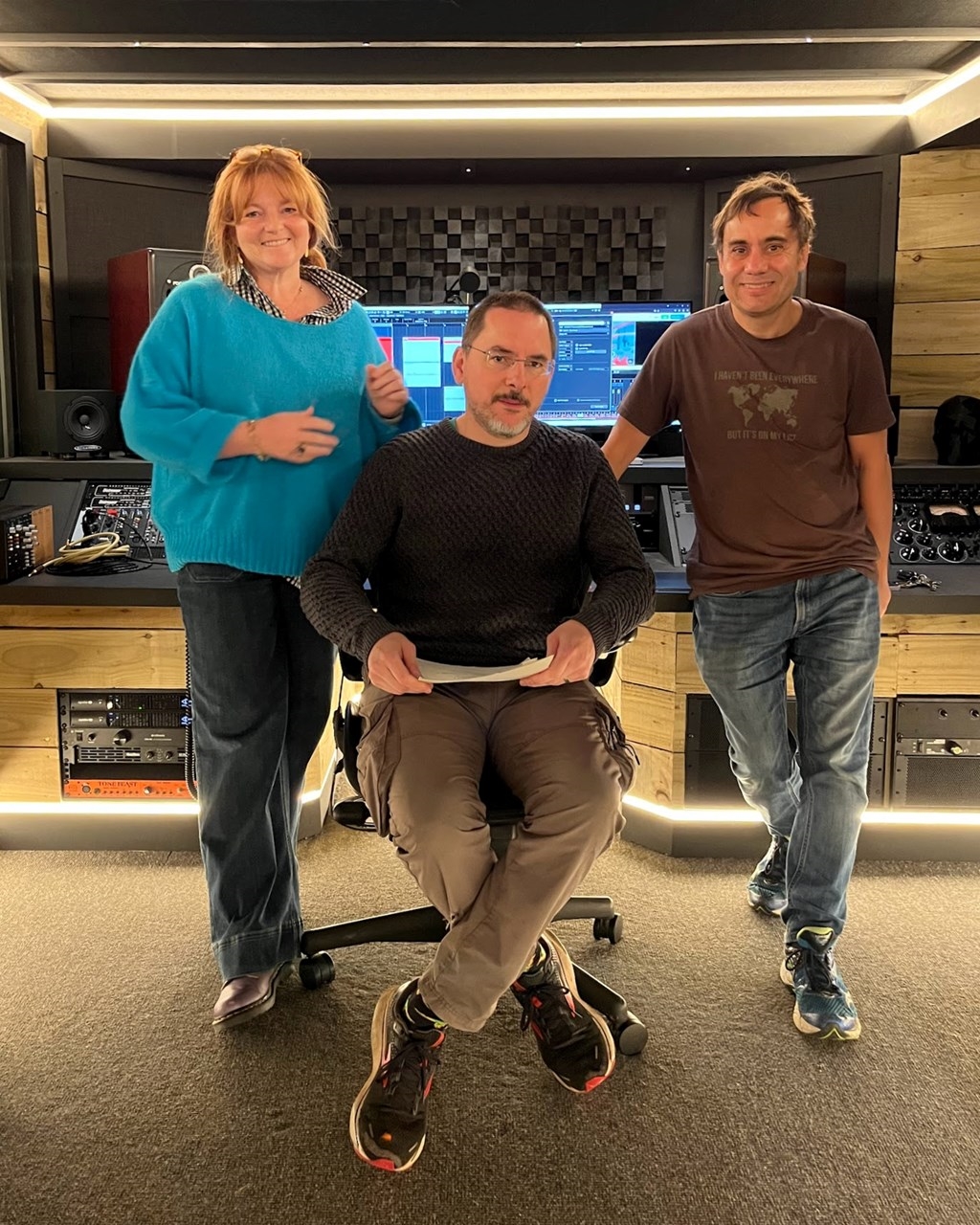 House of Sound-Kathryn Leigh-James McKay-David BuntingDavidCould you please tell us about the process of making the film: Who was on the team?
DAVID: While James is the only artist we see on the screen, the film required the talents of many artists to bring it to life, often working out of hours alongside their commercial commitments.
Associate producers Fergus Haycock and Steve Smith (The People V Climate Change, BBC) were the first to come on board and help us navigate development.
The conversation you see in the film was extracted from a three-hour interview. That's how much science there was to discuss! We suddenly found ourselves with the huge challenge to cut this down to the 10-minute film it is today. I asked one of my favourite editors I've worked with, Roberta Bonnoni, experienced in documentary, animation and indie to Hollywood features like Dreamwork's "Dog Man", to help us find the heart of the story. Cutting this down to size was the hardest challenge to crack, but ultimately, the incredible promise of this science-informed world, and the decisions we need to make to get there, shone through clear in an accessible format for a wide age range.
We began editing by creating a radio edit, slowly cutting it back, with James adding visual artwork until scenes started to emerge. Once we were happy with these scenes and the scientists approved them, we were able to move them into animation. James is one of the finest artists I've ever met, and we needed an equally fine animator to bring his work to life. I reached out to Billy Allison, an early pioneer in computer animation who's equally skilled at animating on paper, brought James' watercolour painting to life and endowed our characters with soul. Numerous other animators and a live-action team were integral in making the film. The musical score was composed and performed by English-born and US-based Dave Bainbridge. A Co-founder of Celtic progressive/folk/rock/band IONA, with whom Dave toured the world and released 13 critically acclaimed albums. It really does require a village to create a film!
How did the idea for the film arise?
JAMES: I'd previously created a comic called 'A Dream of a Low-Carbon Future' which showed a positive, zero-carbon society in 2150AD. I wanted to make an animated, immersive version of that. Then the academics who had helped me with that comic told us they had funding to create a small film for public engagement and education. That was going to be just a low-key educational "explainer", but when they talked to me and David about it, we realised we could do something much more ambitious and special.
DAVID: We immediately saw the potential. Professor Julia Steinberger’s research project ‘Living Well Within Limits’ explores how universal human well-being might be achieved within environmental limits. James's visual exploration of zero-carbon cities is combined with this extraordinary scientific research. It was a wonderful meeting of art and science. The documentary concept was conceived during early discussions with the scientists about the best way to bring their science to a broad public audience. Listening to James and the scientists talk, I began to realise how special it would be to let the audience in on this discussion between James and the scientists.
What was it like for you making this film? What were some of the challenges, successes, and high points?
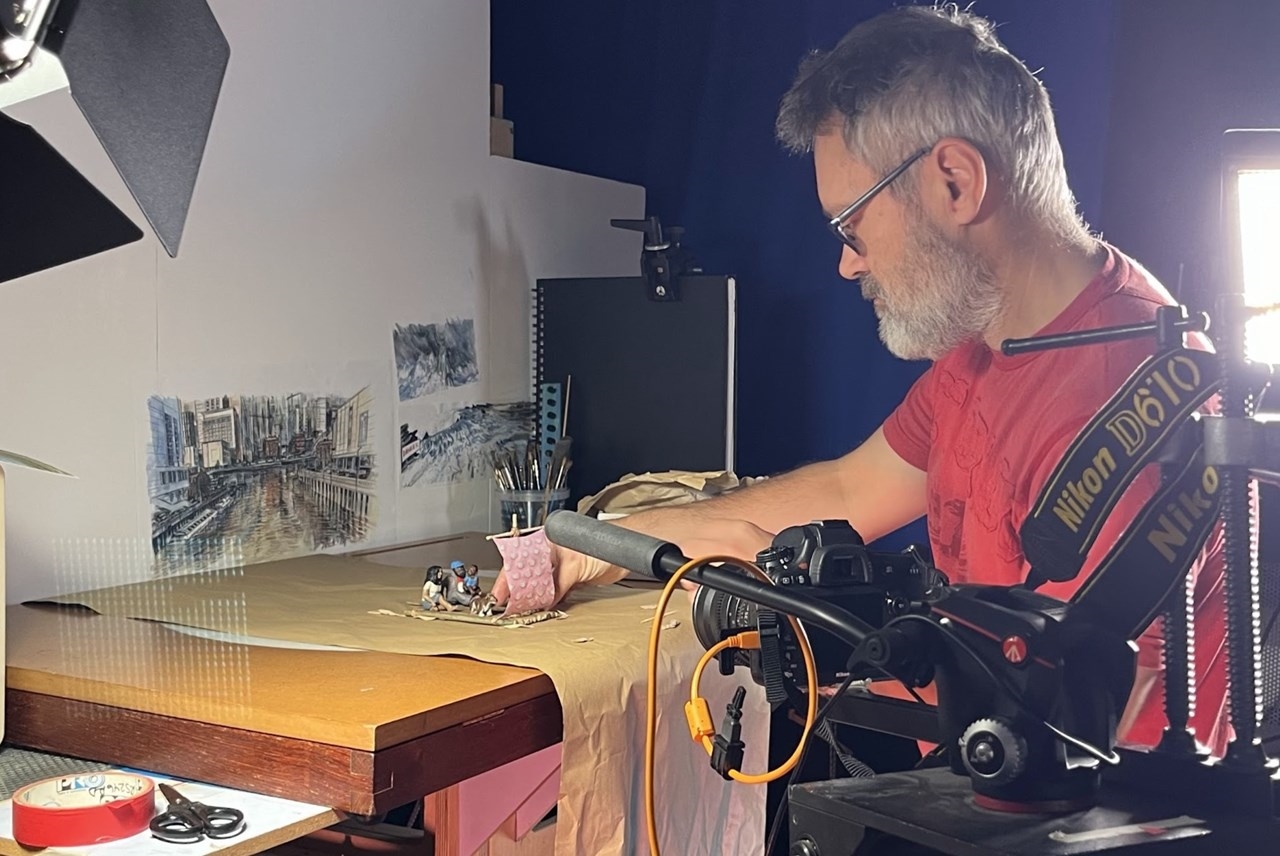 Paul Couvela Animating
DAVID: Making the film was a true labour of love, and I had the privilege to work with an incredible group of people, from the scientists to James, and the wider team we created to make the film with. I felt the weight of responsibility to bring the research to the screen authentically, and in a way that didn't preach to the converted but was able to speak across political divides by resonating with our shared humanity. As a filmmaker, you are given a lot of trust and power to tell a story, and with great power comes great responsibility. I felt that very keenly when dealing with such important science. There were plenty of times we felt lost in this deep forest of science, but we both knew we had each other to help us.
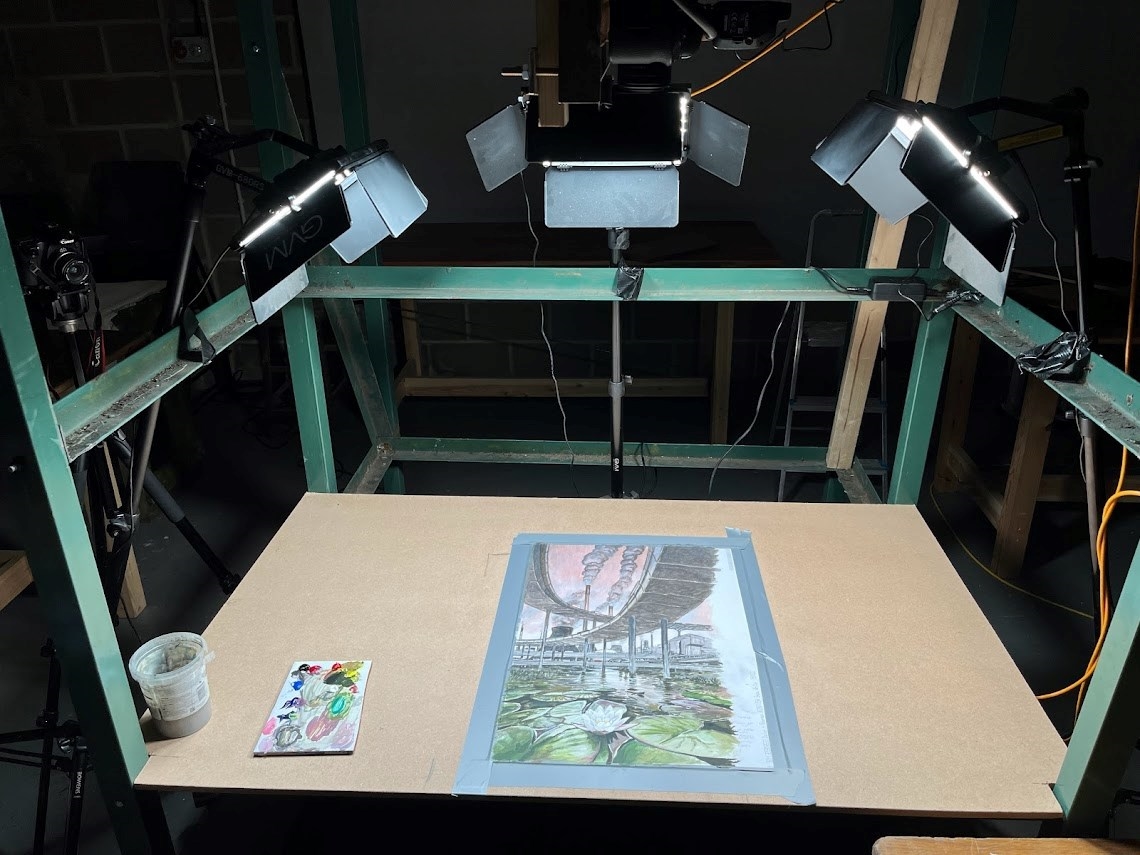 Timelapse RostrumJAMES: It was a big challenge to reduce a 'rough' cut from about half an hour down to under 10 minutes. The film had to be tight and compact, but it started out sprawling all over the place. We had lots of advice from top artists and professionals during the process, and we spent months working on scenes that, in the end, were never used. That was tough for me as an artist because you invest a lot in each piece of work. The high points were seeing my still drawings come to life at the hands of master animators.
Who helped make this possible?
JAMES: A huge team of inspirational animators and industry professionals assembled by David Bunting. Also, the team of industry 'advisors' whom David contacted for advice. The academic team was funded by the Leverhulme Trust, without which we couldn't have made the film.
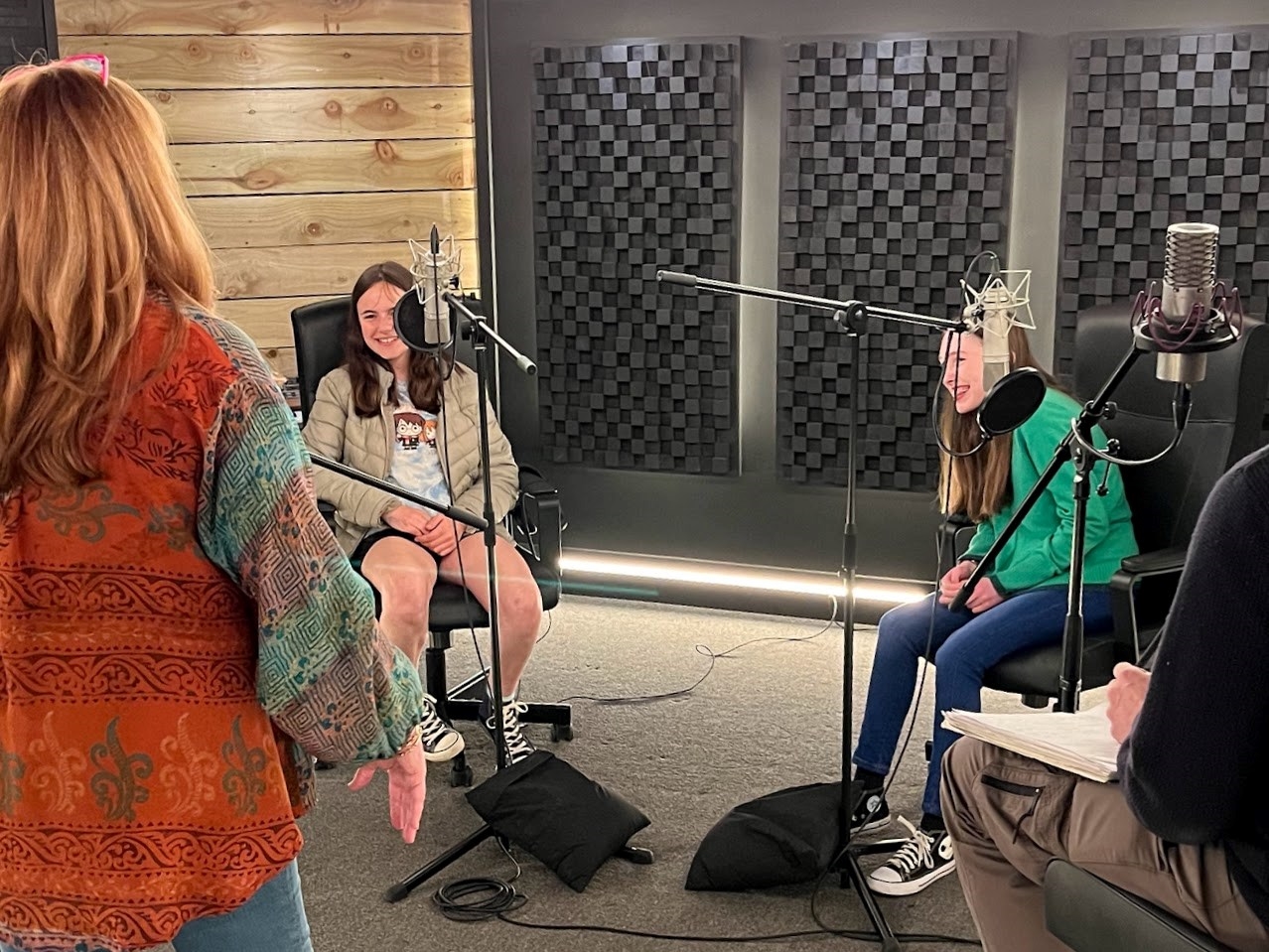 House of Sound-Kathryn Leigh-James McKay-David Bunting
Do you have a personal hero?
JAMES: I've met 3 artistic geniuses in my life, who have inspired my work (they're all comics artists): Jean Giraud (Moebius), Sergio Toppi, Mick McMahon.
DAVID: I was lucky to speak to a few personal animation heroes who gave their time to offer advice. However, I'd have to single out Professor Julia Steinberger. The work of her and her colleagues is the true hero needed in this hour.
What does it mean to you to win the MY HERO Award?
JAMES: It's amazing because an award helps the film generate attention and reach larger and larger audiences.
About the MY HERO International Film Festival
The My Hero Film Festival is an annual event dedicated to showcasing films that celebrate the power of the human spirit. The festival provides a platform for filmmakers to share inspirational stories of everyday heroes. Thanks to generous sponsors, prizes are awarded to elementary, middle school, high school, college and professionals in a variety of categories, including documentary, narrative, music video, animation, experimental, and more.
The festival aims to inspire audiences to recognize the heroism in their own lives and encourage positive actions in their communities. Learn more.
Page created on 12/19/2025 5:44:15 PM
Last edited 12/19/2025 6:03:19 PM