 |
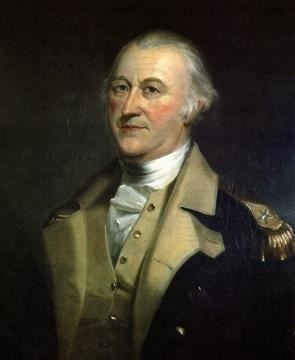
| Picture of him in uniform (http://backyard-history.com/artemaswardmuseum/index_files) |
One day at Western Massachusetts my hero was born. His name was Artemas(art-A-mez)Ward. He was the sixth out of seven children. Eventually in 1748 he graduated from Harvard and taught there briefly.
Two years later in 1750 he found, loved and married a woman named Sarah Trowbridge who was the daughter of a reverend. Soon after the wedding the young couple returned to Shrewsburry and opened a general store. In the next fifteen years the couple will have eight children. There names were Ithamar, Nahum, Sara, Thomas, Artemas Jr., Henry Dana, Martha and Maria.
The Next year in 1951, he was named a township assessor for the county, Worcester County. This was his very first public office he took. Eventually Artemas was elected to the Justice of the Peace in 1752 and also served the Massachusetts Bay Colony's 'general court'.
 |
| (http://upload.wikimedia.org/wikipedia/commons/thumb/6/67) |
In 1755 at the beginning of the French and Indian War, the militia was remade for war. Artemas Ward was made the Major of the 3'rd regiment. The Third Regiment served as garrison troops along the west side of Massachusetts. He alternated between this and his court job for two years. Artemas was promoted to colonel soon after that and participated in the battle at Fort Ticonderoga.
Artemas Ward finally returned to Shrewsbury and In the General Court he was placed on the taxation committee with Samuel Adams and John Hancock. He was second only to James Otis in speaking out against the acts of Parliament. His presence in these debates made the Royal Governor Francis Bernard to take away Artemas's military commission in 1767. At the next election Bernard voided Worcester's votes and banned Artemas from the assembly.
Starting to favor rebellion the third regiment resigned from British control on October 3, 1774. Then they marched to Shrewsbury and told Colonel Ward that they elected him as their leader. Soon as other counties started to rebel the Royal Governor abolished the Assembly. Towns soon joined up in a group called the Committee of Safety. Their first action was to elect Artemas Ward as there leader of the colony's militia.
After the Battle of Lexington and Concord on April 19 1775 the rebels followed the British back to Boston and started siege. Additional British forces arrived in May and in June. Artemas Ward found out about their plan to attack Bunker Hill so he told his men to prepare for attack and Fortify the hill starting the stage for the Battle. Artemas heard about the Heroic stand on the hill but they failed to hold position due to lost of ammunition.
After the battle the brand new Continental Congress was making the Continental Army. Soon after the creation they named Artemas Ward as the Major General and George Washington in Second of command.
After the British evacuation on March 17, 1776, Washington led the main army to New York City and Artemas took command of the Eastern army on April 1776. He stayed at his post until his health forced him to resign from the army.
Page created on 4/26/2010 12:00:00 AM
Last edited 4/26/2010 12:00:00 AM