 |
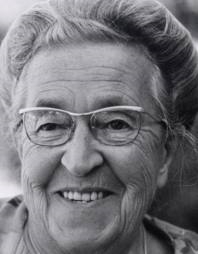
| Corrie ten Boom (http://www.tlchrist.info/wise_women_build.htm ()) |
Looking out from her father's watch shop, she saw the pain, the panic, the desperation of those searching for a safe haven from the Nazis. Realizing the distress surrounding her, she took action, revealing her justice-driven character. Corrie ten Boom was born to a Dutch family in Haarlem, Netherlands, on April 15, 1892. Raised as a conservative Christian, as a young girl, ten Boom practiced her Christian faith and developed a passion for loving and caring for needy people in her city. As an adult she lived a quiet life helping her father in his watch shop. But during her forties, when the Nazis invaded Holland, ten Boom encountered the pinnacle of difficulty in her life; she had to learn sacrifice. Because of the love ten Boom had for people and because of her Christian conscience, sacrificing was not just a duty, but was another opportunity to serve. The harsh obstacles she had to overcome changed the course of her life, helping ten Boom to reach her ultimate goal, spreading the love of Christ through acts of righteousness. Rising above the tragedies she endured, Corrie ten Boom utilized her strengths of compassion and courage to rescue some and to influence others, making her a true hero.
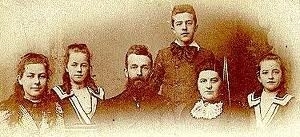 |
| C.T.B (far right) and her family! (http://www.fold3.com/page/286020537_ravensbrueck/ ()) |
Ten Boom was motivated to help the Jews simply by her compassion. Already driven by her Christian faith, she felt burdened for the thousands of Jews around her being captured and sent to concentration camps. Watching the tragedies and heartbrokenness, ten Boom took initiative by taking Jews into her house to keep them safe from the Nazis. One night, ten Boom encountered an old woman struggling to get into the hiding place: "She heard the sickening sound of wheezing. (It was) the oldest Jew in their home. (even though) she was sick, Corrie sprang from her bed and helped her make it through the secret panel...only seconds before a Nazi policeman appeared in her room" (My Hero Project-Corrie ten Boom). This incident shows that even though she was sick, she always put others before herself. By the motivation of compassion, ten Boom not only saw a person as an ordinary living being, but also believed that there is purpose in life for every person. She saw if the Nazis took life away from any individual Jew, even the ones struggling from sickness, there would be an essential loss to the world. Another time, working as a coordinator of the underground project hiding Jews, ten Boom struggled to find a home for a young mother and her baby. Looking for someone to take them in, she scrambled out of desperation pleading to her pastor as if he was the only and best choice. She implored to him, "'Good morning, Pastor. I confess that I am searching for something. Would you be willing to take a Jewish mother and her baby into your home? They will almost certainly be arrested otherwise.' He took a step back from me. 'Miss ten Boom! I do hope you're not involved with any of this illegal concealment and undercover business!'" (Corrie ten Boom 266). Even though ten Boom saw the need for these forlorn people, she knew the risk and the importance of hiding these Jews and scouting a home for them. Not only did the seeking of a home for the two helpless Jews revealed the depth of compassion that ten Boom had, but also the loving and life-treasuring attitude towards the individuals that were displayed as true acts of a hero. Ten Boom paints a picture of true compassion-a person who empathizes, realizes the brokenness and corruption of society, and cares for others.
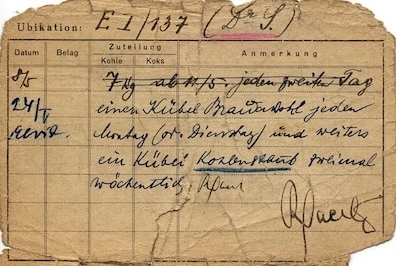 |
| Actual ration card used during Holocaust. (http://www.edwardvictor.com/Holocaust/theresiensta ()) |
Ten Boom, motivated by compassion to save endangered Jews had to find a method to support them. In the midst of the Nazi occupation, that method was her physical courage. As food supplies started to decrease, ten Boom volunteered to ride her bike out into the city, looking for ration cards. While she rode around, she knew the dangers; she knew that the Nazis were patrolling and could capture her. Ten Boom coincidentally then went to a government official, a bald man named Fred, and opened an irrelevant topic about a Sunday service. Figuring out that she desired something else, the government official said, "So now I know why you came here...how many (ration cards) do you need?'"(Corrie ten Boom 249). The rushed biking, the urgent crises needed to be solved, and the seeking for help in times of hazardness on her own, all demonstrates a vital character of ten Boom. Jeopardizing her life in and outside her home not only exemplifies her compassion and love towards the individuals she was hiding, but also the courage she possessed. The physical courage. The kind that only occurred by stepping out of our comfort zone. The kind that ten Boom had.
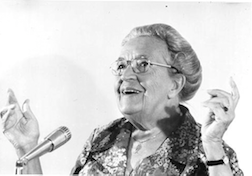 |
| C.T.B. Speaking about experiences from the past. (http://www.deeprootsathome.com/corrie-ten-boom-a-h ()) |
These acts of compassion and courage could have been seen by anyone watching her life, but there's an even greater aspect of being a hero. The aspect of the hero changing him or herself inwardly. In ten Boom's case, she changed her perspective over and over. After she got caught and sent to Ravensbruck, there were many times when she had to learn to stay positive, especially after her father and then her sister died in captivity. Years after she survived the concentration camp, ten Boom was invited to speak at a church. There, as she spoke about her experiences, she came across a familiar face. The very man who mocked, spat on, and abused ten Boom and her sister. But with the face full of shame and guilt from the former camp guard, he interrupted her and stretched his arm out for an apology acceptation in front of ten Boom: "And so woodenly, mechanically, I thrust my hand into the one stretched out to me. And as I did, an incredible thing took place. The current started in my shoulder, raced down my arm, sprang into our joined hands. And then this healing warmth seemed to flood my whole being, bringing tears to my eyes. 'I forgive you, brother!' I cried. 'With all my heart'" ("I'm Still Learning How to Forgive"). As Boom faced many difficult obstacles within the camp, after, she learned that forgiving the very people who mistreated her was the only way to overcome anger and fear with peace and love. Ten Boom displayed this unseen courage by her willingness to forgive which stems from her moral and spiritual experience; knowing that the chains of hatred were setting her back, she chose forgiveness so that she might be set free. It was not of the number of courageous acts ten Boom fulfilled, but the amount of heart poured through each self-altering achievement. The greatest heroes are those who are able to forgive, like Abraham Lincoln, Gandhi, Nelson Mandela, and even Jesus Christ-all great men, but ten Boom was just a typical woman.
There are those who are great athletes, speakers, politicians, and actors; the famous, the rich, and the powerful. But ten Boom was just ordinary. She was a woman, a middle aged woman, who would be unknown if she lived today. But potentially preserving hundreds of lives, it is conclusive that "this woman is just further proof that as deep as the evil can go in some people, there is always a greater goodness in our species" (Allison, Scott, and George Goethals). Although she made visible many acts through her courage and compassion, ten Boom set a standard for all of humanity, inspiring us, the common people, to become greater. Still Influencing us today, ten Boom reminds us to remember to step out, to find and to help when we see outcasts around us in our city, our community, and our school. Corrie ten Boom saw the pain, the fear, the vacancy within the eyes of the neglected. Possessing attributes of both compassion and courage, she did what she saw needed to be done, making her a deserving hero for us to follow.
Works Consulted
Boom, Corrie Ten. The Hiding Place. N.p.: Hodder and Stoughton, 1972. N. pag. Print.
"Corrie ten Boom." Contemporary Authors Online. Detroit: Gale, 2007. Gale Biography In Context. Web. 10
Dec. 2012.
"Corrie ten Boom." Contemporary
Heroes and Heroines. Vol. 2. Gale, 1992. Gale Biography In Context Web. 5 Dec. 2012.
Stevenson,
Michael. "Corrie Ten Boom." Corrie
Ten Boom. N.p., 16
Dec. 2004. Web. 28 Dec. 2012.
"The My Hero Project -
Corrie Ten Boom." Myhero.com. N.p., 16 Apr. 2009. Web. 10 Dec. 2012.
Page created on 1/11/2013 12:00:00 AM
Last edited 1/11/2013 12:00:00 AM