 |
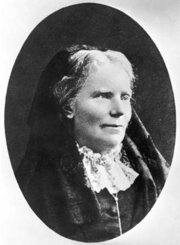
| Elizabeth Blackwell |
Christopher Reeve once said, “A hero is an ordinary individual who finds the strength to persevere and endure in spite of overwhelming obstacle.” This quote made me think strongly about the first women doctor, which was Elizabeth Blackwell. Back in the 1830’s men were the only people that could get a career as doctors. Despite Elizabeth being a girl she still went through many hard times in life and never gave up on being a doctor. Although Elizabeth went through many struggles in her life to become a doctor, she didn’t let being different or being a girl stop her. In 1838 when she was only 17 years old living in Cincinnati, Ohio her father Samuel died. Her father owned a sugar refinery and when he passed away Elizabeth, her mother, sisters and brother had to make the money for the family. They did that by opening a boarding school, it was hard for Elizabeth to accomplish her dreams because her father was her big inspiration. How was she able to achieve such a big goal without her father, she’s a real hero.
Working as a teacher in the school wasn’t her dream and she would stop at nothing to achieve her dream of doing what she wanted to live to the fullest. Elizabeth Blackwell was born on February 3, 1821 and was daughter of nine of Hannah and Samuel's children. In 1832 her family moved to New York when she was 7 years old. Her life was going well and they moved into a wealthier neighborhood. I know you can probably see how a girl with a good life could achieve such a dream. Times got harder as she continued to get older, in 1838 when she was only 17 years old and her father died. After this she had no choice of what she wanted to do in life so she didn’t have much of a dream and worked with her family in a school to make a living. When she was finally convinced by a dying friend in 1844 that what she wanted to do with her life was become a doctor she began to study and quit being a teacher. Soon she tried attending many schools and colleges but was denied by 29 different schools because she was a woman and wasn’t allowed, by law, to be a doctor.
Years passed and she continued studying almost losing hope, but with the help of many people she stayed strong and never gave up. One major help was Samuel H. Dickenson, one of the Charleston’s doctor who knew her father. Together they got her accepted to one school, and it wasn’t easy. She was accepted to the school for one year and got no degree because she was dressed as a boy and soon the school realized and she had to drop out. In a year she was accepted to a New York college as a joke and was tortured by the teachers and students. She almost gave up hope but in 1847 she was accepted to Geneva College in Paris. In 1849 she graduated top class from the college and was very proud and continued to study to achieve her goal. When she was 26 years old she graduated the second time with a special recommendation in a doctor training program. On Sunday November 4, 1849 she had her first operation on a syringing the eye of a baby boy. While giving the procedure to the highly contagious eye, the juice shot from the baby’s eye and spread to her left eye. She went all the way to a hospital in London to get her eye replaced with a glass eye piece.
When she traveled back to New York in 1851 she had to restudy to refresh her mind and continue her studying. Back in Paris she learned to speak different languages and it was hard for her now to transfer the degrees she earned in the European and American hospitals. After she was refused by many different hospitals she opened her own clinic in New York with her sister Emily. In their clinic they only had patients of different languages. The clinic wasn’t strong enough and didn’t make much money so in New York on May 12, 1857 they both opened a hospital with other women doctors called the Infirmary Indigent. Each patient paid four Dollars a week and if they couldn’t afford it they wouldn’t have to pay. The business began to go down hill and patients' friends and relatives blamed women doctors for the cause of their patients death. Elizabeth couldn’t take people saying women were bad doctors anymore so she went out and traveled. She came back to the business when the Civil War again began and helped the women. The women’s respect was gained back in 1868, they were able to be accepted to colleges and work in community hospitals to cure hurt army men from the Civil War. The hospital stayed open until 1899 and women were allowed to enter Cornell University Medical Schools, and that’s exactly what Elizabeth did.
Finally in 1869 she succeed and felt she had accomplished her goal, she helped many other women also achieve there goal of becoming doctors. Then slowing down and opened a large practice, The National Health Society and London Medical School for Women. She became a professor of Gynecology from 1875 to 1907. She wrote books in class and gave lectures in England in 1859. Writing books about the medical conditions she learned in college also helped women succeed in doctor careers. One of the books she wrote that were very helpful was The Physical Education of Girls in 1882, it dealt with social hygiene and preventive medicines.
I believe for as long as Elizabeth Blackwell lived she never gave up on trying to achieve her dream, and to me that’s a real hero to have perseverance. Other hero traits I think go along with Elizabeth is, as an individual, she wasn’t afraid to do what she wanted even if other women weren’t doctors. In her life she was willing to sacrifice to get her dream, also in her life she gave up being a teacher even if she knew that was how she made a living. She was willing to sacrifice her money she was making to try to become a doctor and it was a good chance it wouldn’t happen. Bravery was why she took that chance and she kept achieving her goal, and even when she achieved her goal she kept sharing information she learned to help other patients in need. Writing health papers and reports helped her spread her ideas. In the middle of writing an autobiography but didn’t finish because Elizabeth had passed on May 31, 1910 in her home in Hastings, England, after helping many women and changing their rights. She had died by trying to explain her life and how hard it was to achieve a dream. If it’s worth it, you won’t give up.
Page created on 7/6/2007 12:00:00 AM
Last edited 7/6/2007 12:00:00 AM