 |
| (http://blog.justporter.org/harriet-tubman-undergro ()) |
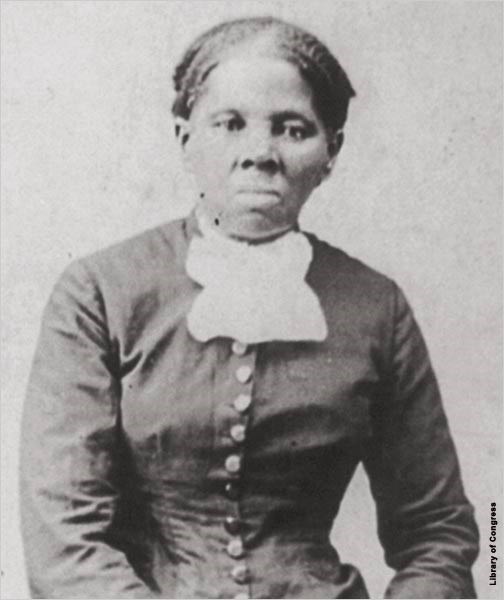
The dictionary definition of "hero" is a person, typically a man, who is admired or idealized for courage, outstanding achievements, or noble qualities. Although Harriet Tubman was not a man, she definitely had a lot of courage and amazing achievements associated with her name. Harriet Tubman was born into slavery in Dorchester County in Maryland around 1820, and died in Auburn, New York on March 10, 1913. She was an escaped slave who went on to become one of the most famous conductors for the Underground Railroad, and during the Civil War, a scout, spy, and nurse. A hero has to be selfless, caring, dedicated, resilient, and should never give up. They have to care enough about others to give to them when they don't have much. They should also work hard to achieve their goals and resist the urge to give up when things don't go their way. Harriet Tubman was dedicated despite her many struggles, and never gave up in what she believed was right, and that makes her a hero.
Harriet Tubman was dedicated all throughout her career as a conductor and as a nurse and spy. This was shown when she transported her parents out of slavery through the Underground Railroad. "Harriet carried them off [in a 'patched together wagon'] with an audaciousness and an aplomb that represented complete mastery of the Railroad and perfect scorn of the white patrol." ("Harriet Tubman"). She had worked so hard to get as many slaves as she could out of the South that she managed to transport her aging parents in a wagon, uncaught, through the Railroad. She did this as patrols of white people were patrolling the countryside, trying to find escaping slaves to return them to their owners. Also, the Civil War generals trusted her to do her job so much that she lead a raid to liberate slaves. "The first woman to lead an armed expedition in the war, she guided the Combahee River Raid, which liberated more than 700 slaves in South Carolina." (Bio.com). She was the first woman to lead a raid, and at the time it was unheard of for a woman to take a position like that. Yet the generals of the Civil War still gave her the job, and she successfully liberated seven hundred slaves during the raid. In addition, because of her status as a women, she had to work other jobs to have enough money. "For all of her work, Tubman was paid only two hundred dollars over a three-year period and had to find other ways to support herself." (History.com). Even though she was well respected, she was still paid less than other war heroes. She was forced to take another job, yet she still continued to work hard towards her goal. Harriet was trusted to do her job all throughout her career due to her dedication towards her goal.
 |
| (http://www.harriet-tubman.org/category/biography/ ()) |
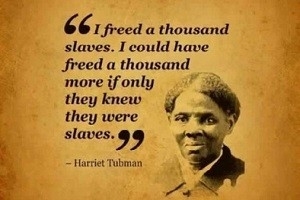
Harriet Tubman never gave up in what she believed was right. This shows when she took drastic measures to keep her passengers safe on the Railroad. "She drugged crying babies with paregoric, an opium derivative; boarded southbound trains to confuse slave hunters; assumed various disguises; leading the weary and frightened fugitives in singing spirituals; and threatened to kill escapees who tried to go back by pulling out her revolver and shouting at them, 'move or die!'"("Harriet Tubman"). She believed that all the slaves in the south deserved to go free, and did her best to give them that freedom. She could have easily let those people turn back, or stayed in the north or Canada where she was safer from slavery, but she still continued to help her passengers along the Railroad. Also, she kept liberating slaves even after the Fugitive Slave Law was passed. "In response to the law, Tubman re-routed the Underground Railroad to Canada, which prohibited slavery categorically." (Bio.com). If she brought slaves to the north now, they could be recaptured and put back into slavery. However, instead of taking that unnecessary risk or giving up entirely, she re-routed the Railroad to Canada, where the escapees would have a greater chance of a free life. In addition, when she was young she defended an escaping slave against a furious owner, and in retaliation the owner threw a two-pound weight at her head. "The injury left her skull permanently pressed against her brain, and she experienced sudden unconscious spells for the rest of her life." ("Tubman, Harriet"). She would spontaneously fall asleep because of this injury, yet she still continued to work on the underground railroad. She risked her and the passenger's safety even more this way, but she did it anyway. Harriet never gave up or lost sight of her goal, even with half the US working against her.
 |
| (http://blackclarksville.com/2016/02/19/black-histo ()) |
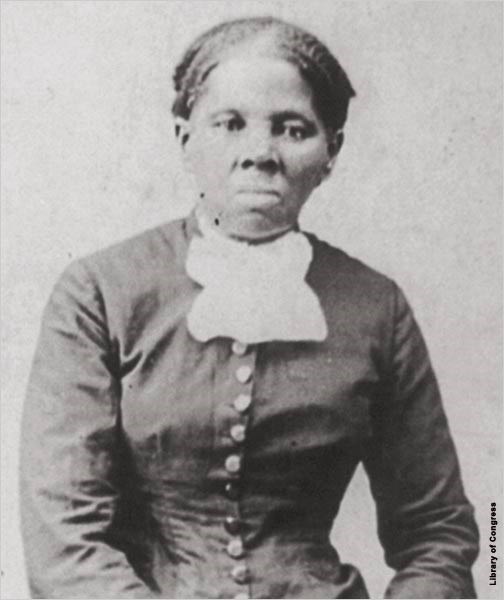
Harriet Tubman is my hero because she never gave up in what she believed was right, and was dedicated throughout her turbulent life. She brought more than three hundred slaves to freedom in Canada, making more than 19 trips. Also, she kept herself and her passengers safe, never losing a single person. She could have easily stayed in Canada after escaping to stay safe, but she still kept going back because she believed it was what she was supposed to do. Harriet is an inspiration for standing up for what is right, despite what other people say or do. "Two generations came together to celebrate the strength of black women and to continue their struggle for a life of dignity and respect. Harriet Tubman, the oldest member present, was the embodiment of their strength and their struggle." (History.com). In 1896, seventeen years before her death, a group met in Washington DC to bring awareness to what black women were going through in that time period. Because of what she had previously done for her people, Harriet was their role model during that meeting. Harriet Tubman was admired for her courage, outstanding achievements, and noble qualities, and by definition, that makes her a hero.
Works Cited
"Harriet Tubman." Bio.com. A&E Networks Television, 2016. Web. 05 May 2016.
"Harriet Tubman." Contemporary Black Biography. Vol. 9. Detroit: Gale, 1995. Biography in Context. Web. 28 Apr. 2016.
History.com Staff. "Harriet Tubman." History.com. A&E Television Networks, 01 Jan. 2009. Web. 29 Apr. 2016.
"Tubman, Harriet." UXL Encyclopedia of U.S. History. Sonia Benson, Daniel E. Brannen, Jr., and Rebecca Valentine. Vol. 8. Detroit: UXL, 2009. 1583-1586. Gale Virtual Reference Library. Web. 29 Apr. 2016.
Page created on 5/19/2016 12:00:00 AM
Last edited 5/19/2016 12:00:00 AM