 |
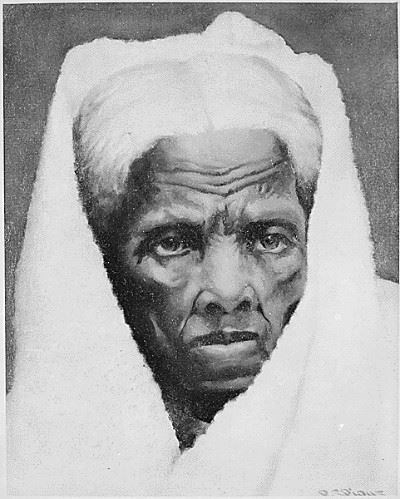
| Harriet Tubman over time (stufffromthelab.files.wordpress.com/) |
God told Moses to go forth to the promised land to save his people from the destruction of the Devil’s work. Harriet Tubman is considered the Moses of her people for being a godsend and saving those who were in mortal danger. Harriet Tubman, an abolitionist from the mid 1800, devoted her life to working as a conductor of the Underground Railroad. This system brought out many enslaved people from their hard-knock lives. According to Tubman, she never lost a passenger; she promised them that they would be home soon to the promised land, just like God had intended.
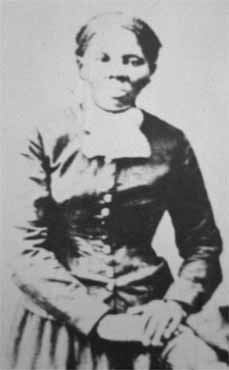 |
| Harriet in the mid 1800 (http://www.africawithin.com/bios/harriet_tubman.jpg) |
Harriet Tubman, an escaped slave from Maryland in the United States, was born in 1820 “Araminta Ross, her mother started to call her Harriet Ross.” ("Tubman, Harriet Ross." Encyclopedia of World Biography). At a young age a small paper weight hit her in the head, this slashed a deep gash into her forehead causing the occasional sleeping spells at random times. Harriet Tubman deserves the title hero because she possessed the courage and strength to fight for what’s right. When Harriet escaped from Edward Brodas’ Plantation near Bucktown, Dorchester Co., Maryland in 1848, “she was leaving behind her husband a man that was free from slavery who was threatening to expose her if she tried to escape.” (The Moses of Her People). During her “daring rescues, complicated plans, and determination”(Mcneese 85) she sang songs that helped her push forward to the promised land. Harriet reached freedom in Philadelphia where she found a steady job and began working amongst the Quakers and Abolitionists. Tubman strongly supported John Brown’s insurrection, but when this attempt failed she decided to act. So Harriet acquired the opportunity to begin speaking tours to help spread the message across to the Abolitionists. During the next 10 years, Tubman with help from the Quakers and Abolitionists, went back to Dorchester County to save her parents and other enslaved people. She made over 20 trips back and saved over 300 hundred slaves through a system called the Underground Railroad. Going through all these passageways she never lost anyone along the way so they all stayed well hidden. But in 1850, a Fugitive Slave law passed. This law stated that any slave found hiding in a white person's home would be punished or might even die. The person helping the slave escape would be charged a heavy fine.
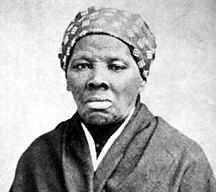 |
| Harriet Tubman in hiding (http://polyweb.rusd.k12.ca.us/Clubs/Black%20History%20Month/Images/tubman.jpg) |
Harriet Tubman remained a very devoted worker and believed that everyone had a purpose in life, that nobody’s useless, and all are equals. After her 10 years of helping the Underground Railroad she went into a different field of work because slaves were finally being set free. Tubman began working as a nurse for the Union Soldiers in 1861 when the Civil War began. Besides working for the Union Soldiers, she also worked as a spy to pass along any messages that she might have heard along the way. “She felt that working with the army might help her feel like she was doing more to help the freedom act”(Petry 213). After she worked and did everything that she thought possible to save as many slaves as she could, she returned to Auburn, New York in 1864 to rest and visit her parents. But like other women participating in different movements to save the slaves, she also was interested in Woman’s Suffrage. Tubman took part in campaigns regarding the rights of women and their right to vote like any other man. In order to help with this movement she became an Activist and raised money. In order to help, she said “I had reasoned this out in my mind, there was one of two things I had a right to, liberty or death; if I could not have one, I would have the other” (Tubman). In the last years of her life, she opened a home for the “old and the needy” in New York. But then she soon grew sick and died on March 10th, 1913. Tubman died at the age of 94; she left behind a home, which was considered a symbol of her character in her will. The people of Auburn made it a symbol of her honor and her faithful journeys to a land that she became welcomed in. They made a United States Postal Service stamp with a picture of her on it in 1978 to honor a women so brave and courageous.
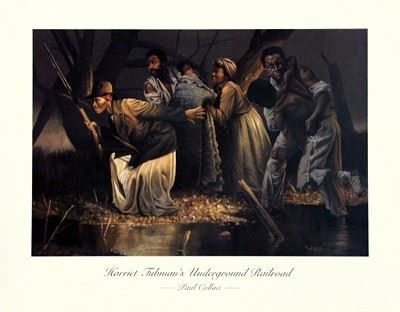 |
| Harriet working the Underground Railroad (http://www.artisanartsonline.com/images/BTAV437.jpg) |
Tubman is an inspiring hero of her time because even though she became known as a savior, a godsend from up above, she went through a hard-time while growing up. She never took anything for granted or questioned what she was asked to do. With all the energy that she has shown over the years makes her a very brave woman who people can look up to. The dozens of men and women she saved gave her the name: “Black Moses.” She didn’t let that go to her head or let that cloud her judgment. She kept on doing what she thought was right. With her fatal injury which caused her to pass out at times while on a mission, she did not let that stop her. She warned her charges ahead of time that if that were to happen to not panic, and to find a place to hide out until she was awake. “Follow the drinking gourd and you know you are safe.” (Tubman). These words comforted her and the people around her. “I never ran my train off the track, and I never lost a passenger.”(Tubman). Harriet Tubman never lost a passenger and she walked by faith and not by site, teaching everyone a different lesson along the way. Tubman inspired many different people to trust their faith and that no one is worth nothing. If you believe that you can do it, the chances are you can.
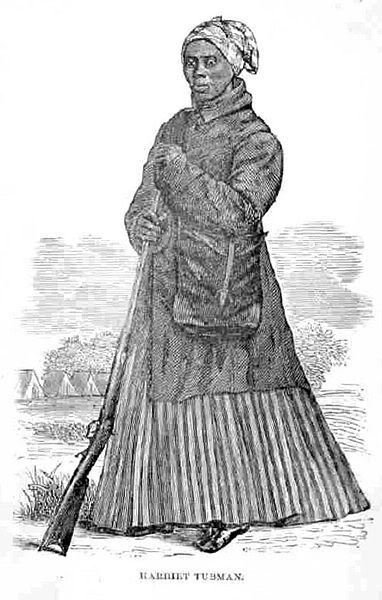 |
| Simple drawing of Harriet Tubman (http://media.photobucket.com/image/harriet%20tubman/ffloodspace/harriettubman.jpg) |
Page created on 2/14/2010 12:00:00 AM
Last edited 2/14/2010 12:00:00 AM