 |
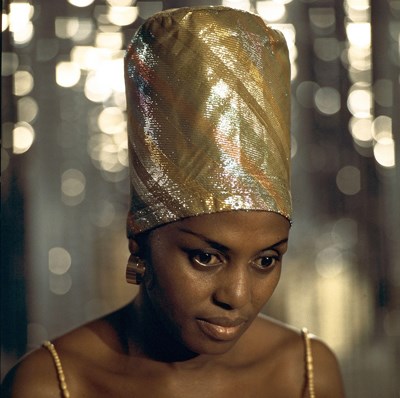
| Miriam Makeba in her younger days |
South Africa was colonized by Dutch and English people. They called these people the Afrikaners. When they moved to this land they had found diamonds that could be worth money so they tried to colonize the area where they found these diamonds. The invasion of the English sparked a war between the people that were living in South Africa at the time and the English this war was called the Boer war. When they won this war the Afrikaners created a apartheid law. They also separated the black South Africans from the white people that took control of South Africa. They created non whites and White's only places. They also made a marriage law in which non-whites could not marry whites. The Blacks that were segregated were required by law to carry passports with them. These passports had to have their finger prints, their picture, and permits saying were they could go in whites-only areas and where they could not go. The Afrikaners passed an act called Population Registration Act which meant everyone had to be racially classified into one of three groups. These groups were whites, blacks (African) and colored. Colored meant that the person was half white and half black. Many people spoke against the Apartheid, but one young female, used her music to get into people's minds.
Miriam Makeba was born March Forth, 1932 in Johannesburg. When she was eighteen days old, her mother was sentenced to 6 months in prison for selling umqombothi, an illegal African beer. The young child spent the first six months of her life in jail, beside her mother. At the age of six, her father passed away, she was forced to work and for very little, did house work. At the age of Seventeen, Miriam gave birth to her daughter Bongi who was born with breast cancer. Shortly after, her first husband left her. That was the first of five.
The key to her success showing all around the world was her small singing part playing herself in the move “Come back Africa”. When the film was finished, she received an invitation to a screening at Venice Film Festival in 1959. Where she became a well known celebrity. One year later in 1960, a short time after the Sharpeville Massacre, Miriam got news that her mother had died. But due to her African Passport being revoked, she was stopped from returning home to attend the funeral, which then began her 30 years of exile from her homeland. Being exiled never stopped her fame back in the US. In 1966 she earned a Grammy award.
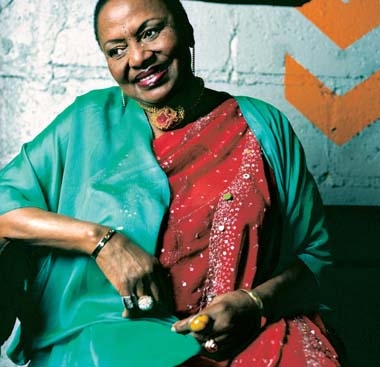 |
| The Older Verison of Miriam Mekeba |
In 2005, she had announced that she was going to be retiring. But during her few months off she continued to receive phone calls from abroad. She once said, "Everyone keeps calling me and saying 'you have not come to say goodbye to us!(Ewens).” So she continued her farewell tours, until she literally collapsed on stage in Naples. Miriam Makeba died on November 10, 2008.
Even though she died just a few years ago, Miriam Makeba is still well known for her music and a campaigner for human rights. Miriam also knows Zanzi was a huge idol to all colored people because she fought for them so they could have the same rights as any other person. Not only did she go to the outside world and try to make people understand but she also showed it through her music.
Ms. Makeba wrote in 1987: “I kept my culture. I kept the music of my roots. Through my music I became the voice and image of Africa, and the people, without even realizing.”
Makeba signed with the Manhattan Brother in 1954 and made her signature song, “Pata Pata.” She performed throughout South Africa, Rhodesia, and the Belgian Congo. Her singing quickly got very popular as she made solo records. She was such a big hit that she was the first South African to win a Grammy ward for one of her albums. Even though she was very successful she join an all female group of singers called the Skylarks and also went on tour with lost of Jazz groups.
Being a witness to racist policies such as giving whites more rights than blacks, she vowed to sing about the poverty and injustice in South Africa.
So as a result, Miriam Makeba sang out against apartheid. Miriam is truly inspirational because she was one of the people who had chosen not to fight physically but through her voice. Miriam is one of a kind and she has been and still is an inspiration to all. Her songs and voice were her weapons against the apartheid in South Africa and the apartheid in general. So she decided to use it, to sing about her life, to sing about her experience, and about the apartheid.
Miriam Makeba. blogspot.com. Web. 22 Feb. 2011.
http://3.bp.blogspot.com/_YFnDdQ8Mzug/SRxIaGCUz3I/AAAAAAAAAVU/Dspje6Z6UfQ/s400/maekba5_1110729c.jpg.
"The History of Apartheid in South Africa." www-cs-students.stanford.edu. N.p., n.d. Web. 22 Feb. 2011. http://www-cs-students.stanford.edu/~cale/cs201/apartheid.hist.html.
Ewens , Graeme. "Miriam Makeba." guardian.co.uk home. 11 Nov. 2008. Web. 22 Feb. 2011. http://www.guardian.co.uk/music/2008/nov/11/miriam-makeba-obituary.
"Miriam MAKEBA." African Success. African Success, 11/10/2008. Web. 23 Feb 2011. http://www.africansuccess.org
Page created on 3/7/2011 2:46:10 PM
Last edited 3/7/2011 2:46:10 PM