 |
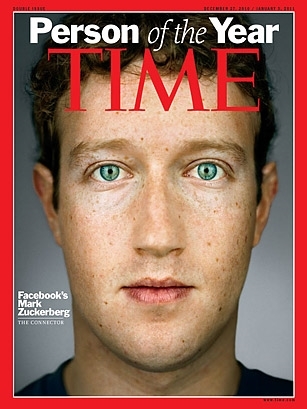
| Time Person of the Year 2010 Cover (http://content.time.com/time/specials/packages/article/0,28804,2036683_2037183_2037185-10,00.html) |
According to the Oxford Dictionary, a hero
is "A person, typically a man, who is admired or idealized for courage,
outstanding achievements, or noble qualities." However,
this definition is too general, and doesn't explain what noble qualities should
be admired. The Greek hero Odysseus and superhero Batman do not possess "noble
qualities," and although Odysseus's shrewdness and strength when conquering the
Cyclops or even Batman's intelligence and aggression in combat may seem heroic
to others, my perspective about a hero is slightly different. In my opinion, a
hero must defy social norms by pursuing personal goals and having a desire to
make a positive impact on society. True heroes win over the hearts of
others by going above and beyond the status quo. A hero must have the
determination to build his reputation by overcoming adversity and never
succumbing to failure. Ultimately, a hero must remain hopeful at the face of
adversity and feel capable enough to jump over any hurdle that may lie ahead.
 |
| ( http://www.forbes.com/sites/ryanmac/2014/05/14/facebooks-mark-zuckerberg-turns-30-a-look-back/) |
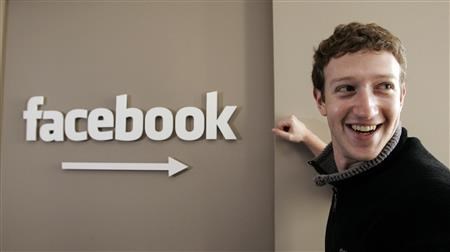
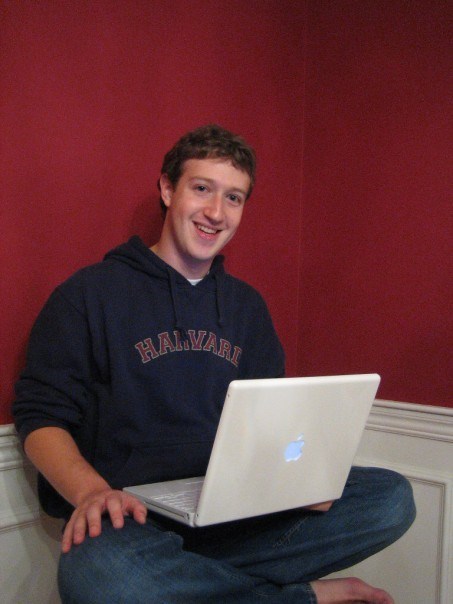
"People who are crazy enough to think they can change the world are the ones who do" (Steve Jobs). In 2004, a man envisioned a system that connects people to one another and seamlessly exchanges information. Even though his peers found the idea absurd and impossible to fabricate, the man pursued the idea because he believed in its potential. This idea is Facebook, and the man behind it is Mark Zuckerberg. When the famous co-founder of Facebook was twelve years old, he gained an interest in computers and programming. His burgeoning interest continued to flourish, and by the age of 13, he was taking graduate courses at a local Mercy College. Aside from programming, Zuckerberg was also a stellar student, but in order to pursue his passion for computer science, he left his local high school to attend Phillips Exeter Academy. Before Zuckerberg graduated from high school, AOL and Microsoft noticed Mark's knack for programming and offered the teenager a job at their company; however Mark rejected the offer to attend Harvard. While attending the Ivy League, he founded Facebook, and later dropped out of Harvard to dedicate himself to Facebook full-time. "Forbes's 2008 Youngest Self-Made Billionaire" and "Time's 2010 Person of the Year" are only a few titles acquired by the young CEO of Facebook. Despite being born into an average middle-class family, he utilized his passion for programming to create and improve the biggest social media breakthrough, Facebook. Mark Zuckerberg's determination and self-confidence motivates others to strive towards their goals and believe in their own capabilities, thereby making him a true hero.
 |
| ((http://matt-welsh.blogspot.com/2010/10/in-defense-of-mark-zuckerberg.html ())) |
By pursuing personal challenges and attempting to constantly improve Facebook, Zuckerberg's determination continues to set an example for others to strive for. Zuckerberg creates personal challenges for himself, in order to better himself: "Every year, the Facebook CEO sets some sort of challenge for himself. In 2010, he tried to learn Mandarin. In 2009, he vowed to wear a tie to work every day to show he was serious about Facebook's growth (and possibly get a break from the signature T-shirt and hoodie he wears to every public event). The annual challenges sometimes make headlines, most famously in 2011 when Zuck vowed to eat animals only if he had killed them himself. That pronouncement led to a mixture of backlash and praise from animal-rights activists." (CNN). Zuckerberg acknowledges his flaws and works on improving himself by setting annual goals. Other CEOs do not engage in acts of self-improvement, however Zuckerberg is determined to take on challenges, even when he may receive criticism for doing so. He creates a positive impact on society and motivates his fans to set personal goals. Zuckerberg's vow to become partially vegetarian gained exposure, and allowed his fans to follow in his footsteps. In addition to setting goals, Zuckerberg must try to overcome any mistakes he faces when trying to accomplish his goals for Facebook: "His EQ has its limits. He'll play at fallibility - 'Almost any mistake you can make in running a company, I've probably made,' he says..." (Time). Zuckerberg acknowledges his failures, in order to avoid future miscalculations. One gains experience through mistakes, and Zuckerberg's errors has allowed him to better his understanding of the business environment, resulting in his various titles. Zuckerberg sets the example that even successful businessmen make mistakes, however instead of sulking about it, one must strive to improve upon them. Zuckerberg's steps for self-improvement exemplify his determination, a quality a true hero must possess.
 |
| (http://hypervocal.com/news/2012/mark-zuckerberg-cnbc-2004-interview/) |
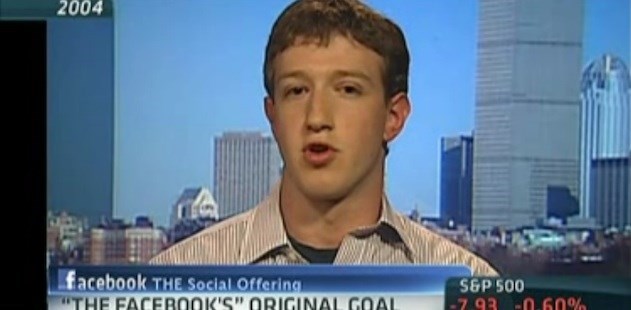
Zuckerberg's self-confidence when making decisions for Facebook helped him ignore temptations and believe in his abilities. During Facebook's early life, more companies were interested in purchasing the small start-up: "About this time Zuckerberg turned down a $1 billion buyout from Yahoo!..." (Newsmakers). Zuckerberg ignored the revenue and his temptation to see what he would gain by accepting the offer. He knows that money is hard to earn, however by accepting the offer, he would not be able to gain any business experience. After rejecting the offer by Yahoo, Zuckerberg talks about his vision for Facebook: "'I think the next five years are going to be about building out this social platform,' Zuckerberg says, on a long walk around Facebook's neighborhood in Palo Alto in December. '...If the last five years was the ramping up, I think that the next five years are going to be characterized by widespread acknowledgment by other industries that this is the way that stuff should be and will be better'" (Time). Zuckerberg turns down the offer because he is confident that there is more potential in Facebook. Instead of monetary gain, Zuckerberg wants to connect the people of America to their friends and family. Zuckerberg's tone shows that he is confident in his ability and that he will continue to persevere in order to obtain success at all costs. His self-confidence exudes bravery in a different way. With his self-confidence. He is able to slash pessimistic thoughts and shield optimistic thoughts. In a society where everything is uncertain, self-confidence boosts one's belief in themselves, resulting in more positive outcome for society. Zuckerberg's self-confidence gave him the power to ignore temptations and pursue his passion, and all he needed to do was believe in himself.
 |
| ((http://www.hollywoodreporter.com/news/congressmen-send-facebook-ceo-mark-31408 (Justin Sullivan))) |
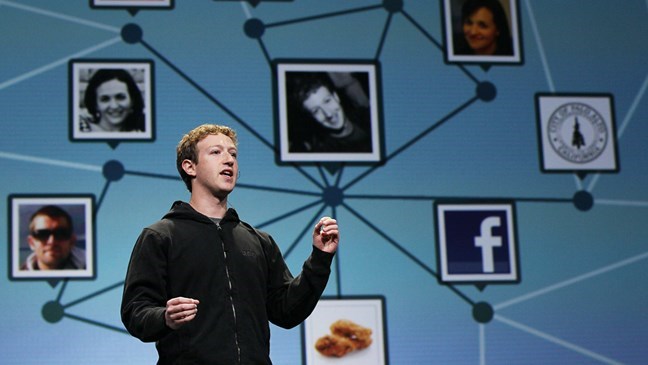
As Zuckerberg once said: "'My goal was never to just create a company. A lot of people misinterpret that, as if I don't care about revenue or profit or any of those things. But what not being 'just' a company means to me is building something that actually makes a really big change in the world'" (Zuckerberg). Through Zuckerberg's words, he emphasizes that Facebook to him means something more than just a source of revenue. Zuckerberg fabricated Facebook to change how the world exchanges its information with one another. He admits that at first, the idea of a social network seemed absurd to him, but he looked past that and kept progressing to make his idea a reality. His empowering story makes others feel like they have a chance to accomplish success: "Harvard freshman Madeline Halimi believes Zuckerberg's presence on campus may galvanize another generation of starry-eyed Harvard students" (Ibtimes). Zuckerberg thought that he could change the world, and by applying determination and self-confidence, he ended up doing exactly that.
Works Cited
Grossman, Lev. "Person of the Year 2010." Time.
Time Inc., 15 Dec. 2010. Web. 19 Jan. 2015.
"Mark Zuckerberg." Newsmakers. Vol. 2.
Detroit: Gale, 2008. Biography in Context. Web. 2 Jan. 2015.
Kelly, Heather. "Mark Zuckerberg's Bizarre New Self-improvement
Goal - CNN.com." CNN. Cable News Network, 13 Sept. 2013. Web. 19
Jan. 2015.
Smith, Dave. "Mark Zuckerberg Returns to Harvard,
Inspires Students." International Business Times. IBT Media Inc., 8
Nov. 2013. Web. 19 Jan. 2015.
Page created on 3/31/2015 4:58:13 PM
Last edited 3/31/2015 4:58:13 PM