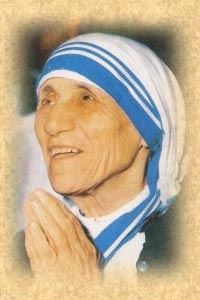
 Mother TeresaMother Teresa Praying"You're alive. Do
something. The directive in life, the moral imperative was so uncomplicated. It
could be expressed in single words, not complete sentences. It sounded like this:
Look. Listen. Choose. Act." (Barbara Hall). An Albanian woman, who goes by
Mother Teresa, learned to live through powerful words like these. Born in
Skopje, Yugoslavia in 1910, Agnes Gonxha Bojaxhiu was raised by a wealthy
family. Agnes lived a glorious childhood, given an education and a fun life.
Following the footsteps of her religious mother, twelve year old Agnes declared
she would serve God's calling to help the poor. At the age of eighteen, Agnes left
her home to travel the world, answering the cries of those in need. In 1928,
she became a teacher, educating the slum girls of India. Realizing there were
people who had far worse living conditions than her students, her second
calling was to help the poorest of the poor. Later adopting the name of Mother
Teresa, she traveled the world, opening countless schools, hospitals, and homes
to offer care for the poverty stricken citizens of the streets. Other than
receiving numerous awards such as the Nobel Peace Prize in 1979, Mother Teresa
received the gift of pure happiness when she saw the faces of the people she had
helped. Faces of hope, faith, and life pushed her to become even more active in
her miraculous work. Often known as the "Saint of the Gutters",
Mother Teresa's devotion to her works, selfless actions, and unconditional love
toward the needy of India led her to become one of the world's most
inspirational heroes.
Mother TeresaMother Teresa Praying"You're alive. Do
something. The directive in life, the moral imperative was so uncomplicated. It
could be expressed in single words, not complete sentences. It sounded like this:
Look. Listen. Choose. Act." (Barbara Hall). An Albanian woman, who goes by
Mother Teresa, learned to live through powerful words like these. Born in
Skopje, Yugoslavia in 1910, Agnes Gonxha Bojaxhiu was raised by a wealthy
family. Agnes lived a glorious childhood, given an education and a fun life.
Following the footsteps of her religious mother, twelve year old Agnes declared
she would serve God's calling to help the poor. At the age of eighteen, Agnes left
her home to travel the world, answering the cries of those in need. In 1928,
she became a teacher, educating the slum girls of India. Realizing there were
people who had far worse living conditions than her students, her second
calling was to help the poorest of the poor. Later adopting the name of Mother
Teresa, she traveled the world, opening countless schools, hospitals, and homes
to offer care for the poverty stricken citizens of the streets. Other than
receiving numerous awards such as the Nobel Peace Prize in 1979, Mother Teresa
received the gift of pure happiness when she saw the faces of the people she had
helped. Faces of hope, faith, and life pushed her to become even more active in
her miraculous work. Often known as the "Saint of the Gutters",
Mother Teresa's devotion to her works, selfless actions, and unconditional love
toward the needy of India led her to become one of the world's most
inspirational heroes.
When Mother Teresa became a nun, she swore to devote her life to aid the victims of poverty, and since then, she had never stepped away from her duties. Throughout her lifetime, Mother Teresa was greatly appreciated for the many lives she had affected. However, there were always those who critiqued and challenged her organizations: "In a 1994 British television documentary, Hell's Angel: Mother Teresa of Calcutta, accused her of taking donations without questioning sources" ("Teresa, Mother"). After multiple cases of harsh judgments and critiques, Mother Teresa ignored their remarks and continued to care for others. Without any complaints or signs of struggles, Mother Teresa learned to take the criticism in a very subtle way, displaying a strong stand for her beliefs. Not only were critics part of Mother's Teresa's life, but as she aged, she suffered from multiple health complications, such as mild malaria and minor heart attacks. Despite her declining health: "during the next 47 years, her order grew to include 5,000 nuns and brothers operating more than 2,500 orphanages, clinics, and hospices in more than 120 countries, including the United States" (Parello). Mother Teresa sacrificed endless hours organizing her work and letting people know about her cause. The amount of effort displayed in her success demonstrated true dedication in spite of her personal issues. Neither critics, age, nor health hampered Mother Teresa from pursuing her calling to aid the poor.
To a celebrity, fame and money are keys to happiness and success. But to Mother Teresa, giving was definitely better than receiving, and she often displayed selfless actions to do that. With all the money given to her, Mother Teresa could've easily became a millionaire, but she displayed no signs of wealth: "The woman who brought in millions of dollars to support her causes lived on a rupee (about four cents) of food per day and little more than four hours of sleep per night. She only owned three saris and packed two when she traveled" ("Teresa, Mother"). Mother Teresa truly did not care for materialistic things or a beautiful image, thinking it was not necessary. She believed that if you spent time benefiting the world or doing what you loved, it would lead to great success. Mother Teresa was viewed as very humble when she heroically received the Noble Peace Prize: "When she won the 1979 Nobel Peace Prize, accepting her award in the same $1 white sari she donned when she began her order, she convinced the committee to forego the traditional ceremonial dinner to add the money to her prize winnings, a total near $192,000. She used the money to build more homes for victims of leprosy" ("Teresa, Mother"). With all of the luxuries that could've been hers, Mother Teresa didn't care to think of herself. Instead, she thought about the happiness she could give to people who were restricted from enjoying life. The fortune or recognition was not what Mother Teresa intended to receive when she had her calling. It just happened to come her way and even then, she diverted the attention to the people who deserved it more.
When she sought to offer service, Mother Teresa saw beggars scrounging for food, bodies being eaten by rats, and bones as thin as branches. Displaying love and compassion, Mother Teresa: "began to see the need not only or the education for the poor, but for a place of the street people of Calcutta to die with dignity. 'They like animals,' Mother Teresa said to those she cared for. 'At least they die like human beings'" ("Teresa, Mother"). The poor of India were never looked at as real humans, and due to their caste system, were referred to as the "untouchables". Mother Teresa treated them like royalty by caring for and loving them. Mother Teresa's goal was to remind them of the real meaning of life: joy. No matter what social class they belonged to, Mother Teresa didn't hesitate to offer a hand. Continuously demonstrating great acts of love through all ages, she believed life was important: "in 1982, when she was 72, Mother Teresa visited war-torn Beirut, Lebanon, walking across the front lines of battle to rescue dozens of children"(Parello). Although Mother Teresa was 72 at the time, she had the energy of a young person, risking her life to save helpless children. Primarily thinking of the children's safety instead of her own, saving lives showed how much she adored people. Mother Teresa gave love to those who never experienced what it felt like to be treated as human beings.
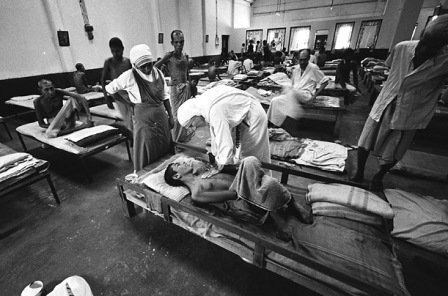 Mother TeresaClinics like these housed the poor
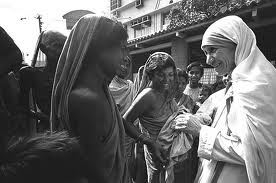 Mother TeresaMother Teresa with local Indian children
Works Cited
Muggeridge, Malcom. ""Mother Teresa Speaks: Interview by Malcom Muggeridge and Mother Teresa."Mother Teresa of Calcutta Center. N.p., 1971. Web. 25 Mar 2012.
"Teresa, Mother." Newsmakers. Detroit: Gale, 1998. Gale Student Resources In Context. Web. 22 Mar. 2012.
Parello, Jennifer. "Mother Teresa: Saint of the Gutters." World Book Advanced. World Book, 2012. Web. 25 Mar. 2012.
Page created on 4/23/2012 12:00:00 AM
Last edited 7/26/2026 4:18:53 AM