 |
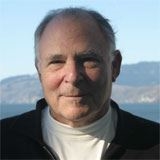
| Paul Ekman (http://www.dalailamacenter.org/​vancouverdialogues/​2006/images/speakers/​ekman.jpg) |
I first became aware of my Personal Career Hero when I was watching a T.V. show called "Lie To Me" on which he is based. I was already very interested in lie detecting and the reasons that make people lie and just how to read people. I wanted to understand how to catch the tell-tale signs that people make when they are lying. I am extremely interested in his career because it enables me to deal fairly with people when I know and can catch that they are not telling the truth and so I won't be tricked and just be fed false information. I am intrigued by the fact that all people make the same expressions because the same muscles control them. Although body language is variable between cultures and societies around the world, facial expressions stay mostly the same when the same emotion is being expressed.
Paul Ekman is a psychologist who studies the human face. He uses a system called FACS, Facial Action Coding System to detect fleeting emotions that barely appear on a person's face before disappearing and, most of the time, they are not even aware of these expressions called "micro expressions." However, to become a psychologist, usually around 5 to 7 years are spent on graduate study, concluding in a PhD or a PsyD. Those who are interested in clinical study, however, should focus on a PsyD. Those concentrating on research should reach more toward a PhD. Their education usually consists of studying personality development, the history of psychological problems and the science of psychological research After that, a 1-2 year internship is required to become a psychologist. The student is able to use practical portions of the job like methods of treatment, analytical training, problem-solving techniques, psychological theory, and behavioral therapy. Even after that, most states require 1-2 years of practical work experience supervised by an authorized mental health professional to finally become a licensed psychologist.
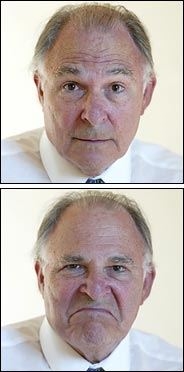 |
| Examples of universal facial expresions (http://www.phayul.com/images/news/​articles/20030804225716tf.jpg) |
From the beginning, Paul Ekman was interested in nonverbal communication. He read Freud's New Introductory Lectures and was very interested in Freud. He could quote him on any topic and read everything that Freud had written. He was also inspired by Darwin, SIlvan Tompkins, and Duchenne de Boulogne and claims to be a "descendant of all three" (Kreisler 2). In 1966, the DARPA, Defense Department agency that was formerly called ARPA, gave Ekman a grant to conduct basic research on the native people in the isolated areas on New Guinea. At this time, there was an argument where one side argued that facial expressions are culturally based, meaning that your facial expressions depend on where you are from and your media exposure, and the other side argued that all facial expressions are universal and culture, location and media didn't matter. Darwin and Tomkins supported that latter. Ekman saw this as a prime opportunity to prove one side over the other since the New Guinean people had not ever been exposed to the media and were very isolated on their island. There was not one expression that he had not seen before. This proved Darwin and Tomkins correct and has become one of his more famous experiments.
He has worked with people ranging from Central Intelligence Agency and the Federal Bureau of Investigation to local police forces. He has used his career to catch assassins, terrorists, and other criminal activity. Dr. Ekman has also helped the entertainment industry by using his skill to help create more realistic expressions to animations and cartoons. However, reading emotions is one thing, and finding the source of the emotion is another. When working with law enforcement and antiterrorism, finding the source is the main things that Ekman has students take away from the lesson.
In order to life a live like my PCH, my high school goals are to take AP Psych next year and take many math and science classes like AP Biology in the following years. My college goals are to attend UC Berkeley for undergraduate school and UC San Francisco for my graduate school. My lifetime goals are to live a successful, content life where I am at a stable place and I am not in need of anything. My goals are to make a difference in the world and make it a better place for people to live and learn and grow. I am striving to make an impact in research and just be content in life and work.
Page created on 4/3/2009 12:00:00 AM
Last edited 4/3/2009 12:00:00 AM