 |
| (https://profiles.nlm.nih.gov/ps/retrieve/Narrative ()) |
Christopher Reeve once said, "A hero is an ordinary individual who finds the strength to persevere and endure in spite of overwhelming obstacles."("Christopher Reeve Quotes.") Reeve is trying to propose that a hero has to stand out and stay strong even if there are challenges blocking their way. A hero can be found anywhere and at anytime and should have done something that would benefit the world in either a small or big way. A hero must be someone who should have traits such as: bravery, resilience, and steadfastness.
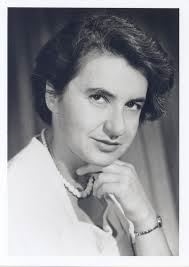
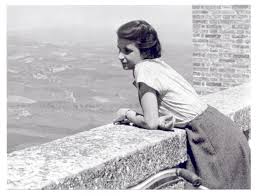
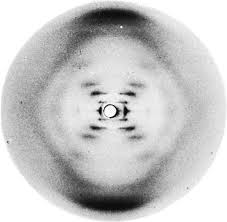
Rosalind Franklin was an inspiration to others because of her strengths and should be recognized as a hero. She was a Jewish girl born on July 25 in London who decided at the young age of fifteen to become a scientist ("Rosalind Franklin" World). Even though her father did not support her career choice, she studied hard and eventually received her father's consent to go to Cambridge University where she eventually earned a PhD in physical chemistry(Ignotofsky 79). At this time, World War II was going on, but Franklin was undeterred. Most of her colleagues left the lab to either join the war, or help with the injured soldiers. In the May of 1952, Franklin "captured the sharpest, clearest photo of the B form ever taken" (Polcovar 84) at King's College which became one of the most important discovery in the science world. Unfortunately, her work was later stolen by her colleague and she left her job to continue studying coal until her death. She is an example of a hero who possessed the courage to do what others were not willing to do, the resiliency to bounce back, and the determination to keep going even when obstacles got in her way. Through Rosalind Franklin's display of courage, resiliency, and determination, she has become a woman in the field of science who was a hero to many.
 |
| (https://profiles.nlm.nih.gov/ps/retrieve/Narrative ()) |
With bravery and courage, Franklin continued pushing forward with her career choices. When Franklin first began working at Cambridge, she was assigned a flawed lab to do. She wrote a complaint, but Norrish, the person who designed the lab, "refused to even look at the report, instead directing Franklin to repeat the experiments. She stood up to him." (Polcovar 33) Franklin knew she was right, her act of defiance was courageous because, as a woman, she was socially inferior to men. Also, Norrish was a full physical chemist and Franklin was only a researcher under him. Franklin upset the order and stood up for what she believed was right. Later in life, Franklin was diagnosed with cancer but still "continued working throughout the following two years, despite having three operations and experimental chemotherapy. She experienced a 10-month remission and worked up until several weeks before her death on April 16, 1958, at the age of 37."("Rosalind Franklin." Biography.com) Franklin loved her work so much that she was determined to keep working for as long as she could-- all the way up to a few weeks before she passed away. It took a lot of courage for her to keep going even when she knew she was on the verge of death. Franklin was a courageous person who did not let anything get between her and what she wanted to accomplish and she stood up to what she believed.
Also, Franklin was also a hero because she had the resiliency to get back up when there were obstacles in her way. At King's College, where Franklin photographed the DNA strand, she had a colleague who was "reported to have had difficulty accepting a woman as his peer. Regardless, he obtained one of Franklin's DNA photographs and, without permission from either her or Randall, showed it to her competitors at Cambridge--James Watson and Francis Crick" ("Rosalind Franklin." World of Biology). Because Rosalind entered a career that consisted of mostly males, her associates "had difficulty accepting a woman as [their] peer". Even though she was not quite fully accepted, she still remained in her job. After her colleague stole her work, Randall, the person who hired her to work on genetics("The Rosalind Franklin Papers: The DNA Riddle: King's College, London, 1951-1953."), "let Franklin leave on the condition that she would not work on DNA, [so] she turned her attention back to studies of coal. In five years, Franklin published 17 papers on viruses, and her group laid the foundations for structural virology"("Rosalind Franklin." Biography.com). After her work was taken by Wilkins, she did not quit, and instead pursued a different branch of science. Because she was passionate about her career choice, she picked herself up, decided not to fall into despair, and started a new job. Franklin demonstrated her resiliency by not giving up and by resuming her work in the science field.
 |
| (https://www.emaze.com/@AOOQWCZO/Presentation-Name ()) |
Lastly, Franklin was determined and did not back down in the face of challenge. When Franklin first told her father that she wanted to pursue a career in science, "Her father adamantly opposed her attending university, insisting she go into social work. However, she ultimately gained his approval to attend Newnham College at Cambridge University" ("Rosalind Franklin." World of Biology). Franklin's father initially disapproved of her career choice but she worked hard and was accepted into Cambridge University. Only then was she given her father's consent for her to go. When Franklin was just accepted into Cambridge, "Franklin often worked for eight hours at a time in the Cavendish Laboratory, the home of Cambridge's Physics Department." (Polcovar 25) Submersing herself almost completely in science, she spent most of her time in the laboratory where she worked on the substance and structure of atoms and molecules. Franklin worked hard for her discoveries and strived to do well. These two examples of determination were just a few instances in her life where she pushed forward. Franklin was a hero because of her courage, resiliency and determination. She courageously stood up for herself, had the resiliency to come back up when things were not going her way, and the determination to move on. Franklin was an inspiration to others because she was a person who kept her goals in her sight since she was fifteen and did not give up easily. She has encouraged me to have faith in myself and to be unfazed by challenges. Her determination to accomplish her goals were extraordinary, and her actions admirable. Franklin persevered in spite of the many obstacles placed in her path and because of that, has become my hero. Works Cited "Christopher Reeve Quotes." BrainyQuote, Xplore, www.brainyquote.com/quotes/quotes/c/christophe141891.html?src=t_hero. Accessed 11 May 2017. Ignotofsky, Rachel. Women in Science: 50 Fearless Pioneers Who Changed the World. New York, Ten Speed Press, 2016. Polcovar, Jane. Rosalind Franklin and the Structure of Life. Greensboro, NC, Morgan Reynolds Pub., 2006. "Rosalind Elsie Franklin." World of Physics, Gale, 2006. Biography in Context, link.galegroup.com/apps/doc/K2434100078/BIC1?u=powa9245&xid=e056a67b. Accessed 5 May 2017. "Rosalind Franklin." Biography.com, A&E Networks Television, 7 July 2016, www.biography.com/people/rosalind-franklin-9301344. Accessed 3 May 2017. "Rosalind Franklin." World of Biology, Gale, 2006. Biography in Context, link.galegroup.com/apps/doc/K2431100121/BIC1?u=powa9245&xid=9bd3e510. Accessed 27 Apr. 2017. "The Rosalind Franklin Papers: The DNA Riddle: King's College, London, 1951-1953." U.S. National Library of Medicine, National Institutes of Health, profiles.nlm.nih.gov/ps/retrieve/Narrative/KR/p-nid/187. Accessed 10 May 2017.
Page created on 5/22/2017 12:00:00 AM
Last edited 5/22/2017 12:00:00 AM