 |
| (https://www.giantbomb.com/articles/apple-founder-s |
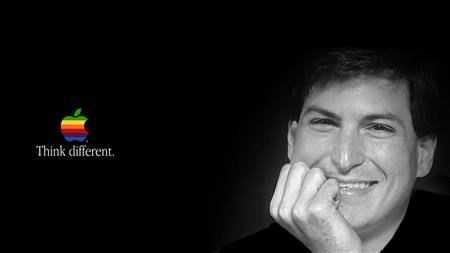
Typically, when you hear the word "hero", don't you think of a superhero like Batman or Superman? Although they're superheroes who save the world in comics, movies, and TV shows, they are not real. However, in our society today there are many heroes who help change our world. They may not be able to fly, carry a falling building, or run at the speed of light, but they do impact our world in many ways. One of these people was the late Steve Jobs. He affected our society today in many different ways, but the largest way was through Apple Inc. Without Apple, technology today would be much different because Jobs changed the way people use and view computers: "Computer designer and corporate executive Steve Jobs (1955-2011) was the co-founder of Apple Computers. He helped create one of the first affordable personal computers for home use and launched one of the largest industries in the United States" (Steven Paul Jobs). Steve Jobs helped revolutionize technology in many ways with his partner Steve Wozniak. The late co-founder of Apple, Steve Jobs, was born on February 24th, 1955 in San Francisco, California and passed on October 5th, 2011 in Palo Alto, California. Steve Jobs was a hero because he never gave up no matter what and was a risk taker.
Steve Jobs was a hero because he never gave up especially when he faced huge setbacks. Jobs always persevered in many different ways like when he was released from Apple, a result of him and another member clashing constantly and rarely seeing eye to eye. Since Jobs was still young and considered immature, the board of directors had to make a difficult decision to release him and keep the mature and well experienced adult: "By 1985, following internal conflicts at Apple Corporation, Steve Jobs resigned from the company he had founded, retaining only his title as chairman of the board of directors. In 1996 the film Toy Story was released. Produced completely with PIXAR computer animation, it was an enormous success. PIXAR's market value for Steve Jobs, who owned 90 percent of the company at the time, climbed suddenly to $1 billion. Within a short time after PIXAR's success Jobs made headlines again" ( Steven Paul Jobs). Even though Jobs was facing a struggle at Apple and was released, he didn't give up all of his He went on to do other things like startup computer company NEXT and buy PIXAR. Because of his great success with Pixar, Jobs was well known again and was eventually brought back to Apple. Jobs easily could've given up, but he did not. Instead he persevered through his rough time and it was all worth it. Jobs also never gave up when it came to getting things done. Once, he was invited to a conference at the Garden of Allah which is near San Francisco. At this conference there were well known executives who were much older than Jobs and had more experience than him. This, however, didn't seem to phase him: "Steve didn't care about their accomplishments. He was always comfortable in a fight. Challenges, confrontations: in his limited experience, this was how you got things done, this was how the great stuff broke through" (Schlender 21). When Steve Jobs went to conferences and meetings, there would always be people superior to him and people who had accomplished more than him. Jobs easily could have given up and not argued with them to get his point across because it was too "difficult" or "hard" because that person had more experience. None of that mattered to him. All that mattered to Jobs was getting things done no matter how it happened, or who he needed to face. Jobs is considered a hero because he persevered no matter what. Although he could've given up many times over he didn't, and the world is better for it.
 |
| (http://allthingsd.com/20120705/the-7-inch-ipads-biggest-critic-steve-jobs/) |
Steve Jobs is a hero because he took risks that were challenging. Throughout his life, Steve Jobs took multiple risks. One of these risks was when he dropped out of college. His birth mother wanted him to go to college, and his adoptive parents lived up to that promise by sending him to college. However, Jobs felt that it wasn't for him, and that there was much greater things he could be doing with his life. "After graduating in 1972 Jobs attended Reed College for two years before dropping out" (Steven Paul Jobs). Dropping out of school was huge risk for Jobs, especially because his mother wanted him to go, and his adoptive parents worked very hard in order for him to go to college. Because he took this risk, he was able to focus on what interested him, which was technology. Although this risk was slightly bad it still worked out fine because it lead to the creation of one of the greatest technology companies of our time. If Jobs had not taken that risk, Apple would've ceased to exist and our world today would be much different without it. For example, the iphone may not exist. Jobs also took risks when it came to focusing on creating new things and perfecting them. He always was thinking differently than the competition and that put him on top. "At a time when software was the model, he built hardware. At a time when everyone focused on the macro, he focused on the micro. He never did anything first, but he did it best. More than anyone else on the planet, he is responsible for fusing the human realm with the digital, for giving us the ability to encode our deepest desires and most intimate thoughts with the touch of a finger." "He's the Bob Dylan of machines," says Bono, who knew Jobs for years. "He's the Elvis of the hardware-software dialectic" (Goodell). Although other companies were focusing on things people were used to seeing in technology, Jobs took risks to look into new things such as hardware and micro. This was taking a risk because it could have all gone south and that would've meant people wouldn't buy Apple products which would have resulted in the end of Apple. But fortunately, that wasn't the case. It all worked out for Jobs and he succeeded, all because of a risk he had taken. Steve Jobs is considered a hero because he took risks. He didn't have to take any of these risks, but he chose to take them. He was willing to sacrifice everything just because he thought he had some good ideas that could've turned into nothing. He was willing to throw away his college education because he wanted to focus more on his hobbies, and he had no idea how big of a success it would later become.
 |
| (http://darkroom.baltimoresun.com/2012/10/40-memori ()) (right) |
Steve Jobs is considered a hero because he persevered through the most difficult of times, and took risks that were both good and bad. Steve Jobs showed his strength to persevere when he was released from Apple and went to make NEXT and buy PIXAR. Jobs also showed that he was a risk taker when he dropped out of college to pursue things that intrigued him. Jobs inspires both myself and others in many different ways. One of these way was his selflessness and his urge to change the world. "Jobs felt a deep restlessness to change the world, not just build a mundane business" (Schlender 20). Jobs inspired people was by wanting to do more than just have his own business. He wanted to use his business to help change the world and he did just that. Today, many others follow the path he made by using what they create to change the world for the better. Jobs is also an inspiration to many through his user-friendly devices. "Jobs was one of the most important figures in the development of the personal computer industry. The Apples and Macs produced by his company were user-friendly, enabling a whole generation of office workers and home users to become comfortable with computer use" (Steven P. Jobs). Jobs inspired people by making user-friendly tech. Today, many other companies are inspired by him to help make more uses for technology. Although Jobs is gone, he will forever be remembered as a hero to the world.
Works Consulted
Page created on 5/18/2017 12:00:00 AM
Last edited 5/18/2017 12:00:00 AM