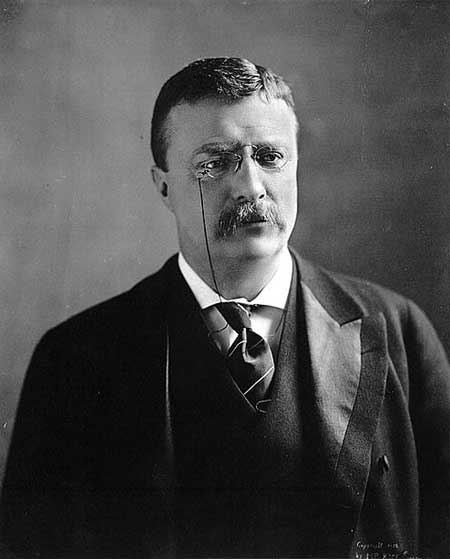
 Theodore Rooseveltlcweb2.loc.gov/ammem/pihtml/pi034.html - "Optimism is a good characteristic, but if carried to an excess, it becomes foolishness. We are prone to speak of the resources of this country as inexhaustible; this is not so" (Quotations). Theodore Roosevelt, the 26th president of the United States, greatly appreciated America's resources and conserved millions of acres of land. He was very influenced by his father and later on by William McKinley and William Strong, who both introduced him into positions of power ("Theodore Roosevelt." Historic, Contemporary). Roosevelt also organized the famous Rough Riders division of the US Cavalry. He was elected vice president of the U.S. New York was very important in his life, as his birthplace and where a large amount of his political life occurred ("Theodore Roosevelt." Contemporary). He experienced outdoor life in the Dakotas and became a war hero in Cuba ("Theodore Roosevelt." Historic). In 1895, Roosevelt began his 2 year term as president of the police board ("Roosevelt, Theodore). In 1901, he suddenly became president of the United States upon McKinley's assassination. Later, Roosevelt survived his own assassination attempt in 1912. When people think of Roosevelt, most people think of just a president, but he was much more. He was considered a hero because he possessed heroes' characteristics of leadership and vision. Leadership is a characteristic that makes others want to follow, which is essential for presidency. This trait was what allowed Roosevelt to carry out what he wanted to do. To have vision is to see future benefits of actions and policies. History has judged him to be correct in his visions of the need for conservation, and for ending conflict through mediation. Roosevelt was a hero because he contributed to world peace, he was visionary, and he was a conservationist.
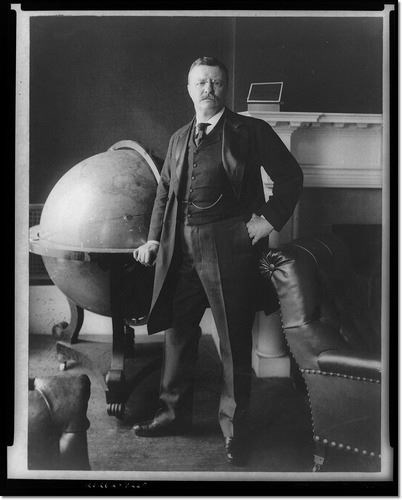 Theodore Rooseveltwww.encore-editions.com/theodore-roosevelt-full-length-portrait-standing-beside-large-globe-facing-front -Theodore Roosevelt contributed to world peace by helping prevent war between countries. Roosevelt believed that war could be avoided with a strong mediator working out differences. "Roosevelt also devoted a great deal of his time to Japanese-American relations, trying to uphold the 'Open Door Policy' of his predecessor through diplomacy and a show of force. In 1906, for acting as mediator between the combatants in the Russo-Japanese War (1904 to 1905), he became the first American ever to win the Nobel Peace Prize" ("Theodore Roosevelt." Contemporary). Being awarded this great honor showed that other countries appreciated his peace-making results. He was well qualified to negotiate because of his relationship with the Japanese. Roosevelt believed that the use of international influence would be effective in keeping the peace. "In 1902 President Roosevelt took the initiative in opening the international Court of Arbitration, which, though founded in 1899, had not been called upon by any power in its first three years of existence" ("Theodore Roosevelt - Biography"). The court had existed but it was through Roosevelt's strong authority that he influenced others to actually use it. This contributed to world peace because by opening court, people could now work out their differences through negotiation instead of through war. Roosevelt kept other nations at peace with each other and ended their conflict.
Theodore Roosevelt was also visionary regarding what would help the United States progress. Roosevelt and Pinchot were both visionary conservationists who worked together effectively. "Roosevelt is best known for his collaboration with Pinchot in appropriating public forest lands once controlled by private interests and 'reserving' them for 'our people unborn"' ("Theodore Roosevelt." Environmental). Roosevelt and Pinchot both liked nature and believed that it was important to protect land. They both wanted future generations to have natural places to enjoy. Roosevelt saw the potential uses for land, and he put his thoughts into action. "Aware of the strategic need for a shortcut between the Atlantic and Pacific, Roosevelt ensured the construction of the Panama Canal" ("Theodore Roosevelt." The). He managed to acquire the narrowest part of land on the continent to make the Panama Canal. This made travel and trade a lot easier since ships no longer had to go all the way around South America. Roosevelt was visionary and he acted upon those visions, however; he was perhaps the most visionary in conservation.
Theodore Roosevelt was a conservationist who conserved hundreds of acres of land and convinced others to do so as well. In 1910 conservation was a new thing and Roosevelt helped spread it. "Roosevelt called into being the first National Conservation Convention (1908), which helped spawn forty-one state conservation commissions by 1910" ("Theodore Roosevelt." Contemporary). The National Conservation Convention was a meeting that informed the others states about conserving. There wasn't a conservation convention on a national scale before this. He helped spread his interest in conserving nature by holding the convention and ended up convincing several others to follow his example in saving nature. Theodore Roosevelt was determined when it came to conservation and as a result, he was very effective. "Roosevelt entered the Presidency with the idea that the western dry lands could become productive through irrigation. One of his first initiatives was to work with congressmen representing western states to pass the Reclamation Act of 1902. Sixteen projects were soon initiated in those states" ("Theodore Roosevelt." Environmental). Roosevelt believed in the Importance of conserving farm land and felt determined to conserve the dry lands. He passed the act which benefited the people because they could now use that land to farm on. Theodore Roosevelt pioneered the conservation movement at a national level and convinced many other states that conserving was important.
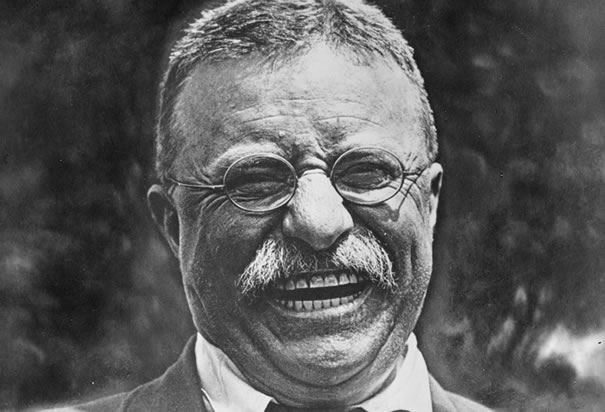 Theodore Rooseveltwww.history.com/photos/teddy-roosevelt/photo15 -By contributing to world peace, being visionary, and being a conservationist, Roosevelt displayed heroism. Roosevelt was forward-thinking in realizing the need for things that would benefit the United States, and he put his visions into action. He was an effective negotiator of peace between countries, and he prevented conflict by doing so. Additionally, he was an avid conservationist, who spread his beliefs nationally and inspired several of the states to follow his example. He was inspiring because he had courage and wasn't afraid to risk his life. "And though his men hunched behind rocks and trees during the charge up Kettle Hill--not San Juan--near Havana, Cuba, during the Spanish-American War, Colonel Roosevelt with bullets splattering all about him spurred his horse ahead, stopping periodically to allow a few noble comrades to catch up" ("Theodore Roosevelt." Historic). He was brave enough to risk his life when leading his troops into battle. He even stopped to wait for others to catch up with him, which endangered him even further by making him an easy target. He also set a great example since he "...was the youngest man to ever hold the office, [and the] first president to win a Nobel peace prize" ("Theodore Roosevelt." Historic). In spite of being young he was well prepared to be president. It is particularity notable that he was the youngest president in history and the first to win the Nobel Peace Prize. He showed that people don't have to be older to accomplish great things. Theodore Roosevelt was an excellent leader and had a great deal of courage. He was perhaps one of our greatest presidents because he had countless important accomplishments and left a lasting legacy on the United States.
Page created on 5/20/2012 12:00:00 AM
Last edited 7/26/2026 4:29:35 AM