By the time Biddy Mason died in 1891, her estate was worth about $300,000. In today’s money, over $10 million. While it was almost unthinkable that a woman in the 1890s could amass such wealth, it seemed even more improbable that a Black woman born into slavery could do so. Nevertheless, Mason did. By the end of her life, she was one of the wealthiest Black people in Los Angeles and among the city’s first Black landowners. Perhaps the key to her success lay in her simple philosophy: “If you hold your hand closed, nothing good can come in.”
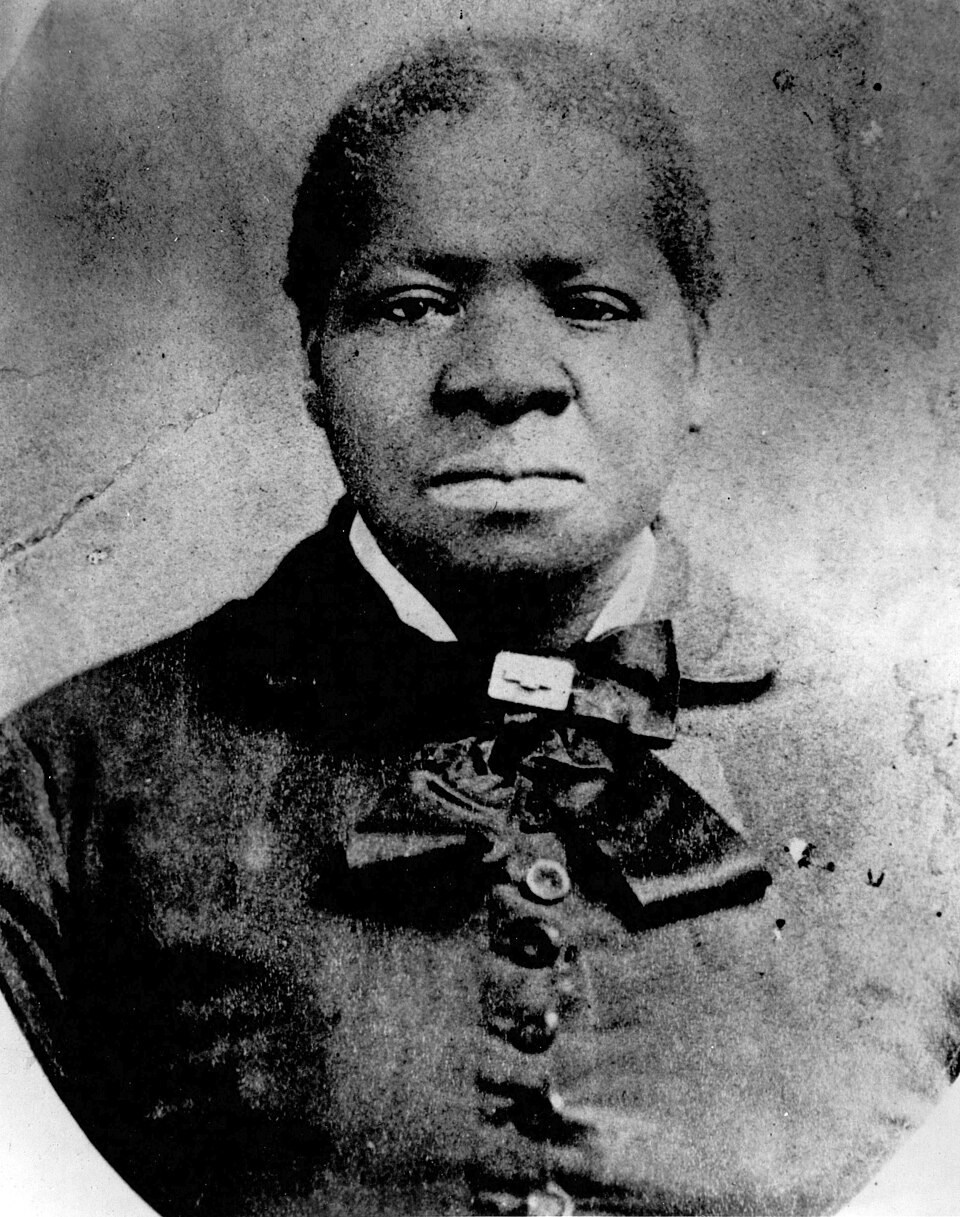 Portrait of MasonSee page for author, Public domain, via Wikimedia Commons
Born nearly two thousand miles away from Los Angeles in rural Georgia sometime around 1818, Bridget Mason entered the world in chains. She was one of approximately 1.5 million enslaved people living in the American South at the time. As such, the details of her early life are murky. Separated from her family at birth, Mason spent her youth laboring on several plantations throughout the Deep South before becoming the property of Robert Mays Smith and his wife, Rebecca Dorn Smith, likely as a wedding gift. Like many enslaved people, Mason was forbidden from learning to read and write. Instead, she developed practical skills that would later shape her future, gaining extensive knowledge of livestock, herbal medicine, and midwifery. During her time as a slave, Mason also gave birth to three daughters — Ellen, Ann, and Harriet — with at least one likely fathered by her enslaver.
Mason’s life changed dramatically in 1847 when the Smith family converted to Mormonism. Soon afterward, they abandoned their plantation — but not the people they enslaved — to join nearly one hundred Mormon pioneers migrating west to the Salt Lake Valley in Utah. Beginning on March 10, 1848, Mason embarked on a grueling seven-month journey that crossed the breadth of the continental United States. Traveling almost entirely on foot, she cared for her young daughters while herding livestock and likely serving as midwife for at least four births along the trail. When the wagon train did finally reach Utah, the stay proved short-lived. In 1851, the Smiths joined Mormon settlers establishing a new community in San Bernardino, California — right next to Los Angeles.
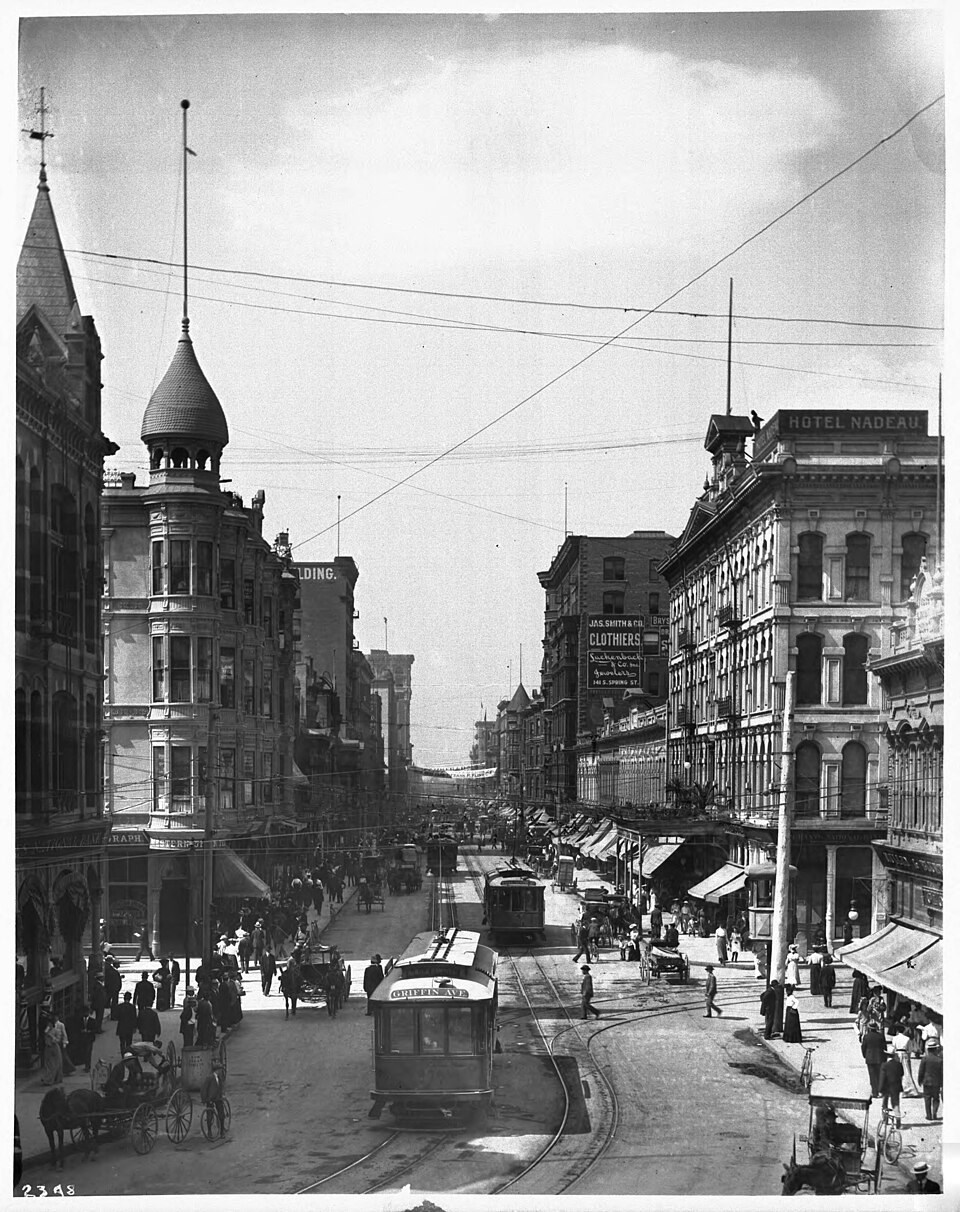 Spring Street, Los Angeles (c. 1900-1910)See page for author, Public domain, via Wikimedia CommonsAlthough California had entered the Union as a free state a year prior, slavery continued to exist in practice throughout parts of the state as enforcement of anti-slavery laws remained inconsistent. In San Bernardino, slavery was openly tolerated. Nevertheless, by 1855, Robert Smith feared he would lose his slaves. He prepared to move to Texas, where slavery was still legal. However, members of Los Angeles’ small — but growing — free Black community learned of Smith’s plans and alerted the police; leading to Smith being intercepted and his slaves placed under protection of the state. The ensuing Mason v. Smith case culminated on January 21, 1856, when District Judge Benjamin Hayes declared Mason, alongside fourteen other slaves, “free forever.”
Remaining in Los Angeles, Mason moved herself and her daughters into the home of Robert Owens, a prosperous Black businessman whose family had helped secure her freedom. She soon found employment as a nurse under one of the city’s leading physicians, earning widespread respect for placing her own health at risk during a devastating smallpox epidemic in the early 1860s. Mason became better known as a midwife, delivering hundreds of babies throughout Los Angeles over the course of her career. Families from across the city’s diverse communities sought out her services, and many affectionately came to know her as “Grandma Mason” or “Auntie Mason.” Her work provided a steady income of approximately $2.50 per day, which is around $100 in today’s dollars. After a decade of careful saving, she began to invest in her future.
Perhaps following the advice of her friend Robert Owens, Mason purchased her first parcel of land for $250 in 1866. When she first bought the two plots, they were well outside of Los Angeles’ commercial center: an area of a few small wooden houses interspersed between vineyards and connected by dirt roads. Originally intended as little more than a family homestead, the investment would prove remarkably farsighted. As Los Angeles expanded during the following decades, Mason’s land would soon find itself in the middle of the city’s financial district. Property values soared, and the once-modest purchase became one of Mason’s greatest assets. After selling a portion of the land, and allowing her grandson to open up a stable on it, she used the profits to buy up more plots in what was becoming downtown Los Angeles. It wasn’t long before Mason was one of the city’s wealthiest residents.
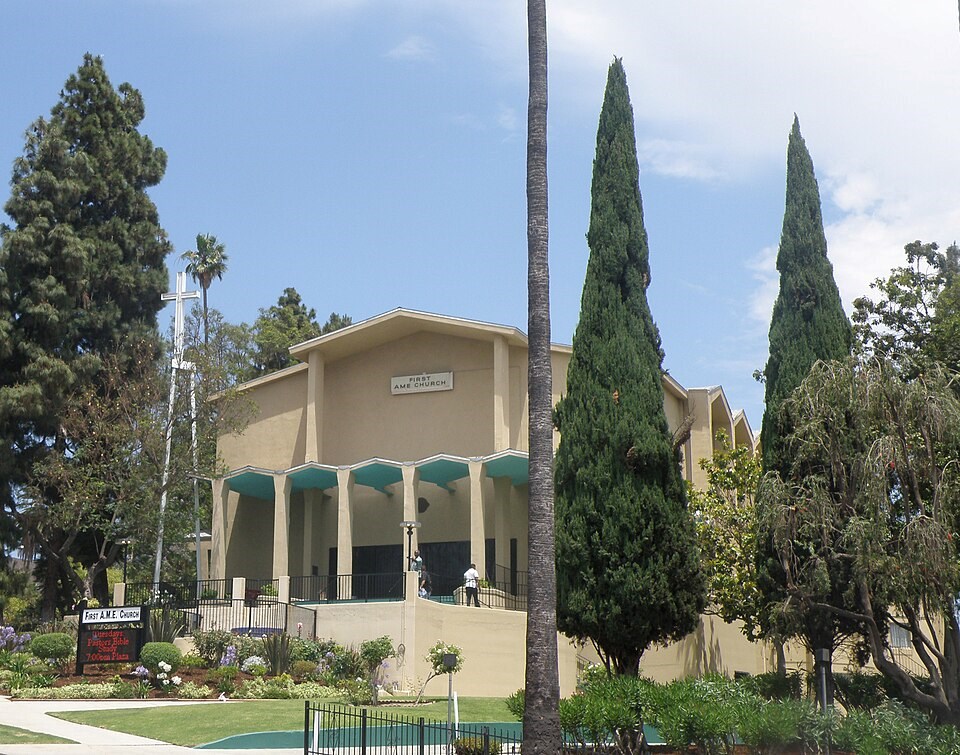 First AME Church Los AngelesLaurie Avocado, CC BY 2.0, via Wikimedia CommonsDespite her financial success, Mason remained committed to helping those around her. Friends, neighbors, and strangers alike all knew her home as a place where anyone in need could receive help. This kindness extended beyond her doorstep, with Mason opening up a small grocery in her neighborhood for the expressed purpose of feeding needy families displaced due to seasonal flooding. In 1872, she became a founding member and principal benefactor of the First African Methodist Episcopal Church of Los Angeles, the city's first Black church. The congregation initially gathered inside Mason's own home before she donated land on which a permanent church could be built. The church quickly became the spiritual and civic center of Los Angeles' Black community, serving not only as a place of worship but also as a center for education, mutual aid, and civil rights advocacy. Mason's generosity helped strengthen generations of Angelenos long after her lifetime.
Page created on 7/10/2026 6:42:44 AM
Last edited 7/13/2026 12:01:47 PM
Hayden, Dolores. Biddy Mason's Los Angeles 1856-1891.California History. Vol. 68, No. 3 (Fall, 1989), pp. 86-99 (14 pages)
, . Bridget “Biddy” Mason. [Online] Available https://freedomcenter.org/heroes/bridget-biddy-mason/.
, . Bridget "Biddy" Mason. [Online] Available https://www.nps.gov/people/biddymason.htm.