REPRINTED WITH PERMISSION FROM THE CHRISTIAN SCIENCE MONITOR
In 2024, UNESCO recognized the skill in making attiéké, a fermented cassava dish, as Côte d’Ivoire’s intangible cultural heritage. And though industrial production of attiéké exists on a small scale here, the artisanal way of transforming cassava does not appear to be going anywhere anytime soon.
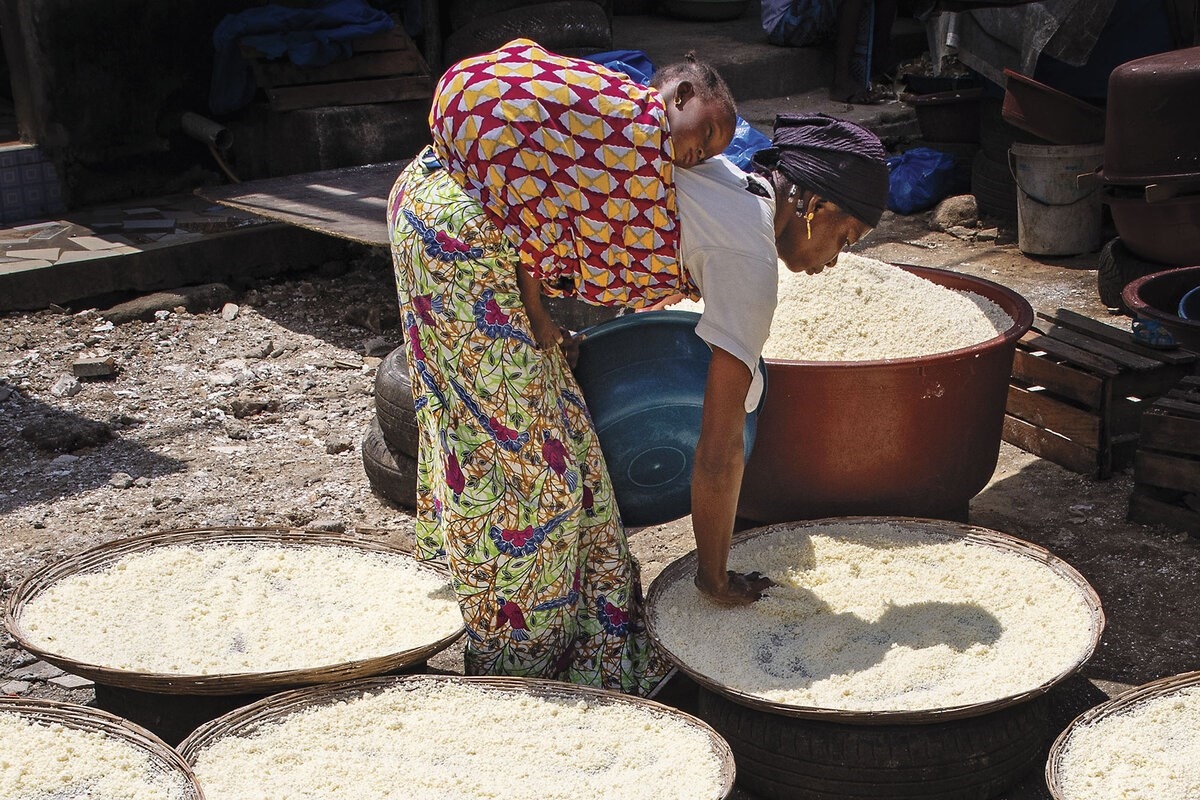 SUPER BOWL: A woman checks on cassava as it dries in the sun in Anono, Côte d’Ivoire. The West African country primarily consumes this staple food as attiéké, a fermented and steamed cassava dish.Melanie Stetson Freeman/Staff
| Anono, Côte d'Ivoire
On a wide avenue off the main road in this suburb of Abidjan, women sit fanned out in small groups, crouching over buckets as they chop and soak a homely brown root vegetable. Piles of what looks like couscous are spread across sheets of black plastic tarp.
At first, the scene appears haphazard, but what I’m seeing are actually highly efficient, open-air production lines of attiéké – Côte d’Ivoire’s national dish.
In one corner, a woman in a flowery purple dress shaves off the rough skin of the cassava root. Another woman soaks the smooth, white stalks in tubs of water. After the root gets ground down and fermented, the water is squeezed out from the pulp with a steel press. The granules then dry in the sun.
A woman known as Madame Hortense, who operates one attiéké production line, leads me into a simple cement house, where a woman is shaking the granules in front of a fan to remove leftover fibers. Another stands sweating over a metal pot, turning the attiéké with a wooden spatula as it steam cooks.
Attiéké can be paired with almost anything – fish, chicken, shrimp, boiled eggs, avocado – and is “best eaten with your hands,” says Madame Hortense. “It just tastes better that way.”
Attiéké production employs upward of an estimated 300,000 women, according to the Ivorian Ministry of Agriculture, and has pulled many out of poverty.
In 2024, UNESCO recognized the skill in making the fermented cassava dish as Côte d’Ivoire’s intangible cultural heritage. And though industrial production of attiéké exists on a small scale here, the artisanal way of transforming cassava does not appear to be going anywhere anytime soon.
“We do have machines that can do all this,” says Madame Hortense, pointing toward a woman squatting on the ground, sifting attiéké through a rectangular pan. “But people prefer the flavor of attiéké when it’s made like this, by hand.”
Albain Ade contributed reporting for this article.
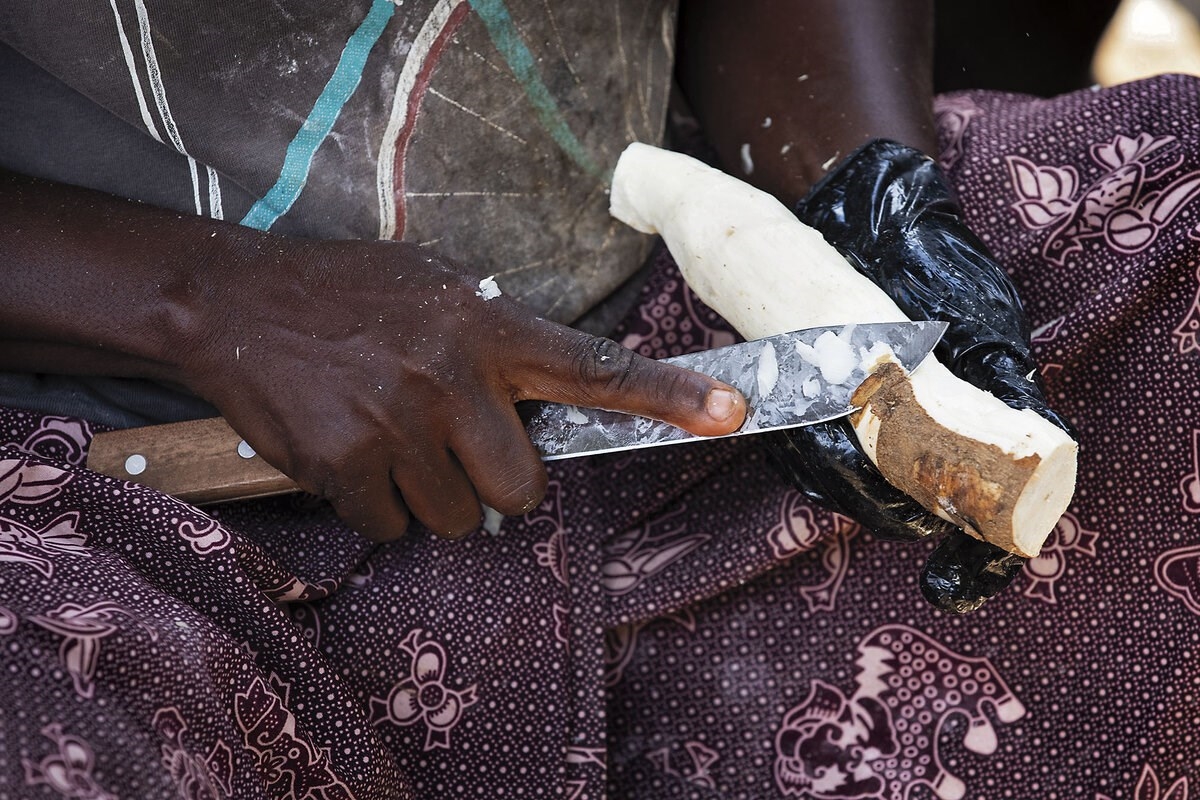 Melanie Stetson Freeman/StaffKNIFE SKILLS: One of the estimated 300,000-plus women employed in attiéké production in the country peels cassava.
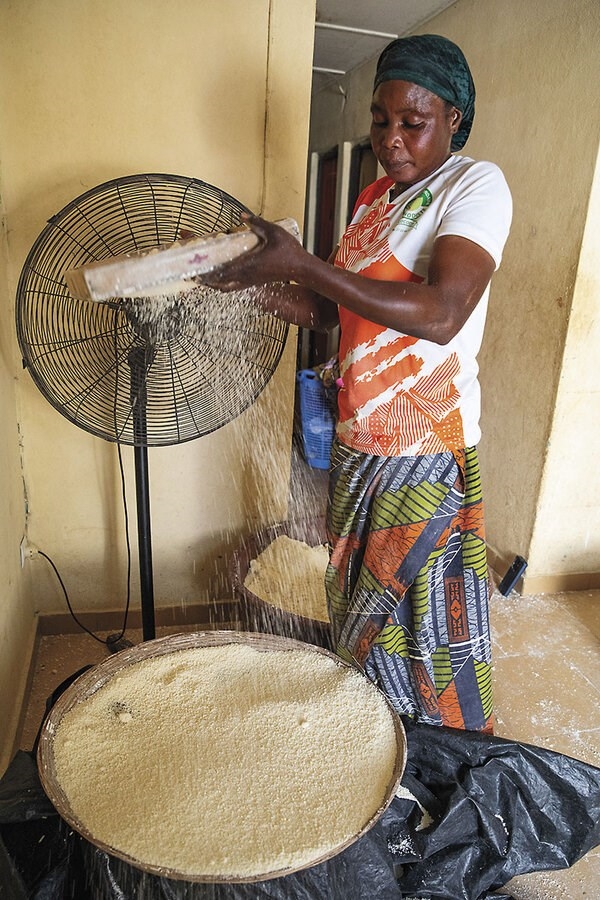 Melanie Stetson Freeman/StaffPOWERED BY WOMEN: A woman named Sali sifts grated cassava to remove unwanted fibers with the aid of a fan. Women do most cassava processing in the country.
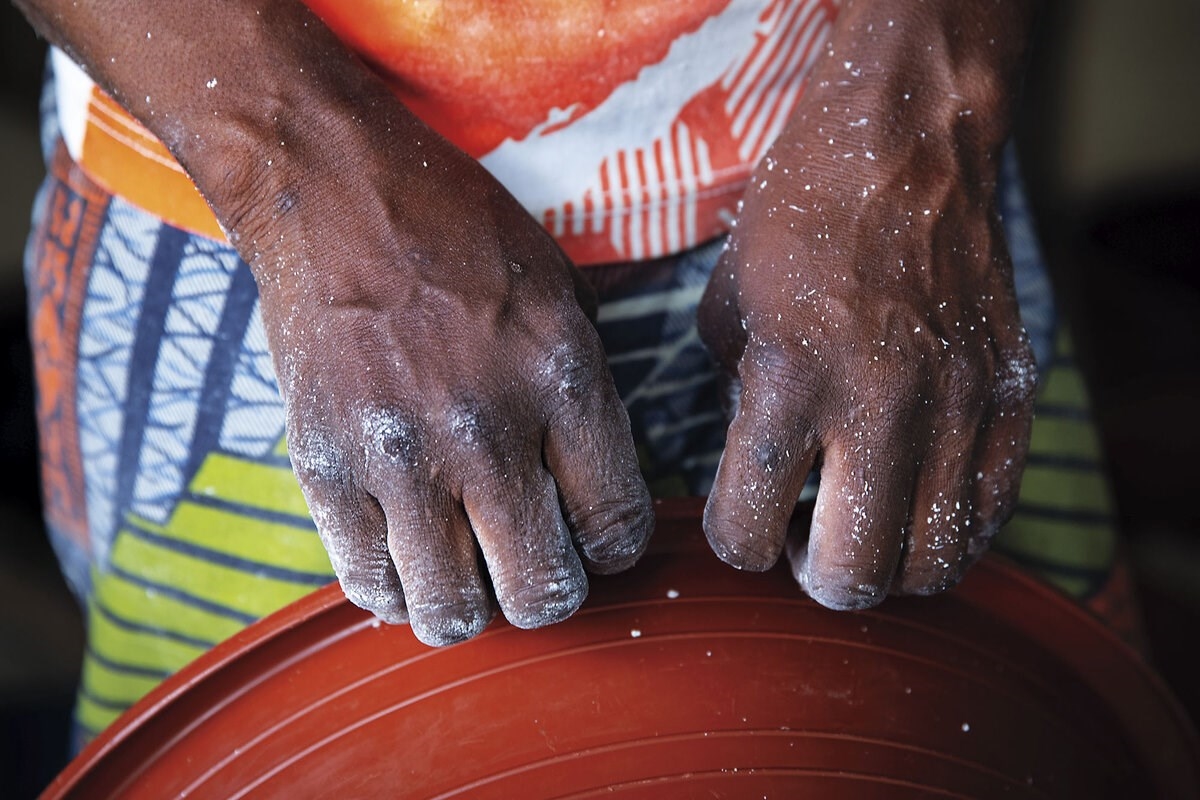 Melanie Stetson Freeman/StaffHANDS-ON WORK: Sali’s fingers are coated in dust from sifting cassava.
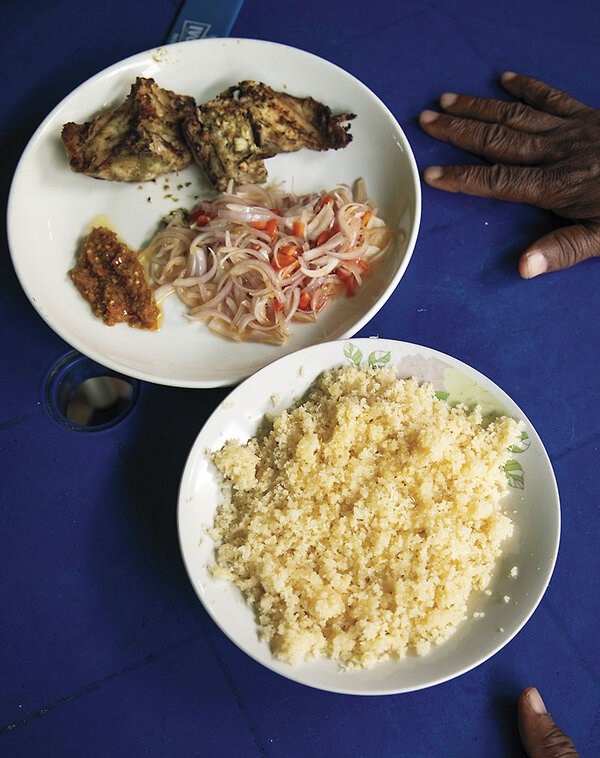 Melanie Stetson Freeman/StaffA COMPLETE MEAL: Attiéké, which can be paired with almost anything, is the cornerstone of Ivorian cuisine. Residents typically eat it with their hands.
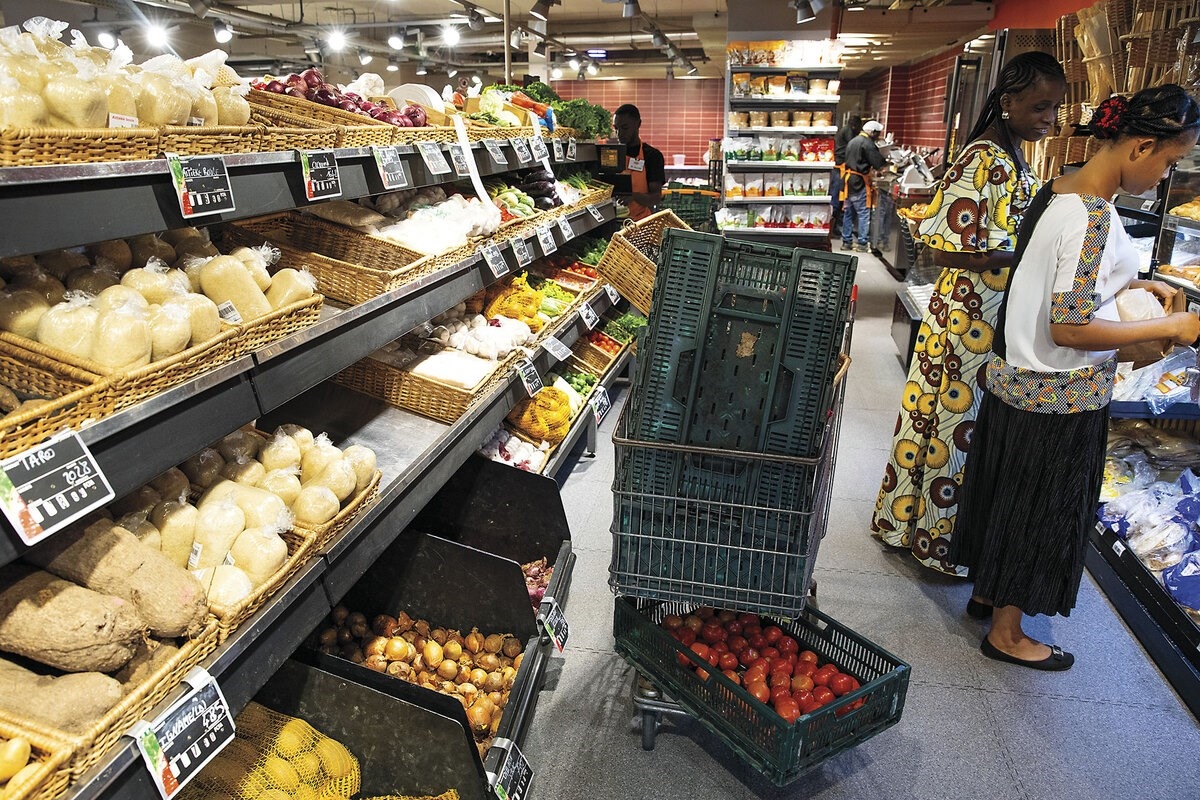 Melanie Stetson Freeman/StaffSHELF STAR: A grocery store displays attiéké wrapped in plastic for sale.
Page created on 6/9/2026 12:41:41 PM
Last edited 6/9/2026 1:10:20 PM