REPRINTED WITH PERMISSION FROM THE CHRISTIAN SCIENCE MONITOR
What makes chocolate ethical? As consumers and chocolate makers around the world examine that question, some have settled on a simple answer: Buy cocoa directly from the farmers who grow it.
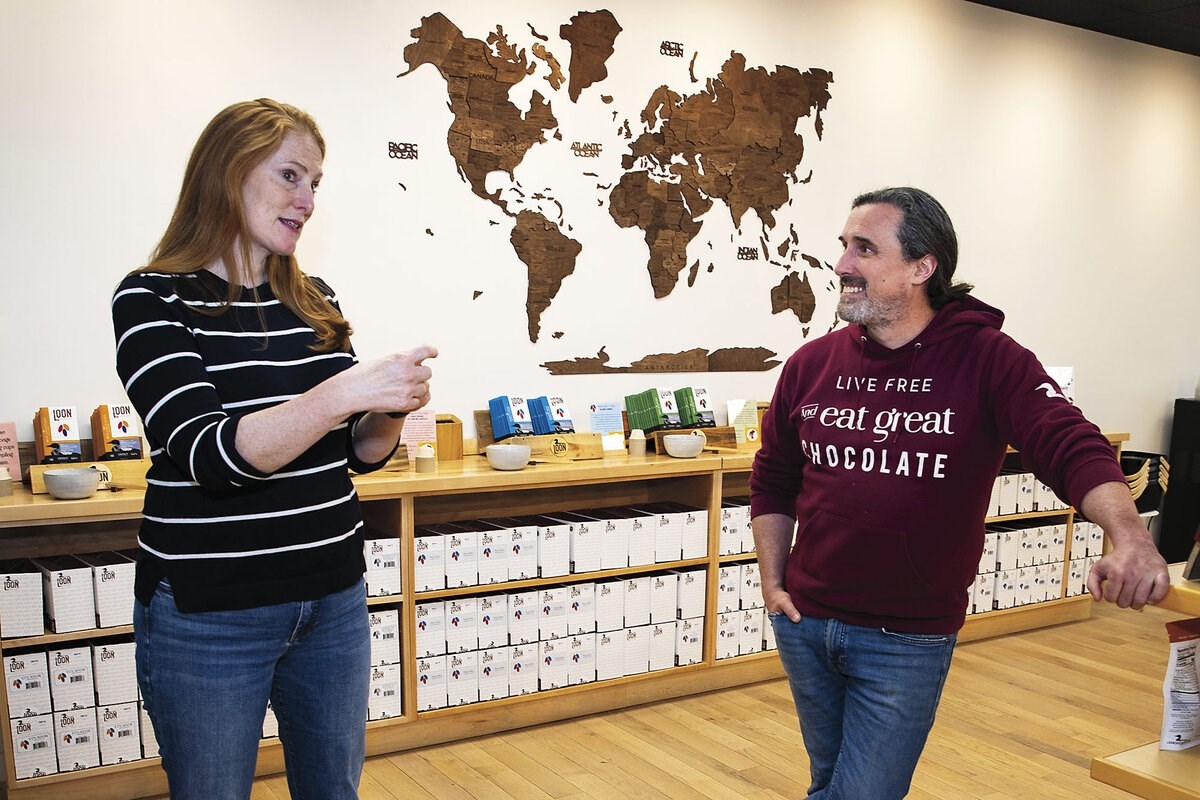 Rachel and David Mack, the owners of Loon Chocolate, at their store in Bedford, New Hampshire, May 9, 2026. Melanie Stetson Freeman/Staff
| Bedford, N.H.
In the brightly lit sales room of his chocolate store, David Mack swoons over a 72% dark-chocolate variety from the Semuliki Forest region of Uganda.
“I love this one, the complexity,” says Mr. Mack of his favorite variety from Loon Chocolate, the company he co-owns.
And he isn’t alone.
Business is booming at this boutique chocolate maker here, which Mr. Mack runs with his wife, Rachel. When the couple bought the business from the original founder in 2022, Loon Chocolate was sold in 30 regional shops. Today, that number has climbed to close to 700.
Loon’s rise is, in many ways, counterintuitive. Global cocoa prices hit record highs during the past three years, while new tariffs also raised prices on everything from the rubber gloves used in its production kitchen to the packaging around its bars.
In this moment of significant turmoil for the global chocolate industry, some boutique chocolate makers, including this one, have emerged as surprise success stories. That’s in part because paying higher prices for raw ingredients, such as cocoa beans and sugar, is already baked into their business model.
But their success also reflects another trend: Consumers are becoming more interested in the origins of their chocolate. A 2024 survey by the National Confectioners Association found 82% of buyers cared about a brand’s commitments to both people and the planet. Loon emphasizes its story everywhere it can – from its packaging to the three-dimensional map in its salesroom that traces the entire journey of its ingredients from “bean to bar.”
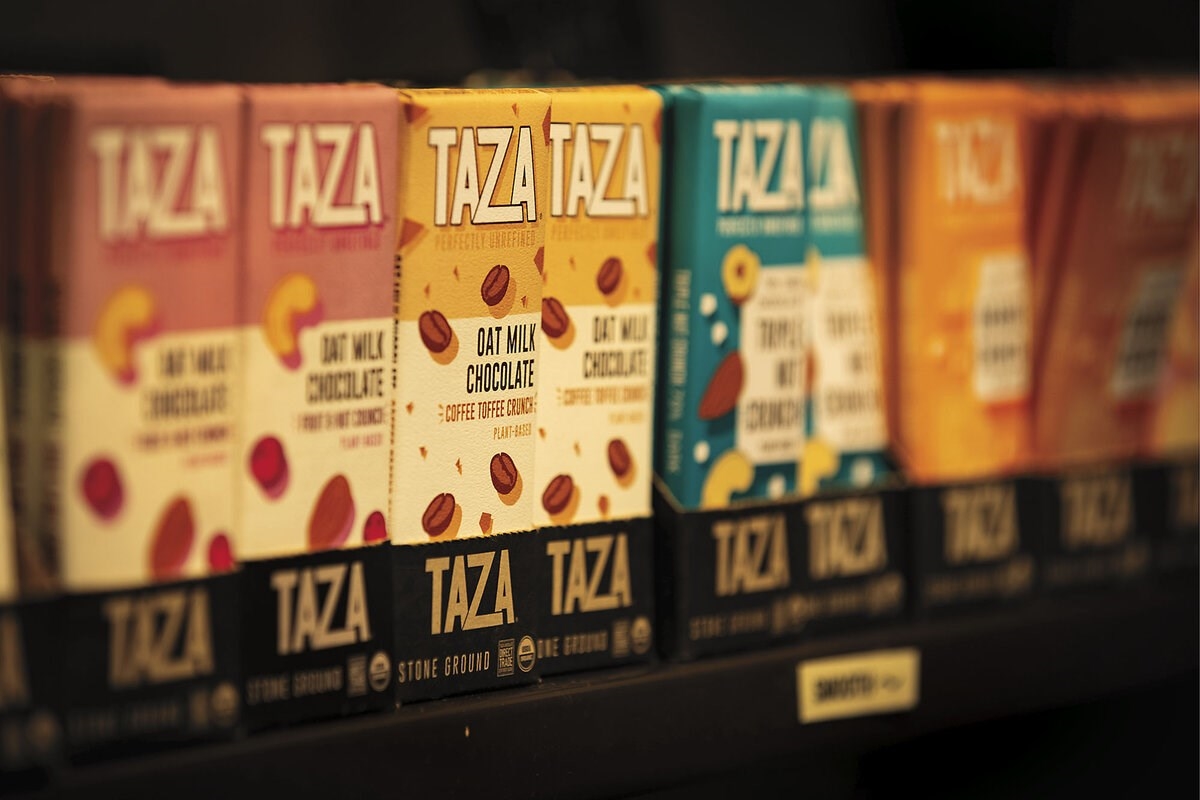
 Melanie Stetson Freeman/StaffDifferent types of chocolate bars are on display in the Loon Chocolate store. The product is sold in about 700 stores.
Many consumers want products that “identify with their values,” says Carla Martin, founder and board president of the Institute for Cacao and Chocolate Research. For them, “a meaningful story ... goes a long way.”
The global market of chocolate made from a single, traceable source of beans is worth roughly $1.2 billion to $1.6 billion annually at current market prices – between 5-7% of the total chocolate market, according to an estimate compiled by Dr. Martin and her colleagues. But demand for chocolate with a high cocoa content, a clear origin story, and attention paid to farmers and the climate is growing rapidly.
The pursuit of values is what inspired Alex Whitmore of Taza Chocolate to enter the business two decades ago. As an anthropology major in college, he became fascinated by chocolate’s history in Latin America, which dates back thousands of years. After getting laid off from the startup Zipcar in the early 2000s, he traveled through the region, experiencing its chocolate-making tradition firsthand.
The trip gave Mr. Whitmore the idea to make Mexican-style chocolate, including one product inspired by Mexico’s Oaxaca, back home in Somerville, Massachusetts. At the time, craft chocolate was a niche business. But the farm-to-table movement was gaining momentum among food entrepreneurs and consumers.
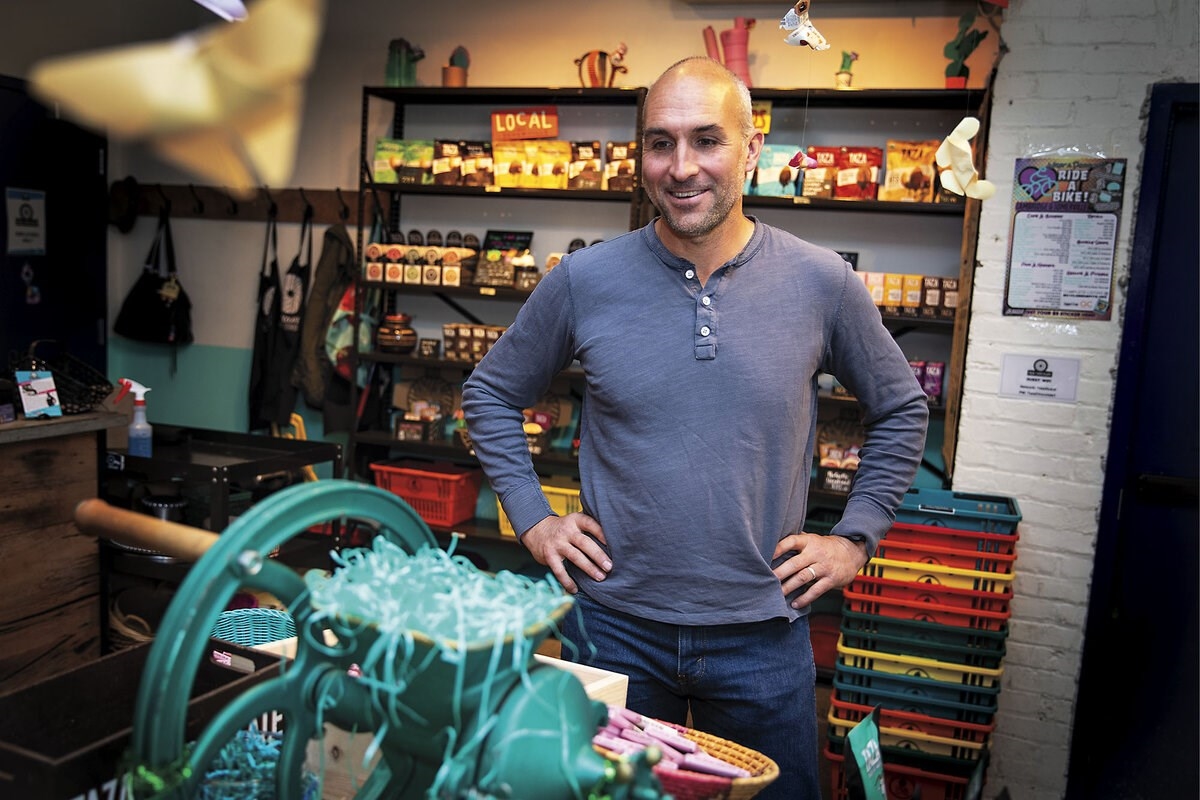 Melanie Stetson Freeman/StaffTaza Chocolate’s Alex Whitmore stands in his shop in Somerville, Massachusetts.
In 2005, Mr. Whitmore and his wife, Kathleen Fulton, began hand-grinding cocoa beans in the basement of their apartment. They named their company Taza – “cup” in Spanish – as a nod to chocolate’s roots as a beverage.
Their gritty-textured, intensely flavored chocolate products soon gained a following. As were the company’s efforts to educate its customers about where its cocoa was grown – and by whom.
At the time, the public was growing increasingly aware of the often troubling origins of their favorite dessert. “The price [of cocoa] has been heavily deflated for hundreds of years,” explains Dr. Martin. She says that is because when the beans were first traded in the West during the colonial era, cocoa was often grown by slaves and other forced laborers, allowing for an artificially low price that became the industry standard.
Journalistic exposés in the early 2000s then revealed widespread child trafficking and child slavery in major cocoa-producing countries such as Ghana and Côte d’Ivoire.
Momentum was also building around a fair trade movement in the industry, which promised, among other things, higher prices for growers and better labor conditions, enforced by third-party inspections.
Mr. Whitmore was inspired by the movement, but he wanted Taza to go a step further. Instead of relying on a middleman to check in on farmers, he decided to buy from them directly.
But he quickly realized the vulnerabilities in this new direct-trade model. The personal relationship between farmers and chocolate makers took significant work on both sides, and it was fragile. If either side went out of business, the other would be left without its business partner.
In 2016, Mr. Whitmore co-founded a second company, Uncommon Cacao. He wanted to scale the principles of direct trade in a way that would lower those vulnerabilities to farmers and businesses. Uncommon Cacao monitors every link in its supply chain – physically monitoring the beans to ensure quality and tracking how money is being exchanged. Every year, it publishes a transparent report detailing who its producers are, how much they are paid, and each step in their cocoa beans’ journey from farm to chocolate maker.
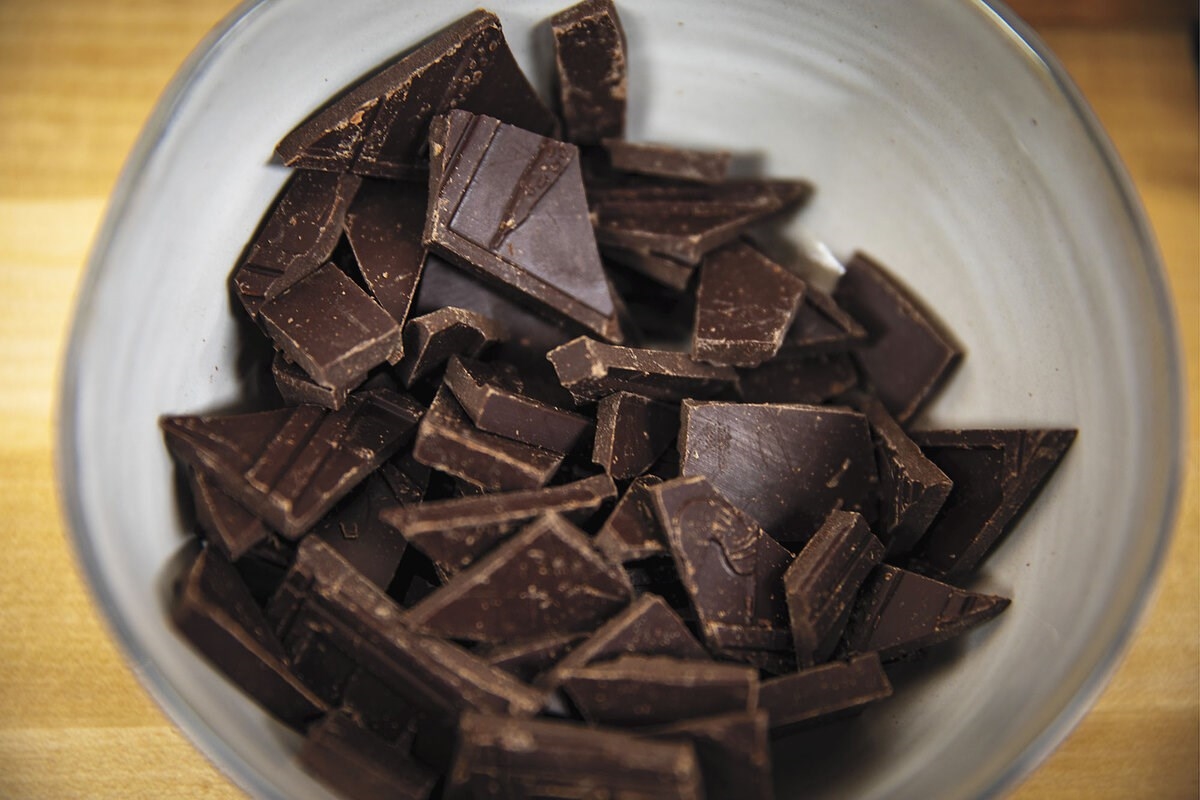
 Melanie Stetson Freeman/StaffHis products are known for their gritty texture and intense flavors.
Uncommon Cacao is not the only company interested in making the bean-to-bar journey less opaque. For instance, Dutch chocolate giant Tony’s Chocolonely digitally tracks every cocoa bean in its supply chain in real time. But for small chocolatiers, which often have fewer resources to devote to tracing, Uncommon Cacao is an alternative to a global cocoa market that is “basically a race to the bottom on price,” says company co-founder and chief executive Emily Stone. Today, it works with 10,000 farmers and hundreds of chocolate companies – including Loon.
One of the key benefits for Loon is consistent access to beans from the same terroir, allowing the company to produce bars such as Mr. Mack’s favorite using beans from Uganda. “It has a maraschino cherry taste, it’s got that cinnamon note in there,” he explains. But that taste doesn’t come from any added flavoring. In fact, the bar has only three ingredients: cocoa beans, cocoa butter, and sugar. The source of the unusual taste is the beans themselves.
Keeping its bars consistent can sometimes mean Loon takes a financial hit. This year, for instance, beans from a farm where Loon sources in Puerto Rico cost $31 per kilogram, more than double what they paid for beans from other sources. That means Loon isn’t turning a profit on chocolate made from those beans, Mr. Mack says.
“But we’re a small business. That farm is a small farm,” he says. “We want to support them.”
Companies such as Loon and Taza are still distinct outliers.
This past spring, Uncommon Cacao partnered with Silva Cacao, a like-minded cocoa sourcing company based in Europe, to extend its global reach. Demand for responsibly sourced chocolate is also likely to grow in Europe. In 2020, the European Union’s Deforestation Regulation banned the sale of cocoa grown on cleared land. Its first audit cycle will begin in December.
Dr. Martin notes that no form of “ethical” chocolate making has the ability to completely eradicate poverty among cocoa farmers, a problem with long, tangled roots.
Still, it’s a mission that appeals deeply to Mr. Whitmore. His effort to show consumers where their chocolate comes from is “the most impactful thing I’ve done,” he says while sitting in a classroom at Taza’s chocolate factory, where the company offers tours to curious customers a few times a week. Today, the company has a staff of about 35 and roasts, winnows, and grinds chocolate from scratch at its factory in Somerville.
“If you’re shining a light down those long dirt roads ... that you have to go to to reach cocoa farms, then you’re shedding a light on an industry that has been incredibly opaque for basically forever,” he says.
Page created on 1/12/2026 5:06:39 PM
Last edited 8/24/2026 3:42:56 PM