REPRINTED WITH PERMISSION FROM THE CHRISTIAN SCIENCE MONITOR
Cellphone screens encourage rapid scrolling, and images can barely register. A traveling exhibit of life-size elephant sculptures invites people to slow down and experience the impact of art, which can move people in very different ways.
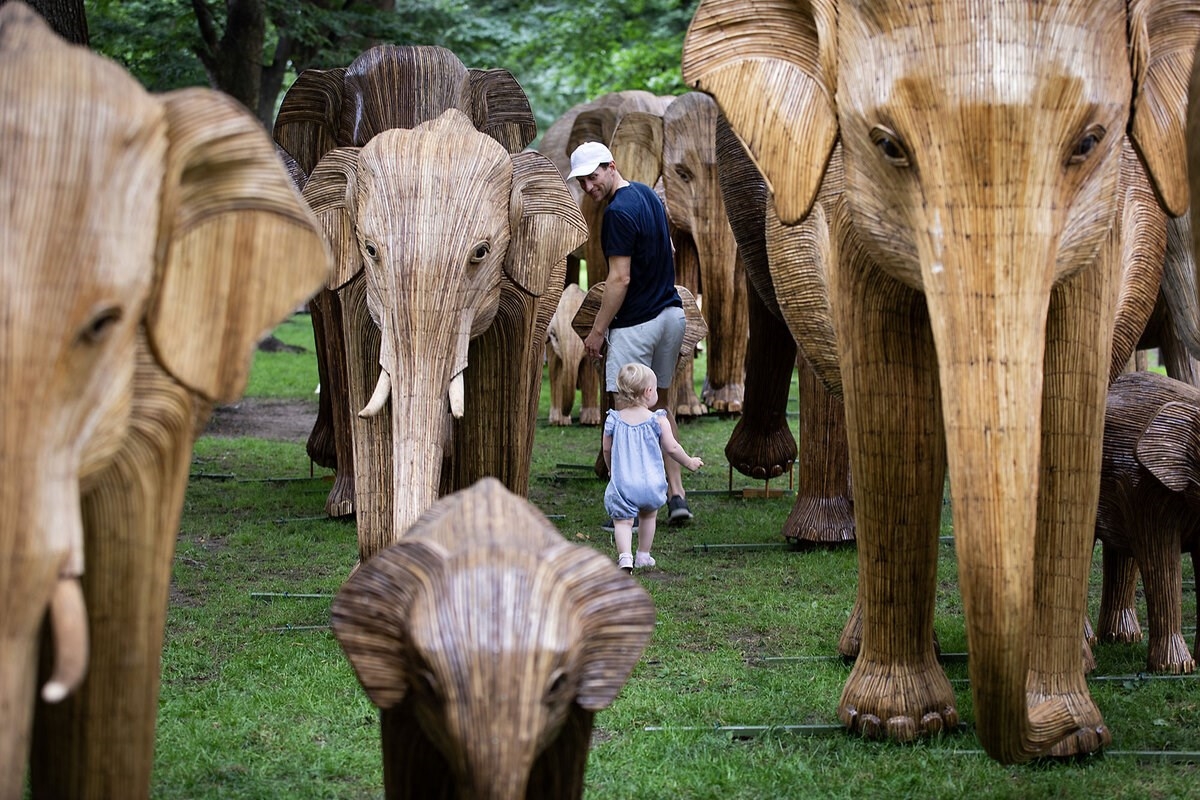 One hundred life-size elephant sculptures are on display on Commonwealth Avenue in Boston, Aug. 6, 2026. The Great Elephant Migration is a public art movement designed to inspire human-wildlife coexistence. Melanie Stetson Freeman/Staff
| Boston
From a couple of blocks away in Boston’s linear park along Commonwealth Avenue, the scene evokes a safari in India: Beneath the trees, elephants gather, with calves standing among towering adults.
But get closer, and it’s clear that each elephant is actually a sculpture, carefully woven from plant stems by artists who want people to be moved by what they can see and touch.
“I think art just cuts through,” says Ruth Ganesh, co-founder of The Great Elephant Migration. “You can just look at them and smile and then gradually learn more about the story and the reason for the exhibition.”
Each sculpture captures the shape and features of a real animal from a herd in southern India. They are part of a traveling public art exhibition that has brought 100 life-size sculptures to the Commonwealth Avenue Mall for the next month. Organizers say the art display is meant to promote human-wildlife coexistence while raising money for conservation efforts around the world.
In a world in which people spend so much time looking at their screens, sometimes even remarkable images can appear mundane, easy to scroll past. For the organizers, offering depictions of the animals they are trying to save brings people into contact with tactile sculptures that can have a greater impact by putting viewers into the same environment alongside these creatures.
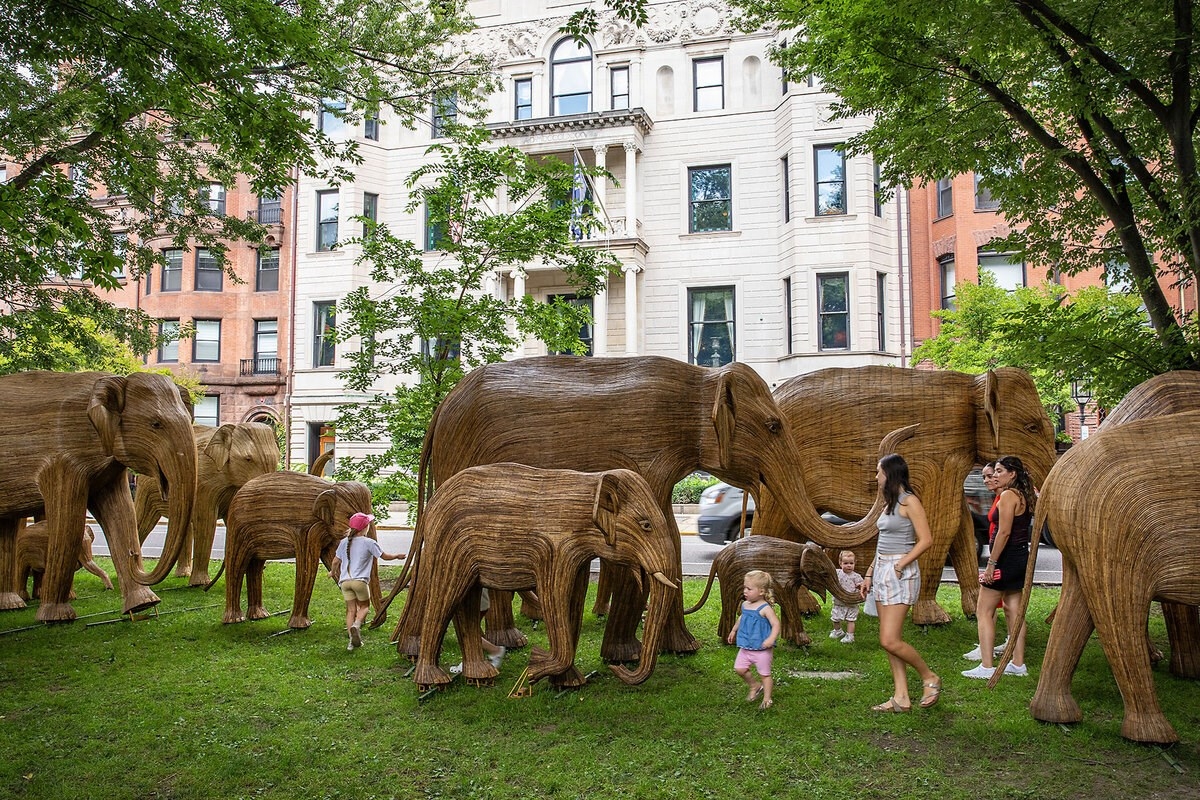 Melanie Stetson Freeman/StaffVisitors enjoy interacting with the elephant sculptures on Commonwealth Avenue Mall in Boston. The exhibit will be in town from Aug. 8 through Sept. 13.
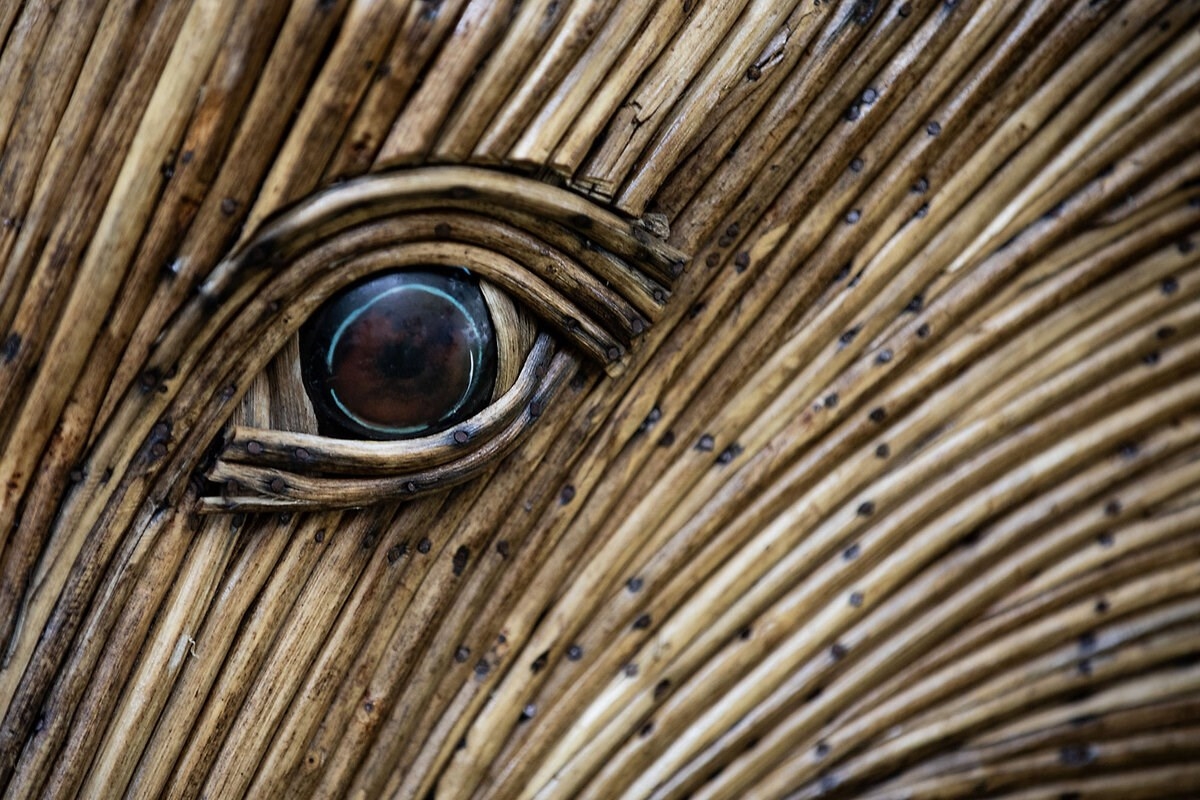 Melanie Stetson Freeman/StaffArtisans created each elephant after a real wild elephant they live near. Here is detail of an elephant eye.
“Oftentimes, when people make art, they use it as a method for understanding and engaging with the world in a way that’s meaningful to them,” says Dane Carlson, an associate professor of visual art and sustainability at Principia College in Elsah, Illinois. “It forces you to see the world around you in a way that you wouldn’t have seen it otherwise.”
The exhibition, which has traveled to U.S. cities in past years, will be in Boston from Aug. 8 through Sept. 13. It’s free, although the organizers do hope to raise money: Each elephant is available for sale, with proceeds from each purchase and public donations supporting conservation projects.
The herd’s journey to Boston began more than 8,000 miles away in southern India.
Having worked with elephants for 20 years, Ms. Ganesh says she discovered a community in the Nilgiri Biosphere in India that was living with elephants. She describes it as the densest overlap of humans and elephants anywhere in the world.
To her, it was “the most remarkable story,” and she wanted to share it.
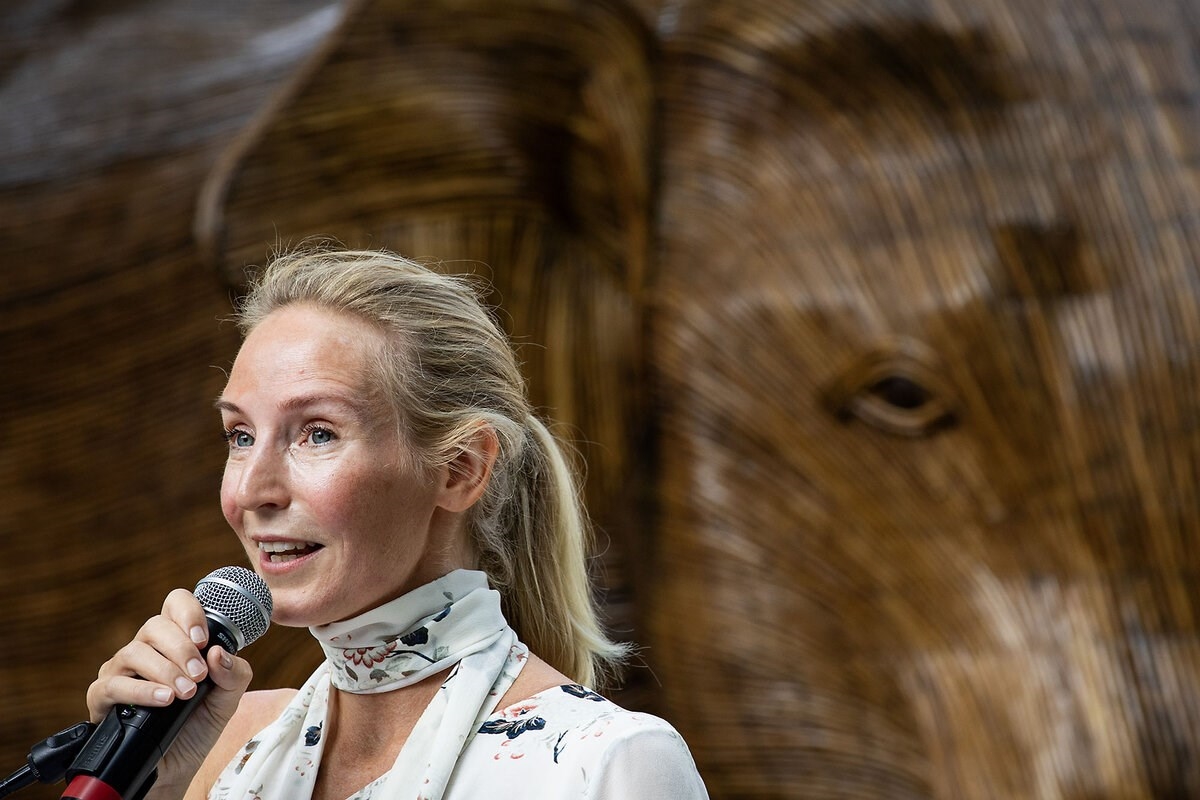 Melanie Stetson Freeman/StaffRuth Ganesh, co-founder of The Great Elephant Migration, gives a press conference as the herd arrives in Boston, Aug. 6, 2026.
Ms. Ganesh, in collaboration with The Real Elephant Collective – a group of Indigenous artisans from the region – says they decided to turn Lantana camara, an invasive shrub that spreads rapidly, into elephant sculptures.
Rather than the artists creating generic representations, she says it was a “really obvious thing for that community” to model each sculpture after a real elephant because they were surrounded by the animals.
The sculptures were meant to do more than just resemble elephants. They became a way to introduce their story to people who might know little about them.
In the exhibit, people can meet the matriarch of the herd, the bulls, cows, and several calves.
Ms. Ganesh believes art plays an important part in reaching people on an emotional level, which she says is more powerful than an intellectual level.
But catching someone’s attention is different from changing the way they think or act.
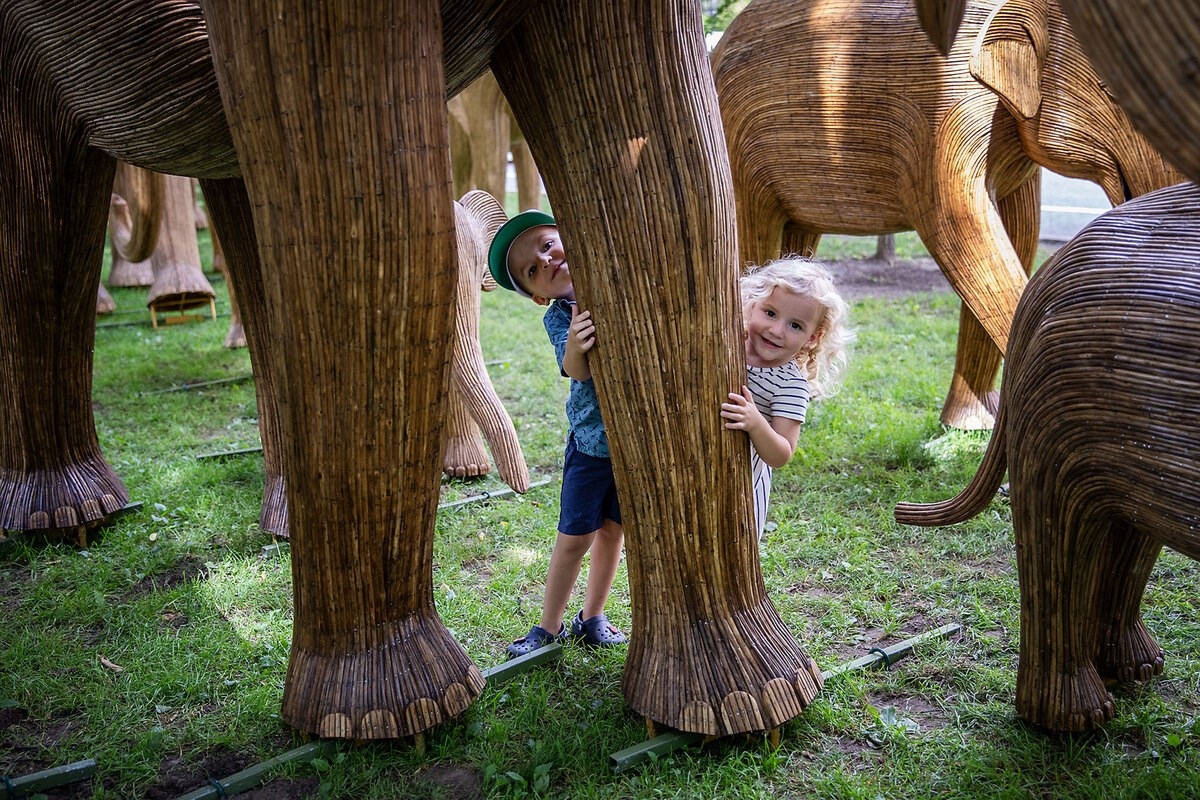 Melanie Stetson Freeman/StaffChristopher Farr and his sister, Charlee, enjoy playing peekaboo with the elephants. The sculptures are made by 300 Indigenous artisans from India’s Nilgiri Biosphere Reserve using Lantana camara, an invasive plant.
For Mr. Carlson, art can encourage people to see the world differently. But its impact, he says, ultimately depends on “whether the person seeing it is open to and interested in being transformed.”
Different responses were evident Thursday at the press preview hosted by the organizers. Some visitors spent time walking through the herd, moving from one elephant to another. Others stopped just long enough to take photographs before continuing on their way.
Giving people that opportunity to encounter the herd freely, or even by chance, was part of the thinking behind the location on the Commonwealth Avenue Mall.
Before the exhibition arrived, organizers considered several locations. Ryan Woods, director of strategic initiatives at Meet Boston, says the public park space is large enough to keep the 100 elephants together while still allowing visitors to move among them.
“Not everybody always feels welcome into a building,” he says. “There may be costs that would obstruct people, and they wouldn’t be able to afford it to get in.”
Without those barriers, visitors such as Stephanie Farr, a resident of the city, say the elephants “speak volumes” to Boston’s community. To others, including John Stanton, who was visiting from Maine, the craftsmanship is “just gorgeous.”
For Ms. Farr, the display elevates the space. “It brings people together,” she says.
Page created on 8/10/2026 1:51:29 PM
Last edited 8/10/2026 2:11:05 PM