REPRINTED WITH PERMISSION FROM THE CHRISTIAN SCIENCE MONITOR
In the tiny southern African country of Eswatini, golf is far more than a sport for many young people. It is a ticket to a different kind of life.
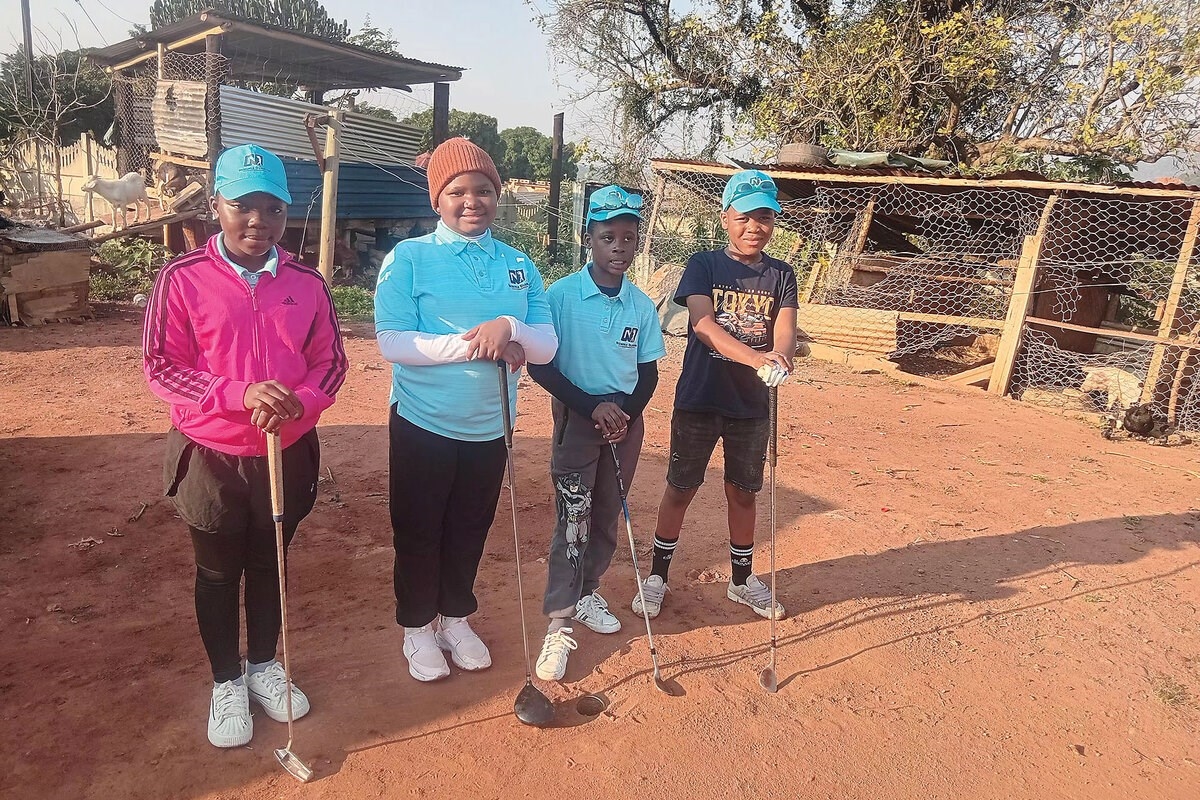 Nkosiyazi Ginindza (from left), Ayetsaba Shiba, Aphiwe Bhembe, and Jaden Mndzebele hold their golf clubs as they stand on the red soil that serves as their turf during practice in Ezulwini, Eswatini.Nokukhanya Musi
| Ezulwini, Eswatini
Only 2 miles separate the manicured greens of the Ezulwini Golf & Country Club and the rocky ground of the rural villages over the hill. But they have long existed as two different worlds.
At the country club, golfers line up their shots on carefully maintained fairways. Meanwhile, in the surrounding community, children are learning the same game on patches of uneven ground where cattle graze. Bottle caps frequently act as golf balls.
On a recent morning, instructor Bhekisisa Bhembe watches one of his students prepare to swing. “Bend your knees a bit,” he instructs, gently repositioning the child’s hands on the club.
Mr. Bhembe got his start in golf caddying for players at the country club. Now, he is part of a growing movement to expand access to a sport that has historically been the purview of a wealthy, mostly white elite.
In this small southern African country, where more than half of young people don’t have a job, golf is more than a hobby.
“There are many people I know who have been sitting at home, wasting away after they finished school,” says 14-year-old Olwethu Bhembe, one of Mr. Bhembe’s students, and no relation to his teacher. “I can see opportunities and the doors golf will open for me. Golf has given me hope.”
Mr. Bhembe’s drive to improve access to the sport is personal.
He was a teenager when, in the early 1990s, he first stepped onto a golf course – not as a player, but as a caddie. At the time, Eswatini was in economic trouble. International companies had set up shop to sidestep sanctions on its neighbor, apartheid South Africa. But apartheid was crumbling, and those companies were pulling out. Meanwhile, Eswatini was on its way to becoming the country with the highest percentage of people in the world diagnosed with HIV.
In Mr. Bhembe’s rural community in Ezulwini, carrying golfers’ bags was one of the few ways a young person could earn an income.
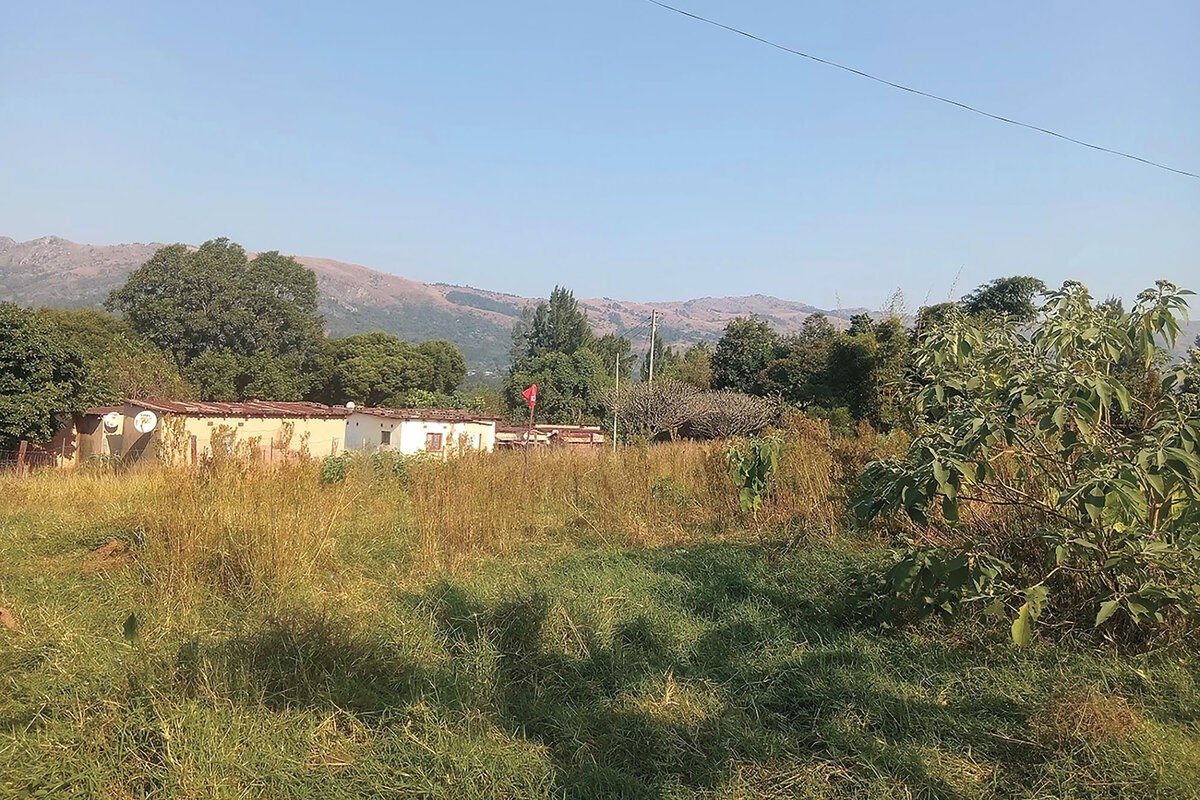 Nokukhanya MusiThe practice area is an open field.
But the pay was so low that for years he went to work barefoot because he couldn’t afford sports shoes. Meanwhile, golf was mostly played by Eswatini’s tiny white minority, which included many South Africans still steeped in the racial hierarchies of their homeland.
“It was somewhat an unspoken rule that Blacks weren’t allowed to play,” Mr. Bhembe says. “Although there was no written rule on a plaque or board, we just knew.”
Still, the game fascinated him. As he and the other caddies looped the course each day, they learned strategy and technique.
“We knew if the golfer was standing in the right posture or had the right club,” he says. “We understood the game, too.”
But they still couldn’t get into the country clubs to play, Mr. Bhembe says. So, in the mid-1990s, he and a group of other caddies banded together to form the Swaziland Caddies Foundation (now called the Eswatini Caddies Foundation). Backed by a top human rights lawyer and the U.S. ambassador, the organization began negotiating with the management of the top clubs. In 1997, the group hosted the first golf tournament for caddies. They also secured caddies the right to play for free on Mondays - the quietest day of the week - on the courses where they worked.
Members of the organization went on to become some of Eswatini’s first Black professional golfers, sparking a wider movement to expand access to golf in the country.
Today, Mr. Bhembe is part of a constellation of efforts to bring more young people into the game. Veteran pro golfer Meshack Zwane trains young golfers around the country with limited financial means and no prior connection to golf. Nobuhle Dlamini – Eswatini’s first female pro golfer and the daughter of caddies’ rights advocate Johannes Dlamini – organizes youth golf tournaments with reserved spots for players from rural communities. These players – including those who train with Mr. Bhembe – pay a discounted registration fee of 35 emalangeni (about $2).
In a game once reserved for people who didn’t look like them, “these children are becoming participants rather than spectators,” Mr. Bhembe says.
For Mr. Bhembe, the ultimate goal of these efforts isn’t to create champion golfers, but to allow children to begin to imagine their futures differently. About half of Swazis under age 35 don’t have a job, and a 2023 index of the quality of life and opportunities for young people around the world ranked Eswatini 155th out of 183 countries. Meanwhile, the country’s absolute monarchy leaves young people with few outlets for expressing their concerns about governance.
Mr. Bhembe says regardless of a young player’s abilities, he believes the lessons learned through golf – such as discipline, confidence, and strategic thinking – will influence how they approach their lives.
Playing golf alongside children from more affluent communities – and even beating them – “boosted my confidence and showed me that I am good enough, too,” says Olwethu, Mr. Bhembe’s student.
Ten-year-old Ayetsaba Shiba, who hopes to become a doctor, sees golf as a pathway to accomplishing that goal.
“I believe golf can get me into a good college and connect me with the right people,” she says.
For Mr. Bhembe, hearing his students express these ambitions reminds him why access to the sport matters.
As he watches his students practice on a recent morning, he looks out over the hillside at the country club in the distance and thinks about how far he has come. Three decades ago, he was carrying players’ bags while secretly falling in love with a game that did not want him.
Now, Mr. Bhembe’s students are learning to play out in the open, allowed to dream of a future in the sport – and beyond it. Ezulwini’s fairways are still in some ways a different world. But with every competition and every swing, he knows that the distance between the village and the country club is becoming a little smaller.
Page created on 8/27/2026 4:14:18 PM
Last edited 8/27/2026 4:22:53 PM