"They kicked me off the plantation, they set me free. It’s the best thing that could happen. Now I can work for my people."
“I guess if I’d had any sense, I’d a been a little scared, But what was the point of being scared? The only thing [the whites] could do was kill me, and it seemed like they’d been trying to do that a little bit at a time since I could remember.”
Fannie Lou Hamer was an activist who fought for what was right and never gave up. Fannie Lou Hamer fought for civil rights and voting rights for black people. Despite all of her many setbacks and hardships along the way, she dedicated her life to more than just herself, but for a greater cause.
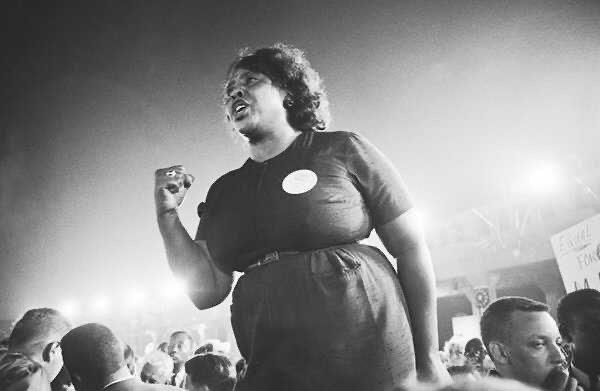 https://www.pbs.org/wgbh/americanexperience/features/freedomsummer-hamer/Fannie Lou HamerFannie Lou Hamer was born on a plantation, the youngest of 20, on a Mississippi plantation on October 6, 1917. She grew up as a sharecropper and married Perry Hamer in 1944. Although Fannie Lou Hamer and her husband wanted to have children, a white doctor in 1961 performed a hysterectomy on Hamer without her consent, a tragedy so common it had been nicknamed a “Mississippi appendectomy”. In 1962, at 44 years old, Fannie Lou Hamer and 17 neighbors went to register to vote for the first time. There Hamer was given a literacy to take and was denied the right to vote when she failed. Driving back, police officers fined the group 100 dollars for driving a bus that was “too yellow”. When Hamer returned home, the plantation owners commanded her to withdraw her voting registration. When she refused to, she left the plantation and never came back. “They kicked me off the plantation, they set me free,”. Fannie Lou Hamer said, from then on, she worked as an activist for the SNCC (Student Nonviolent Coordinating Committee). In 1963, Hamer and other activists were traveling from a voter registration program in South Carolina, where they decided to sit at the whites-only lunch counter in a small act of protest. Hamer and her group were arrested and taken to a jailhouse where they were horrificly beaten for four days, leaving Hamer with permanent injuries that would stay with her the rest of her life. In 1964, Fannie Lou Hamer gave a famous speech to change the white segregationists that took up the Democratic Party of Mississippi. Although president Lyndon Johnson tried to cover up Hamer’s speech by televising a press conference at the White House during the same time as Hamer’s speech, Hamer’s speech was instead rebroadcasted using television primetime, allowing even more people to see her. When the Democratic Party didn’t listen, Hamer went further to national protest, and eventually abolished things like the literacy test that had stopped Hamer from registering to vote years before. Soon after, Hamer ran for Mississippi House of Representatives against a white segregationist named James Whitten. The Democratic Party refused to let Hamer on the official ballot, which then inspired around 60,000 black voters to write her name down on “Freedom Ballots”. For the next few years, Hamer’s health slowly declined until she passed away on March 14, 1977 due to heart disease and breast cancer.
Although Fannie Lou Hamer is no longer alive, her work still lives among us all, reminding us to persist against injustices no matter the hardships. “The only thing they could do was kill me, and it kinda seemed like they’d been trying to do that a little bit at a time since I could remember.” Hamer said, after terrorists shot into the window of a home she was staying in. Fannie Lou Hamer never gave up, and she fought hard for racial justice and voting rights and equality for everyone. Fannie Lou Hamer gives people hope because she never gave up and stayed positive throughout her many hardships through the long battle of racial injustices in this world.
Fannie Lou Hamer was a hero. She persisted against the bias and injustice that she faced day after day, and dedicated and committed her life to a greater battle that didn’t just affect her, but it affected anyone who was put against racial bias. Fannie Lou Hamer used her life to fight and stand up to the people in power who tried to oppress her. That is truly heroic, to be brave enough to fight for yourself, but also others, for the greater good of everyone.
Page created on 6/9/2026 1:57:16 PM
Last edited 6/9/2026 2:24:08 PM