REPRINTED WITH PERMISSION FROM THE CHRISTIAN SCIENCE MONITOR
Rural homelessness has increased sharply over the past five years – the product of failed businesses, stagnant wages, rising inflation, and shrinking housing supply. Individuals and organizations are doing what they can to help – but they’re struggling.
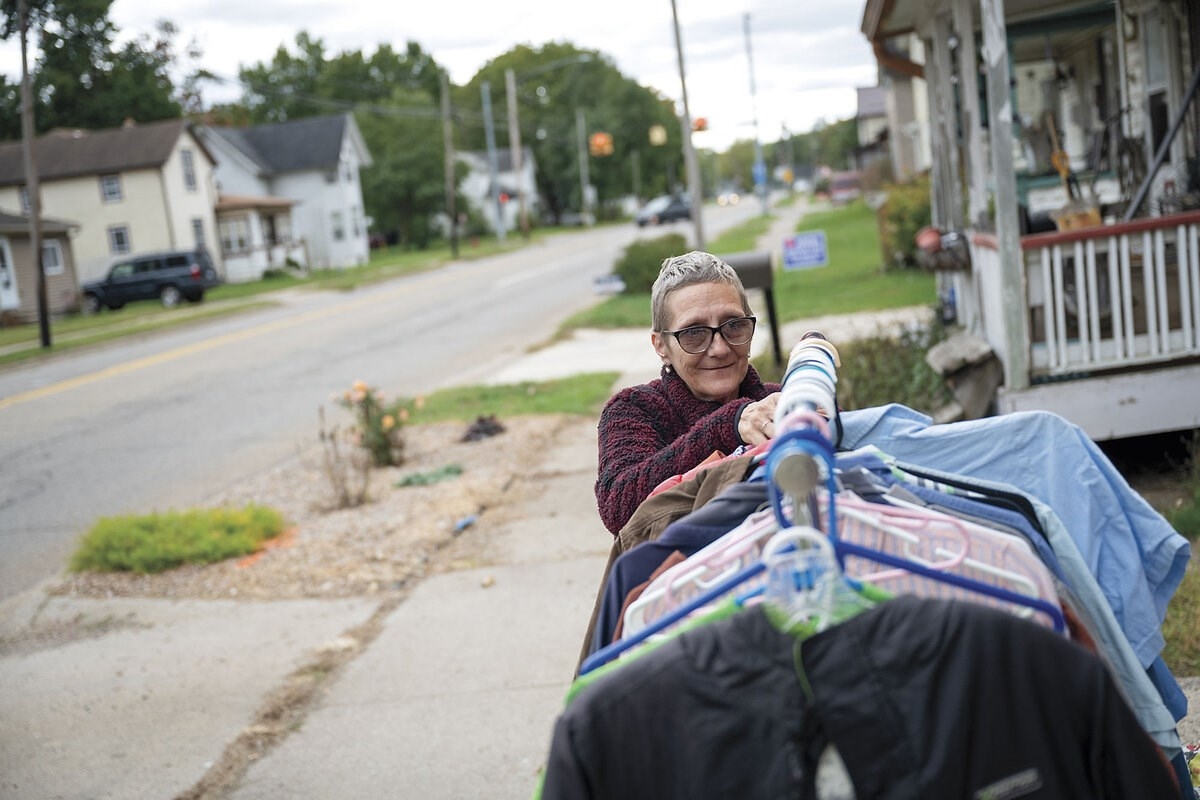 Casey Tobias organizes donated clothing in Three Rivers, Michigan, Oct. 11, 2025. Riley Robinson/Staff
| Three Rivers, Mich.
Two years ago, Casey Tobias started to notice a phenomenon at the Sunoco station where she worked. Customers were struggling. At the end of the month, they were paying for gasoline with pocket change, the last money they had. The COVID-19 pandemic was receding, and hundreds of people were losing jobs in the local RV manufacturing industry.
Ms. Tobias started cooking big meals to bring to work. If she saw a customer who looked hungry, she would send them to her truck, where the food sat in carryout boxes. In time, Ms. Tobias left her job to found a nonprofit organization, Homeless Outreach Practiced Everyday (HOPE). Recently, HOPE took over an abandoned thrift store called the County Closet, where Ms. Tobias and a team of volunteers distribute donated clothing and other items to the most vulnerable people in Three Rivers.
Ms. Tobias says she understands the stress that many homeless people feel. Last October, her doctor told her that she had a serious illness and needed treatment right away. She had just $3,000 in savings.
“This is what people are facing all across the nation,” Ms. Tobias says. “They are just one disaster away from losing everything. One disaster.”
Across the heartland, rural homelessness has been growing sharply over the past five years – the product of failed businesses, stagnant wages, rising inflation, and shrinking housing supply. Many homeless people in rural areas couch surf at the homes of friends or family members, who themselves might be struggling to make ends meet. But as tent encampments grow in rural areas, small-town volunteers are responding the best way they know how: with food, coats, and encouragement.
“What we see in rural communities is deep family ties and friends and faith organizations, and they have no choice but to uphold their duty to take care of each other,” says Mary Kenion, the chief equity officer of the National Alliance to End Homelessness, an advocacy group in Washington.
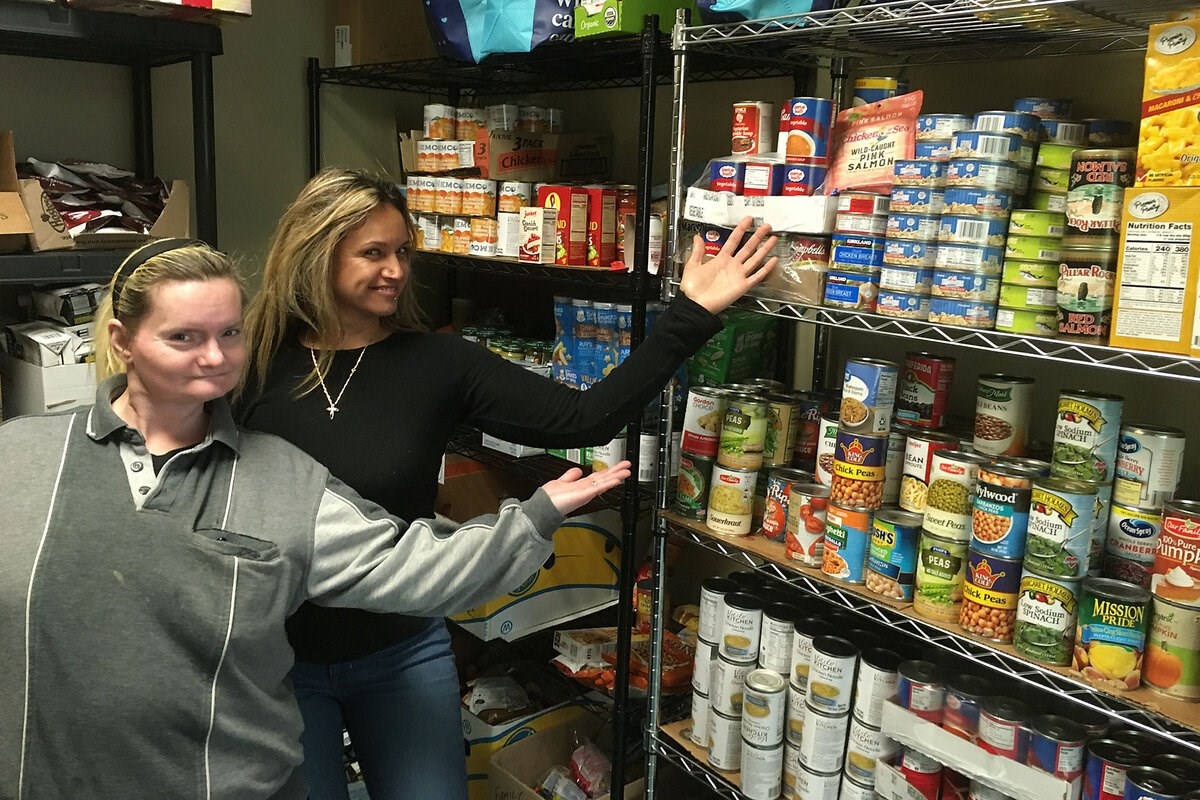 Courtesy of the SHARE CenterVolunteers at the SHARE Center in Battle Creek, Michigan, organized a "giveaway" pantry for customers, including homeless people, veterans, older residents, and those struggling with addiction. Many homeless people live in camps in the city's wooded areas or couch surf with friends or relatives.
In theory, federal and state governments have created networks of service providers called “continuums of care” to meet the needs of rural people who live in places where affordable housing or skills-training programs don’t exist. But Ms. Kenion says these programs are “grossly underfunded” after years of disinvestment.
“Rural communities have a strong capacity and will to do more with less,” Ms. Kenion says. “People in rural communities deserve the same resources that we see in urban communities, but instead, they end up having to deal with the leftovers and to make that stretch.”
At last count, 126,288 people were experiencing homelessness in rural areas of America, according to the U.S. Department of Housing and Urban Development’s 2024 Point-in-Time Count data.
Rural homelessness increased by 12% between 2023 and 2024, the result of rising food and housing costs and stagnant wages, says Jonathan Harwitz, director of policy at the Housing Assistance Council, which studies rural homelessness.
COVID-era relief packages that provided stipends and rental assistance were a big help, Mr. Harwitz says. But when those relief packages expired, small towns and volunteer networks had to pool whatever resources they had to help those in need.
In Three Rivers, Tiffany Sweitzer says she had been living on the streets for several months, sometimes sleeping in the back of cars, but more often under the open sky. With winter fast approaching, Ms. Sweitzer needed warmer clothes – and a place to stay.
She found her way to the County Closet, and Ms. Tobias pointed her toward some brand-new coats, recent arrivals from a clothing drive.
“She could tell I was struggling, and it was getting worse,” Ms. Sweitzer says in a phone interview. “It was a blessing in a time of need. I was wanting to change my life around. She inspired me to do better with my life.”
From that first encounter that started with a warm jacket, Ms. Sweitzer says she has now become a HOPE volunteer herself, to help friends who are still out on the streets. She recently started volunteering at the County Closet. HOPE, in turn, sponsored Ms. Sweitzer’s stay at a rehabilitation center for 90 days, where she hoped to learn how to control her addictions.
“Local workers who have lived experiences of homelessness can be incredibly helpful, because they know or can identify who else is also vulnerable,” says Hsun-Ta Hsu, an associate professor of social work, data science, and society at the University of North Carolina. “Besides providing emergency services such as food, volunteers can also connect the most vulnerable with other services, such as health, and transportation, and shelter.”
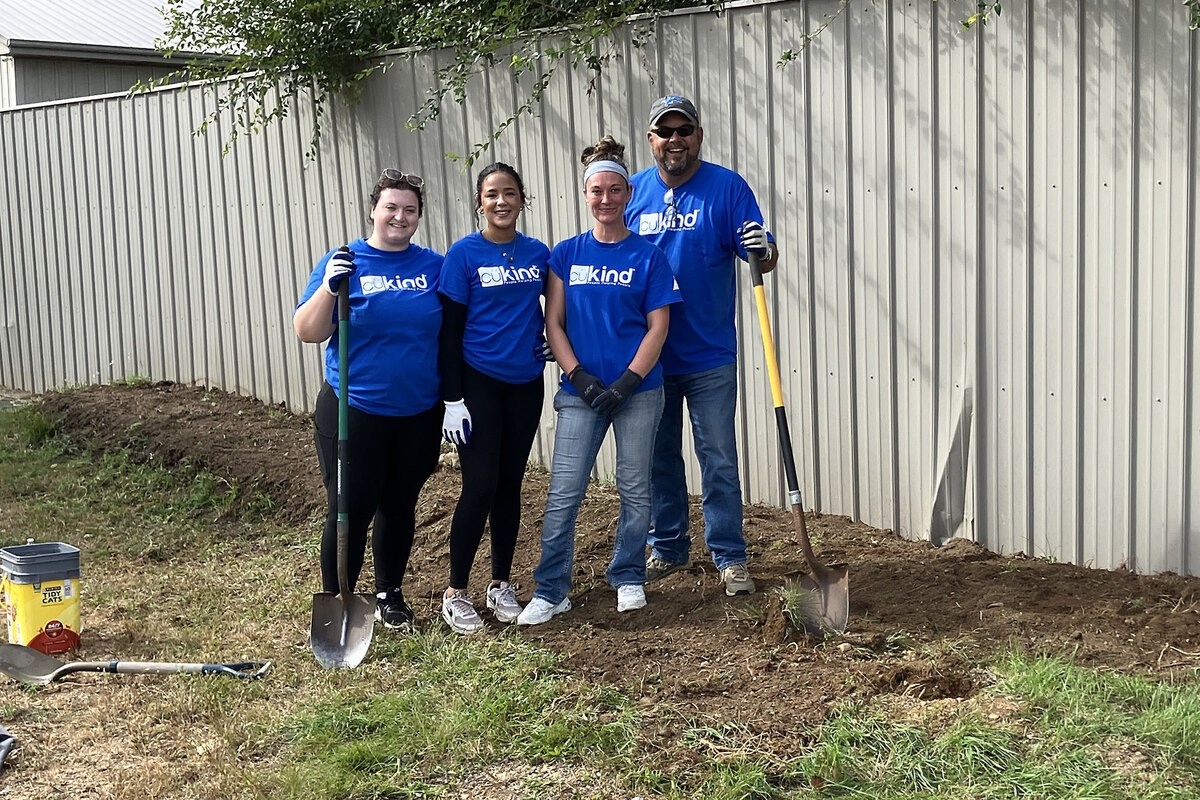 Courtesy of the SHARE CenterVolunteers from Omni Credit Union recently participated in a "CU Kind" Day to support the SHARE Center. The volunteers assisted in preparing the SHARE Center's community garden for winter. Vegetables from the garden are available for customers of the SHARE Center to eat on site or to take home.
In some places, however, the influx of newly arrived people can be so great that simply providing food can exhaust a community’s capacity to respond.
In Kalamazoo, about a 35-minute drive north of Three Rivers, volunteers from Kalamazoo Together for the Unhoused gather supplies for the growing number of homeless people coming into the city for relief.
By day, team members collect donations of season-appropriate clothing, wool blankets, drinks, and food. At night, Judy Lowery and a few volunteers – some of whom are homeless themselves – drive to local encampments in Kalamazoo and to surrounding rural areas. On an average night, the group feeds 80 people.
In Battle Creek, about 25 miles east of Kalamazoo, the small network of service providers and shelters for homeless people that had grown over the years was rapidly overwhelmed by the COVID-19 pandemic. Many of the new arrivals now come from rural areas, says Kathy Antaya, a volunteer coordinator for the SHARE Center, a nonprofit that cares for vulnerable seniors, veterans, families, and individuals experiencing homelessness.
“We have seen a huge influx in people from other communities,” says Ms. Antaya, who has volunteered at the center for seven years. “We heard a rumor that a soup kitchen shut down in a town outside of Battle Creek. That afternoon, a bus pulled up, and a bunch of people with backpacks showed up. They told us they were put on a bus and told, ‘Here’s a place that can feed you. Good luck.’”
Ms. Antaya says organizations such as the SHARE Center are doing what they can to meet the need – but they’re struggling.
“I think we just don’t realize how many unhoused people we have in our rural communities,” she says. “When people in a small community fall on hard times, that puts stress on the small community and its ability to support the unhoused.”
Page created on 1/12/2026 4:54:05 PM
Last edited 1/12/2026 5:04:59 PM