REPRINTED WITH PERMISSION FROM THE CHRISTIAN SCIENCE MONITOR
On assignment in Taiwan, our reporter stopped by the studio of a mechanic-turned-wood-carver who found creativity amid crisis. He now makes art rooted in Taiwan’s typhoon-lashed seashores, and in the lessons he learned from the island’s largest Indigenous group.
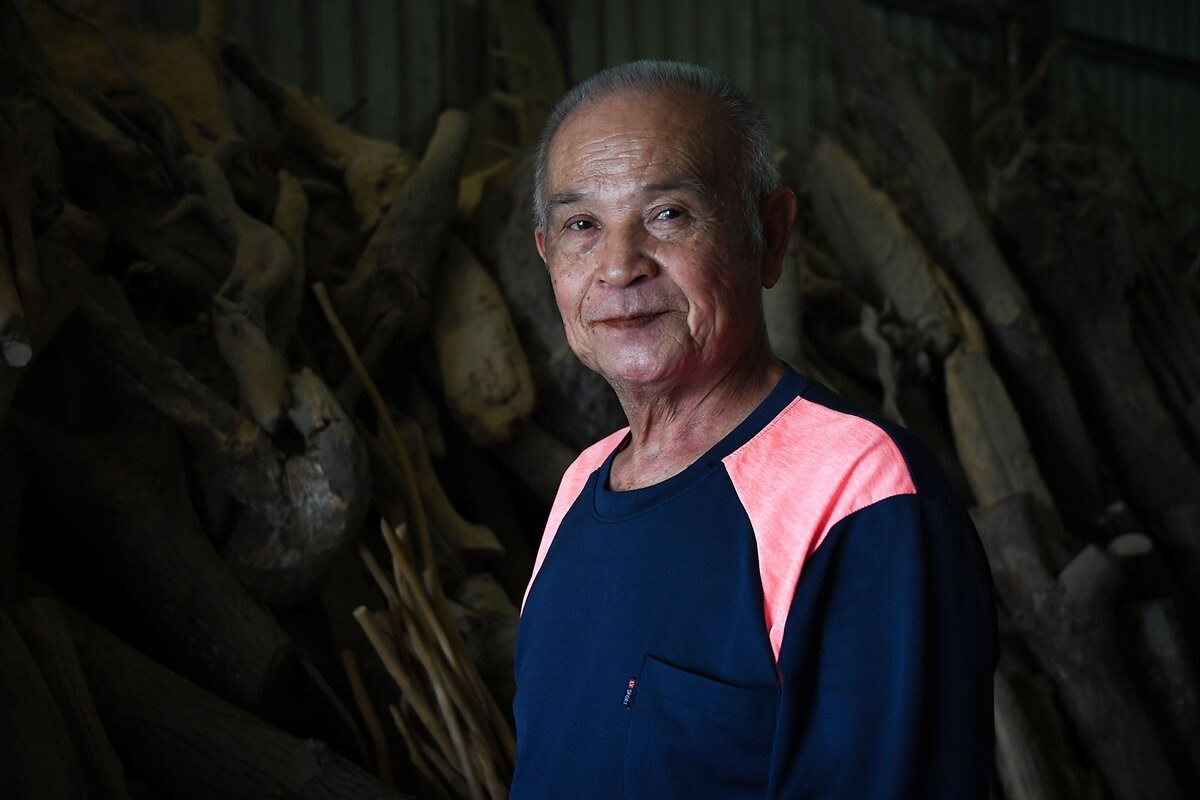 Adike, a Taiwanese artist, with the driftwood he collects after typhoons to fashion into lamps and other one-of-a-kind creations, poses at his studio in Taiwan’s eastern coastal city of Hualien, April 11, 2026.Ann Scott Tyson/The Christian Science Monitor
Hualien, Taiwan | | 4 min read
A string of auto repair shops lines a gritty street in Taiwan’s eastern city of Hualien, their grease-stained, concrete floors and corrugated metal roofs indistinguishable from one another.
The mechanics laboring here are known collectively in Taiwan’s vernacular as hei shou, or “black hands.” Vying for customers, they work long days to try to make ends meet.
All but one, that is.
Inside the garage at 360 Coastal Road, a slight man with graying hair is surrounded not by tires and broken vehicles, but by carefully stacked piles of sand-colored driftwood.
“After the typhoons pass by, I go out and collect the driftwood, and keep it for my creations,” says Adike, brushing off a piece of fragrant camphor wood he found. He wets the wood with water, releasing a fresh, earthy smell.
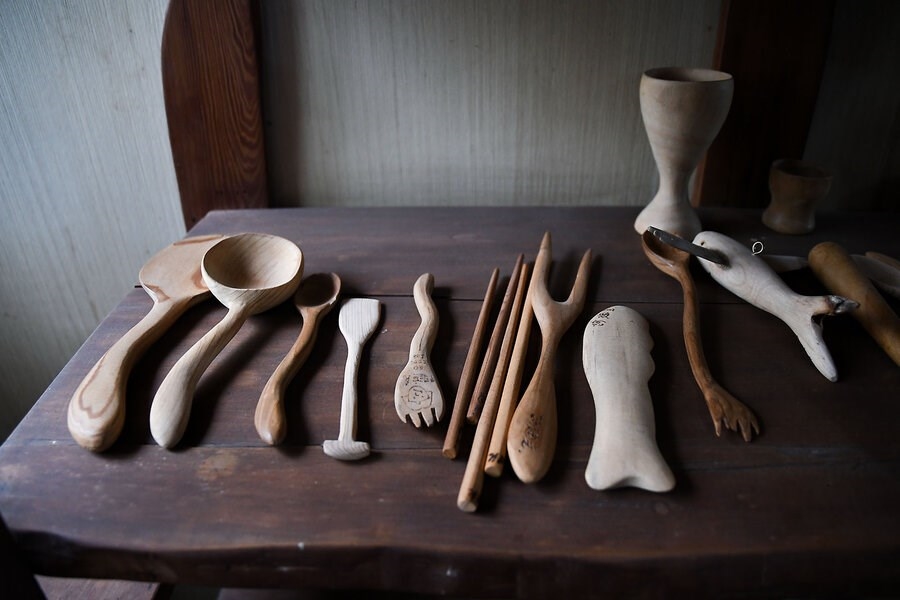 Ann Scott Tyson/The Christian Science MonitorAdike, a Taiwanese artist, has carved spoons, forks, chopsticks, and other implements from driftwood, April 11, 2026, in Hualien, Taiwan.
Adike’s unlikely journey from auto mechanic to artist is a story of resilience and dedication against difficult odds. It’s also a saga of shifting cultural identity – as his unusual one-word name, bestowed on him by an Indigenous Taiwan tribe, portends – and how a man alienated from his roots found a path home.
It all begins with a typhoon.
“I was 6 years old,” Adike recalls, his now-sexagenarian voice gravelly and low.
Born Wang Ch’uankuan, he was the youngest son in an ethnically Han Chinese farming family with six children. “The typhoon hit and washed away our house and all our possessions,” he says, “so my parents ran away to the mountains to take refuge.”
From its farm in the western plains of Chiayi, the family fled to the highlands near Hualien on Taiwan’s east coast, where Adike says they were warmly received by the Amis, an Indigenous ethnic group whose ancestors hunted and fished. The local tribe helped the family build a thatched-roof hut on a small piece of land, where it settled in growing rice, corn, peanuts, and fruit.
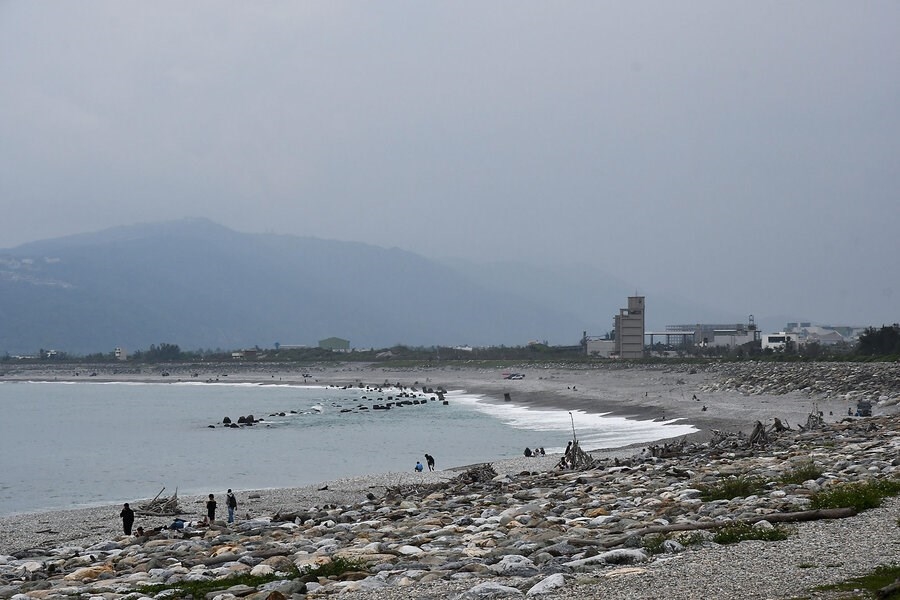 Ann Scott Tyson/The Christian Science MonitorDriftwood rests on a beach in Taiwan’s eastern coastal city of Hualien, April 11, 2026.
One day, the tribe’s chief summoned the boy and gave him a name: Adike, meaning “earthworm” in the tribal language. “Even though you are not a native, like the earthworm, you must depend on the nutrients in the soil here to grow up,” Adike recalls the chief telling him.
Adike embraced this advice. He celebrated tribal foods and customs like the late summer harvest festival. Eventually, he found love in the tribe and married an Amis woman.
In the 1980s, as Taiwan’s industry grew rapidly, many of the young tribespeople began leaving the village to find work. “I was no exception,” says Adike, who in 1989 opened an auto mechanic shop in the nearby city of Hualien. He managed to make ends meet for several years, as he and his wife welcomed three sons.
But fierce competition from other “black hands” intensified, driving his profits to almost zero. In 2005, he had to shut down. “I had no way to earn money, no way to fight,” he says, sighing. “The pressure was so great, I lost my marriage. My wife didn’t forgive me,” he says. She departed, leaving him to raise their sons alone.
Unsure what to do, Adike began to founder. One day, after a typhoon, he walked several blocks to the windswept beach. As the rough surf crashed against the shore, he picked up a piece of driftwood, and then another. “That’s when I started to think about driftwood,” he recalls. “I didn’t have a master to teach me, so I began slowly and quietly exploring on my own.”
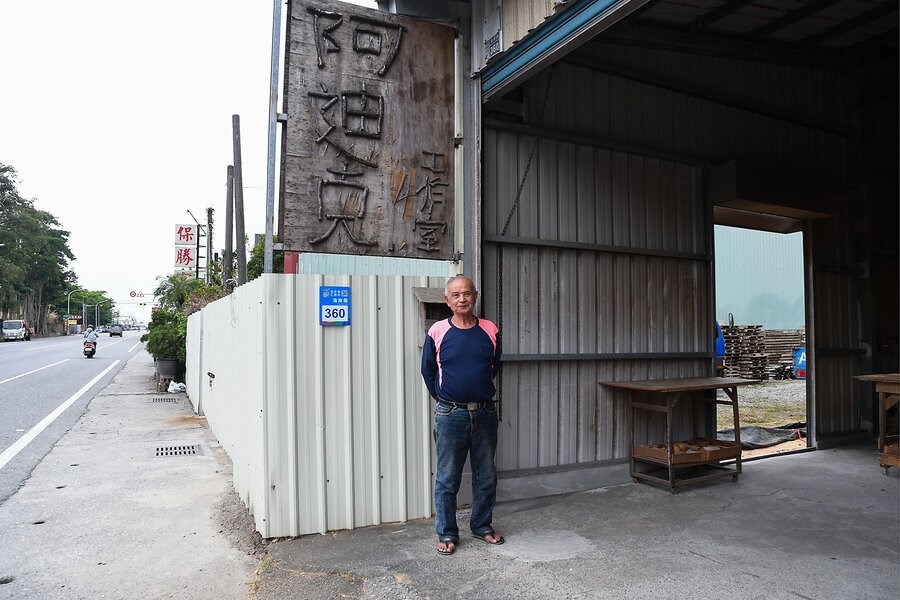 Ann Scott Tyson/The Christian Science MonitorAdike, a Taiwanese driftwood artist, stands at the entrance to his workshop in a converted auto repair garage in Hualien, Taiwan, April 11, 2026.
His aspiration to become a driftwood artisan brought mockery from many around him, including other black hands, friends, and even his own father.
At times, he had to choke back tears. “I swallowed them,” he says, keeping up a brave face in front of his children.
Still, he persisted. “My only option was to keep creating,” he recalls.
He was especially drawn to making one-of-a-kind lamps.
“A lamp is practical, and it can be integrated into our daily lives,” but it’s much more than that, he says. “A lamp has a ray of light – I love it. ... It is lighting up my life ... and also illuminating the path I want to take.”
After three long years, Adike got his break when a reporter from a Taiwan newspaper stopped in to interview him. Sales of his lamps, spoons, stools, and other driftwood creations took off. His art attracted thousands of online followers. He began holding workshops for students, and won invitations to lecture at art schools in Germany and New York.
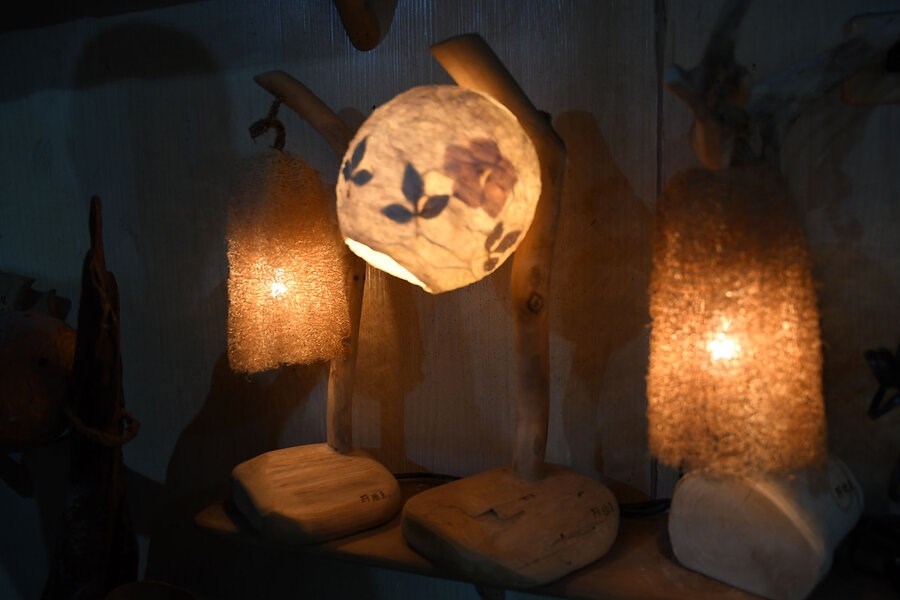 Ann Scott Tyson/The Christian Science MonitorLamps fashioned from driftwood, dried gourds, twine, and other natural products sit in the showroom of Adike, a Taiwanese artist, in Hualien, Taiwan, April 11, 2026.
Twenty-one years later, he is still proudly supporting himself through his art. Lamps remain his favorite creations.
He fashions the posts from smooth, sun-bleached pieces of fir, pine, camphor, and juniper. Next, he encloses the light bulbs in shades crafted with fibers from luffa gourds, natural twine, or papier-mâché decorated with dried flower blossoms. They emit a warm, golden glow.
His goal is to teach more young people to make driftwood art. With Taiwan’s typhoons tossing up the worn wood along beaches and estuaries, they have plenty to work with.
“That’s what I’m most happy about,” he says. “I turn rotten wood into magic.”
Page created on 10/12/2026 4:26:33 PM
Last edited 10/12/2026 4:36:28 PM