Phoenix, directed by Sarah Khaled, Chylier Williams, Phoenix Inaya, Ava Brenner, Kendra Harris is a finalist at the MY HERO International Film Festival 2026.
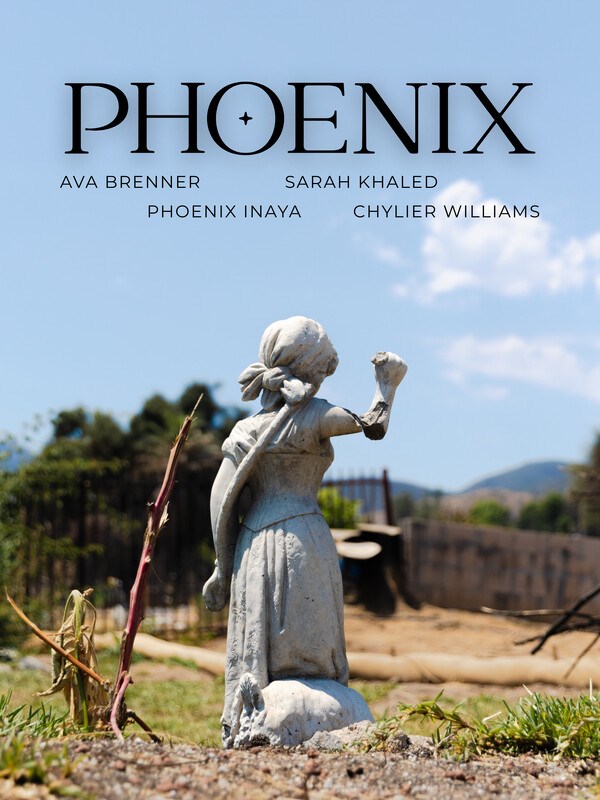
In January 2025, the Palisades and Eaton fires devastated communities across the Greater Los Angeles area. Phoenix is a short documentary highlighting the contributions and experiences of incarcerated and formerly incarcerated women who fought in those fires, bringing awareness to the heroic efforts of these unknown women.
The project was created by a group of young filmmakers who met through the initiative Girls' Voices Now – a youth development program that empowers the next generation of youth from under-resourced communities to find, develop, and use their voice for social change through filmmaking.
MY HERO interviewed Chylier about her experience of making the film:
Why did you decide to make Phoenix?
After learning about the incarcerated and justice-impacted firefighters, their struggle, experiences, and perseverance, we just felt that this story needed to be told. It’s so common for women’s stories to not be told because they don’t fit a certain mold or they are unrestrained by preconceived notions. So, we thought it would be nice to create a space for these strong women to come out with their stories. And with the Palisades and Eaton fires being such a recent event at the beginning of the year when we started filming, we just thought it was right.
How did you first learn about the incarcerated and formerly incarcerated women fighting the fires?
During the start of the program, we were all pitching ideas for the documentary we were going to work on. That’s when Phoenix mentioned the ladies her mom worked with. These women were either incarcerated or formerly incarcerated and were training and working on becoming firefighters. And if I’m being completely honest, I had no clue if people could do that. So, after hearing how there were these super qualified firefighters helping out in the Eaton and Palisades fires who weren’t getting the recognition they deserved, I was completely drawn to being able to give these talented women the spotlight they deserved.
What surprised you most while making the film?
I was surprised at how long it took to make a film. I knew that the film process was a long journey that could take a while and “you can’t rush art” but when you’ve gotten five hours of sleep and a long shoot day, it can feel like eternity. However, spending all that time also showed me how beautiful taking your time can be. Being able to stop and take a break while shooting b-roll and sitting down to listen to the many stories shared with us was just an empowering experience.
What does the word “hero” mean to you after making this documentary?
After making this documentary, the meaning of hero has changed for me. At first, when I thought of a hero, I would think of fictional characters that would beat the odds and defeat their bad guys like Superman or Wonder Woman. But now, after hearing these women’s experiences, I think of them. I think of how they use their strength, both mental and physical, to do brave and courageous things. And I’ll think of how they go through rigorous training because of how dedicated they are to this job.
Was there a particular person or story in the film that stayed with you?
The story that stuck with me the most would probably be Morales’s. Learning about her time in the justice system still makes me tear up when I watch it. But despite that, she is still smiling and being herself, which is something I just love about this part of the interviews. I just love being able to see her personality here while also hearing about how much she just loves being a firefighter.
What do you hope audiences take away from Phoenix?
I hope the audience can take away a new perspective of incarcerated women and firefighting work. I know that when most people hear anything about incarcerated people, they probably go to stereotypes in their head. Our film is here to contrast those ideas and instead uplift women in fields more dominated by men.
What have you learned about filmmaking through making the documentary?
Through making this documentary, I learned so many things about filmmaking, from stuff like handling equipment to just understanding how to tell a person’s story in a meaningful way. Before the program, I had never worked in film; I hadn’t even touched a Sony camera. So while I was actually there, I was just trying to go with the flow and see how the process worked. It was definitely an eye-opening experience because I knew what the side of production, post-production, etc. looked like. I went from not knowing how to record a nice video on my phone to learning how to organize clips needed to go where to emphasize our point.
Why did you choose the title Phoenix? What does the phoenix represent to you and to the women whose stories you tell?
The title Phoenix aims to embody the spirit of both the communities impacted by the fires and the bravery and courage of the formerly incarcerated firefighters involved in extinguishing the flames. Rising anew from the ashes serves as a metaphor for the incredibly strong women involved in the firefighting program—despite having traumatic experiences, legal struggles, or other personal past drawbacks, they have been able to push through the hardship and rise out with a deep and strong purpose to relieve victims of fire. Additionally, the impacted communities themselves are united by the common experience and may, in tandem, work to reconstruct a sense of structure and identity even after such a catastrophic event; this is truly also a scenario of rising from the ashes, quite literally and figuratively.
Page created on 10/20/2026 4:37:26 PM
Last edited 10/20/2026 4:53:34 PM