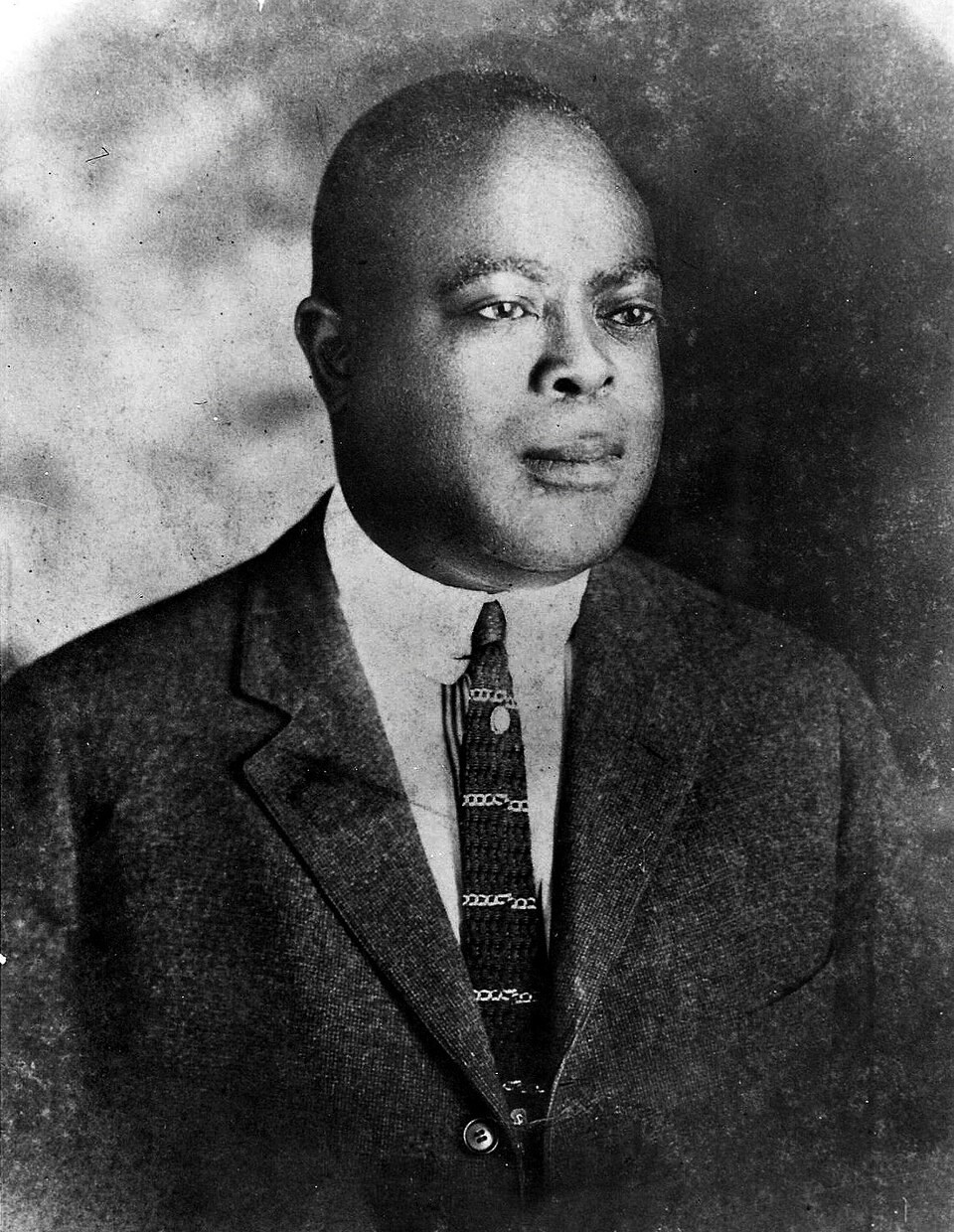
 King OliverWikimedia CommonsIn celebration of national jazz day on April 30, Joseph Nathan “King” Oliver, was a pivotal figure in shaping the foundations of early jazz. He first played in New Orleans, specifically in Storyville–America’s first legally segregated red-light district. The name Storyville was an ironic reference to a New Orleans city councilman named Alderman Sidney Story who, in 1897, made prostitution illegal everywhere in the state, excluding two zones. Amidst competitive gambling and decadent brothels, New Orleans emerged as the exemplar of the jazz city where Joe Oliver was crowned king of the jazz scene. [1]
Jazz as a musical innovation was inspired by folk tunes of Scotland, Ireland, and England, the artistic, romantical songs from Italy and Spain, melodies of French Opera, key European artists like Claude Debussy and Maurice Ravel and, most notably, the plantation religion hymns. Enslaved persons in America were taught a tainted form of Christianity from their enslavers, preaching the idea that slavery was an act favored by Christ and defying one’s master was condemnable in God’s eyes. However, the New Testament of the Bible taught that each person is made in the image of God and that we are spiritually equal. The African diaspora took their masters’ interpretations of Christian theology and reshaped it into a mode of survival and cultural expression. Their songs of melodic spirituals and evangelical hymns were instrumental in shaping early jazz, particularly through their improvisation, freedom of expression, and the sorrowful blues. [2]
When Joe Oliver first started playing, his folks remarked that he was slow in learning music and apparently a poor cornet player for a long time, getting fired from his first job with the Eagle Brass Band because he couldn’t control the volume or valves properly. But sometime in the early 1900s, he busted his hump and earned the title of King in the New Orleans jazz scene. Accrediting his decision in booking it to Chicago from his remarkable vision and keen sense of business is only half the truth. Essentially, he was driven out of New Orleans after he was arrested post police raid which he expressed as extremely disappointed with their conduct, so disappointed that he decided to embark on a new journey, taking jazz with him. Soon after, Storyville returned to a deserted swamp. [3]
When he arrived in Chicago, he began working for a nightclub called Royal Gardens. His first night there, the manager declared him King, adorning him with a gold paper crown on his head. He was an exclusive performer there until mid-July of 1919 where he started playing for multiple bands and for Royal Gardens’ competition, Dreamland. But towards the end of 1919, Royal Gardens, despite their remodeling and installation of a dance floor, shut down. Its owner, Bill Bottoms, blamed his decline in revenue and attention to the introduction of King Oliver and after that, King Oliver broke up with his band. There isn’t much of an account of Oliver’s activities from the two years that followed. [4]
But in 1922, the King reunited with the rapturous prophetic gift to jazz, Louis Armstrong.
And on April 5, 1923, as the horn leaders, traveled with their new band, the Creole Jazz Band, and arrived in Richmond, Indiana. There they were the first jazz and African-American band to transition from live performances to producing a record, making jazz history.
Oliver and Armstrong continued to work closely together, as Oliver acted as a mentor for Armstrong, advocating for his bright talent with the hopes of establishing him as one of the greatest improvisational and harmonic voices in jazz.
Page created on 5/2/2026 2:08:53 AM
Last edited 5/2/2026 8:17:31 AM
, . Joseph “King” Oliver (1885-1938). [Online] Available https://blackpast.org/african-american-history/oliver-joseph-king-1885-1938/.
Hentoff, Nat. Hentoff, Nat. At the Jazz Band Ball: Sixty Years on the Jazz Scene. 1st ed., University of Californi.
Anderson, Gene. The Genesis of King Oliver's Creole Jazz Band.
Ostransky, Leroy. Early Jazz.