REPRINTED WITH PERMISSION FROM THE CHRISTIAN SCIENCE MONITOR
Loss does not have to define a life. The widows of Krushë e Madhe in western Kosovo are a group bound by grief, survival, and the hard work of rebuilding families that were shattered nearly three decades ago.
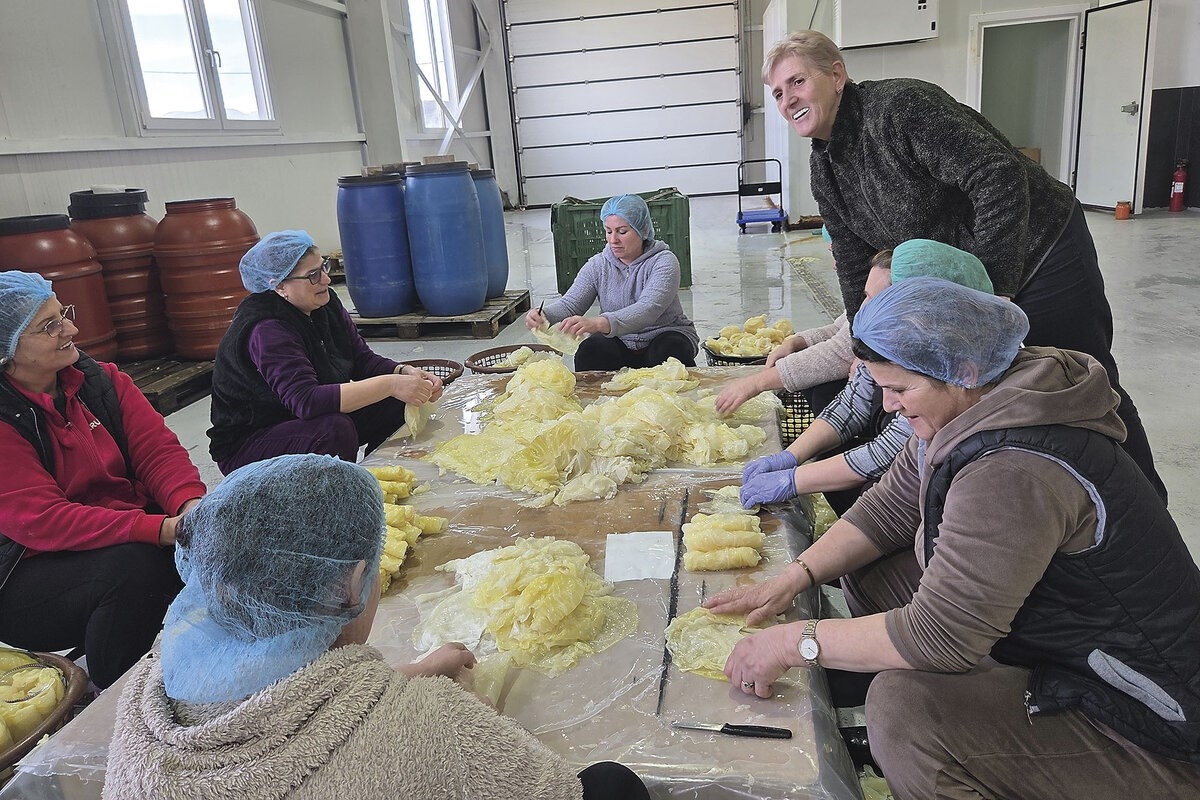 Fahrije Hoti (standing) speaks with employees at the KB Krusha factory in Krushë e Madhe in west Kosovo. The cooperative began by making “ajvar,” a popular Blakan spread of roasted red peppers, but has expanded to 40 products. Isabelle de Pommereau
| Krushë e Madhe, Kosovo
The bus full of women from the KB Krusha agricultural cooperative has barely pulled away from the factory when its founder, Fahrije Hoti, rises from her seat. Albanian folk songs – raw and full of longing – crackle through the bus speakers as Ms. Hoti steps into the aisle, takes her young twin granddaughters by the hand, and begins to sing and dance.
“Aren’t we more beautiful than ever?” she calls out.
The women around her – many of them ethnic Albanian widows from the village of Krushë e Madhe in western Kosovo – are more than employees in the cooperative. They are a group bound by grief, survival, and the hard work of rebuilding after the war in Kosovo shattered their worlds nearly three decades ago.
On this March morning, International Women’s Day, Ms. Hoti is taking the women across the mountains to Albania as a gesture of thanks for their efforts and a reminder that loss does not have to define the limits of a life.
Like some of the other women, Besire Duraku steps into the aisle to dance. A widow left with small children after a massacre in their village, she defied her family to join Ms. Hoti’s cooperative and has never looked back. “Work is where we found our strength,” says Ms. Duraku. “It’s where we found each other.”
Though Krushë e Madhe is a family farming hub known for its fertile soil, Ms. Hoti did not start out in agriculture.
After marrying young, she moved into her husband’s large, traditional household, caring for her daughter and embroidering wedding dresses in gold thread – a craft passed down through generations of village women. By 1989, Slobodan Milošević had stripped Kosovo of its autonomy, pushing ethnic Albanians out of jobs, schools, and public life. “We didn’t really pay attention,” says Ms. Hoti. “As young people, we thought life was ahead of us.”
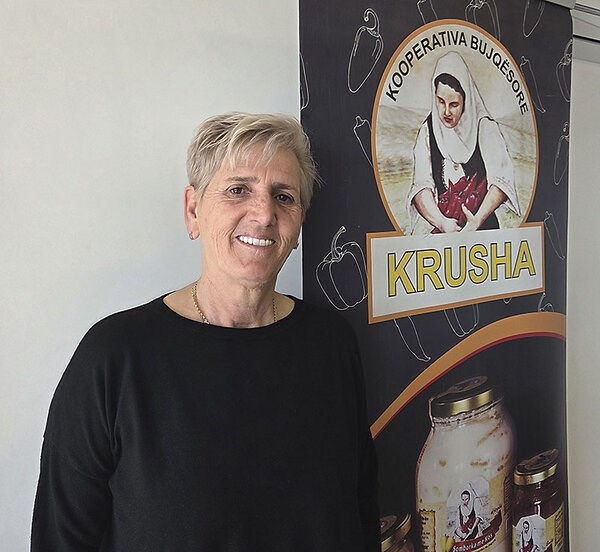 Isabelle de PommereauFahrije Hoti stands in front of the logo for KB Krusha, which employs 37 women full time and dozens of seasonal workers.
Then came March 25, 1999, when Serbian forces entered Krushë e Madhe. Men and older boys were separated from women and taken away. In the end, 241 civilians were killed or went missing, in one of the worst massacres of the war. Sixty-four bodies from Krushë e Madhe, including that of Ms. Hoti’s husband, were never found.
Ms. Hoti had fled on foot to Albania with her infant son and young daughter. When she returned three months later, after NATO airstrikes had forced Serbian troops out, the village was unrecognizable: fields ransacked, farm animals killed, tools destroyed. Eleven members of her husband’s family were dead; 16 children were left without a father, including her own. “I had to accept [my husband] did not survive,” she recounts in her office.
By burning the village to the ground, Serbian forces struck at the heart of its livelihood. Anguished over the fate of her husband and the future of her two children, Ms. Hoti faced another battle: the judgment of a deeply traditional community that expected widows to grieve silently, stay indoors, and depend on others.
“The war lasted a short time,” says Ms. Hoti. “But the war after the war, that was the difficult one.”
Ms. Hoti began organizing other widows through protests and campaigns, demanding answers about the fate of the missing and calling on Serbia to reveal their whereabouts. The answers never came.
When she learned to drive – a first for a woman in the village – she was mocked. Going door to door in search of work, she was turned away, she says, because she was dressed in black mourning clothes.
But the group of widows whom Ms. Hoti organized gave her confidence. In 2005, she formed a plan: The widows would produce ajvar – a popular Balkan spread of roasted red peppers – in large quantities and sell it. They would earn money to feed their children and, by working together, begin to heal.
At first, many farmers refused to sell peppers to her, believing that it was demeaning to do business with a woman. The immediate postwar climate was also marked by mistrust: Farmers had often gone unpaid for their produce, and were skeptical that a woman would manage to pay them.
So, Ms. Hoti grew the vegetables herself. When widows facing family pressure hesitated to join her in producing ajvar in her house, she urged them to make it at home themselves; she would collect the jars and sell them.
“The hardest part was convincing the community that we were not doing anything wrong,” she says. “Because in the end, nobody was going to come and feed our children.”
Initially, the women displayed jars for sale wherever they could. “Whenever we heard of an event – a street fair, anything – we loaded the van and went,” says Ms. Hoti.
That is how, in 2008, Mustafe Kastrati, an agricultural engineer with the German development agency GIZ, noticed them. Impressed by Ms. Hoti’s “instinct for survival and a determination to learn,” he says, he offered training and equipment. With help from GIZ and, later, other international groups, Ms. Hoti formalized the cooperative in 2010 and moved into her first dedicated workspace in 2014.
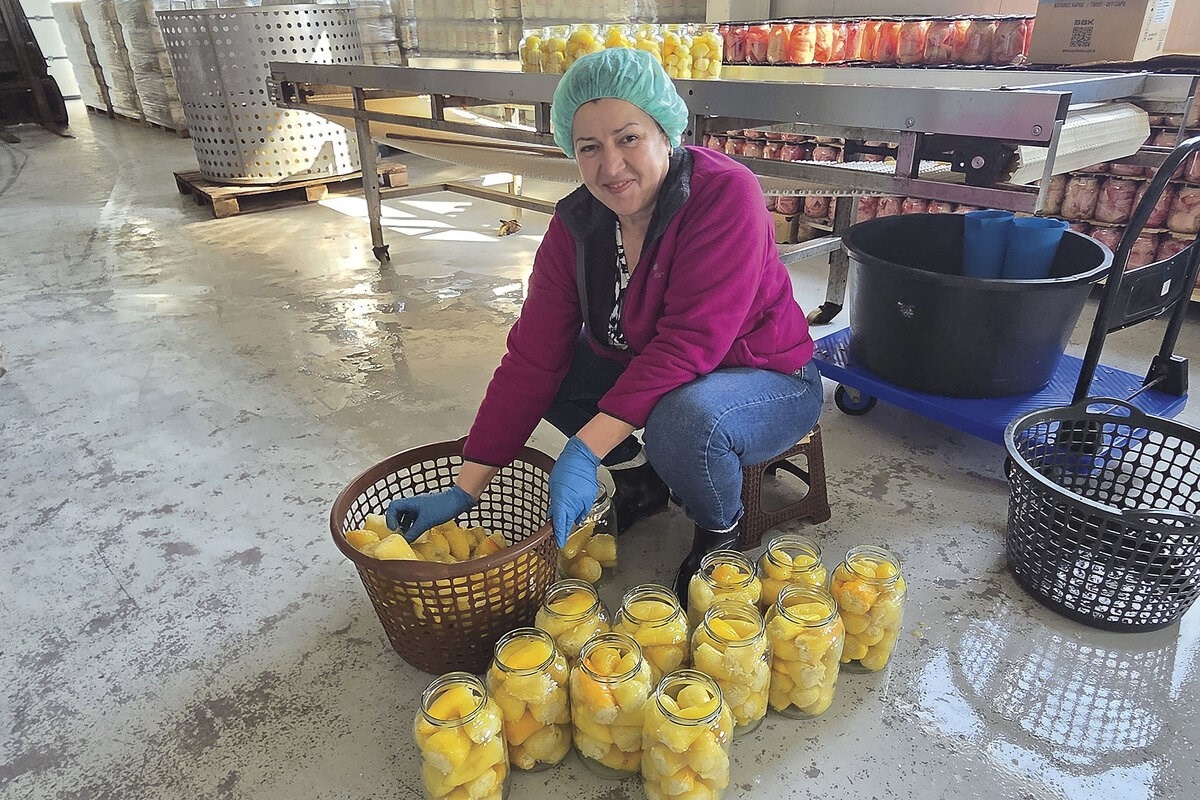 Isabelle de PommereauA KB Krusha employee with some of the factory’s products.
In 2019, when a fire destroyed her small factory, Germany was the first to help her rebuild. She calls its support her “pillar of growth.”
In 2021, the cooperative moved into a modern, glass-paneled headquarters. A grant from the European Union covered slightly more than half of the €600,000 (about $702,000) cost. Securing a loan for the rest was difficult, because like many Kosovar women, Ms. Hoti lacked collateral. She remembers sleepless nights. Then, she says, Albania’s former ambassador to Kosovo talked with banks on her behalf and rallied private investors around the project – support that grew out of a history of solidarity between Albania and the people of Kosovo.
Ms. Hoti’s rise is “breathtaking,” says Faton Nagavci, executive director of the business association Organika, who worked in Krushë e Madhe immediately after the war. “The change-maker in her is that she got women to process, to make things – not just to collect and sell,” Mr. Nagavci explains. What began as “a very sad story turned out to inspire all the other women,” he adds.
Today, 37 full‑time female employees and dozens of seasonal workers at the cooperative produce tens of tons of ajvar a year. Much of it is bound for Europe and, increasingly, the United States, thanks to a vibrant diaspora. Ms. Hoti has become a “role model on how to build and grow a business from the ashes,” says Hartim Gashi, president of Kosovo’s fruit and vegetable processors association.
By enabling widows to transcend expectations and earn incomes, Ms. Hoti helped open a national conversation about women’s roles in society – a debate gaining momentum, says Shpresonë Grulaj, a Kosovo-born scholar at Charles University in Prague. (Ms. Hoti is running June 7 to be a deputy in Kosovo’s Assembly.)
Women’s empowerment – from access to employment to access to land – has become a priority at conferences and in international aid programs, says Danijella Çoça, co-founder of EcoKosWomen EKW, a nongovernmental organization that supports women and girls in rural areas. In recent years, the number of women‑led enterprises has surged, she adds.
Beyond economics, Ms. Hoti “changed the mindset of the whole Krushë e Madhe,” says filmmaker Blerta Basholli, whose 2021 drama, “Hive,” brought Ms. Hoti’s story to global attention. Without Ms. Hoti, she notes, “many women might have remained trapped in isolation.”
A day before the trip to Albania, the women sit in a bright, high‑ceilinged hall, carefully folding fermented cabbage leaves into tight rolls that will be sealed in jars of brine and shipped, ready to be stuffed with minced meat for sarma, a traditional Balkan dish. Ajvar remains the heart of the business, but Ms. Hoti has expanded to 40 products, including pickled vegetables and pepper spreads blended with yogurt, ensuring work through every season.
Ms. Hoti moves across the floor with energy, joking and laughing as she oversees production.
“We’ve gone through a lot,” says Shqipe Sejfullahu, a mother of six. “We do everything together: singing, crying, sharing difficulties. It helps.”
Nearby, Fadile Hoti (no relation to Fahrije Hoti) – a widow who joined the cooperative early on – speaks with quiet pride. “With my work here, I raised my children, educated them, and married them off,” she says.
Much has changed in Krushë e Madhe since the war. Widows meet for coffee; women drive; small ajvar businesses are sprouting, although few are led by women, notes Fahrije Hoti. While change is uneven, she continues to meet with war survivors, women’s groups, and policymakers. When Ukrainian journalists in exile visited her recently, she offered them a message: “I lost my husband. I ran through the forest escaping bullets. And still, life continues.”
Each day, she is the first to arrive at the factory and the last to leave. “I always show up with a smile,” she says.
And each day, the widows of Krushë e Madhe peel vegetables, stir pots, and seal jars. Sometimes, they break for coffee and dancing. But always, they are building a future.
Page created on 6/9/2026 1:00:54 PM
Last edited 6/9/2026 1:10:07 PM