A Raisin in the Sun opened on January 26, 1959, at the Walnut Street Theatre. When the curtains closed, playwright Lorraine Hansberry found herself in an alleyway outside with her lifelong friend James Baldwin, immediately swarmed by a crowd seeking autographs. “The Black people crowding around Lorraine,” Baldwin would later write in the intro of Hansberry’s memoir To Be Young, Gifted and Black, “whether or not they considered her an artist, assuredly considered her a witness.” It was a fitting word. Already on society’s periphery — as a Black woman, a lesbian, a communist — Hansberry spent most of her life on the outside looking in. It was precisely this position that made her one of the most astute artists of her generation.
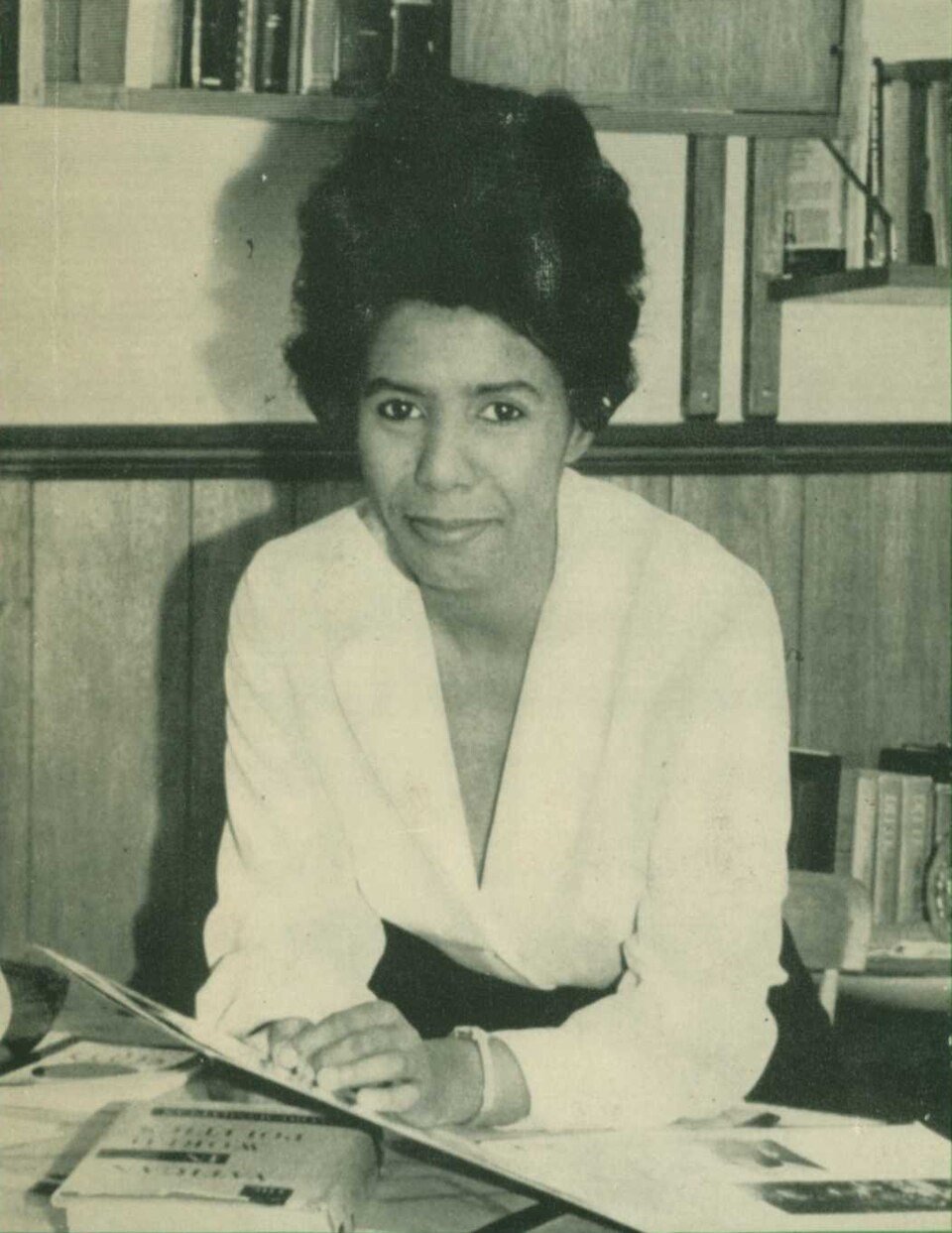 Playwright Lorraine Hansberry (c. 1965)Jacket design not credited, Public domain, via Wikimedia Commons
Lorraine Vivian Hansberry was born May 19, 1930, in Chicago, to a family that had migrated north during the Great Migration. The Hansberrys were relatively affluent — her father a real-estate broker, her mother a local politician — yet were still crowded into the tenement-like housing of Chicago’s Black working class in the South Side. This tension between privilege and confinement was formative: When the five-year-old Hansberry was gifted a white fur coat during the Depression, as Anne Cheney notes in the biography Lorraine Hansberry, she was “assailed with fists, curses, and inkwells” by her poorer classmates. Rather than resent them, she respected those “who refused to apologize for [their] poverty.” The class contradictions she lived inside became the very marrow of her art. Multiple Black intellectuals — W.E.B. Du Bois, Langston Hughes, Paul Robeson — visited the Hansberrys, but it was Robeson that showed her art and politics could exist in union; a belief she carried for the rest of her life.
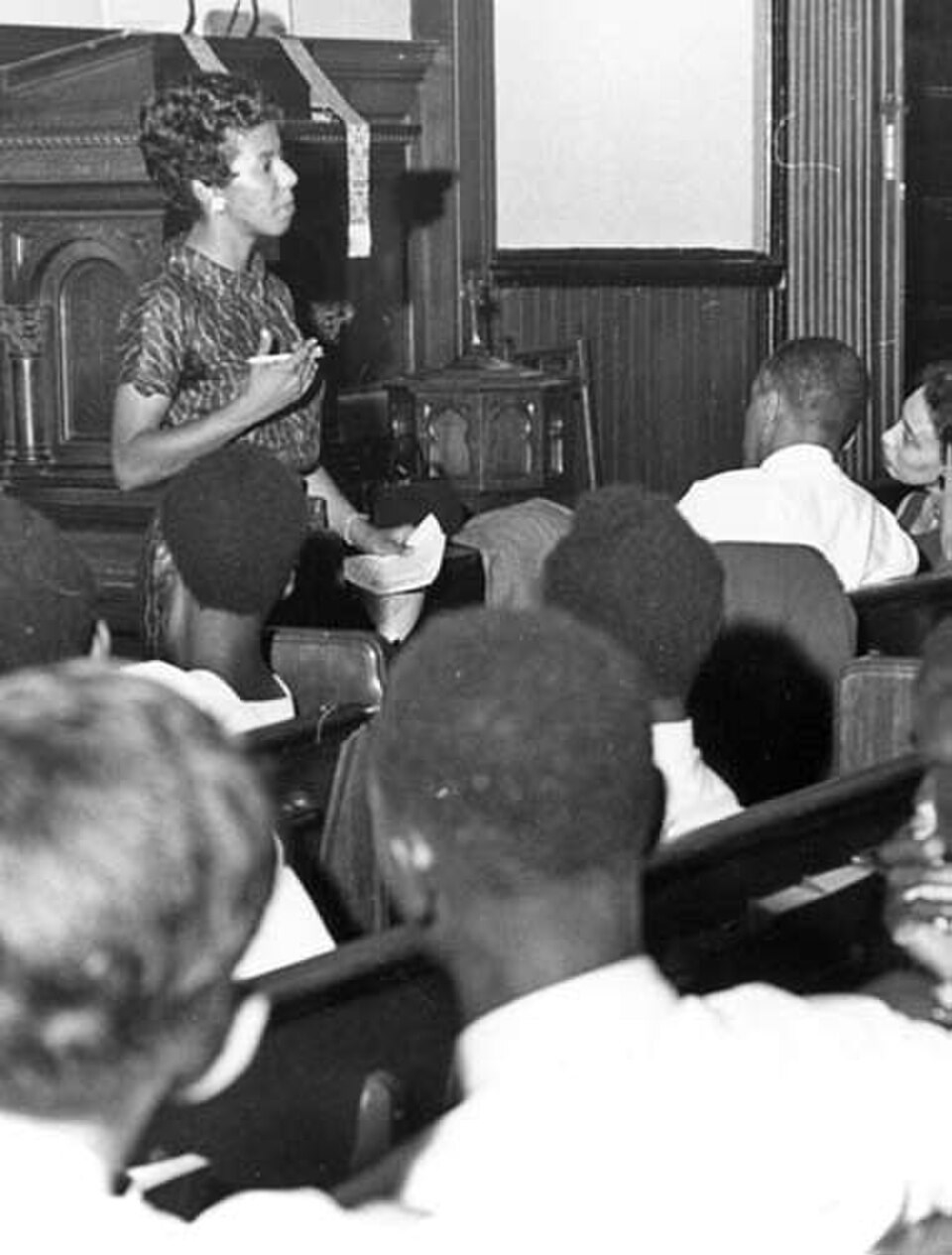 Hansberry speaking to an audience (c. 1959-1960)See page for author, Public domain, via Wikimedia CommonsIn 1948, Hansberry left for the University of Wisconsin-Madison to pursue an art degree. Despite the school’s progressive reputation, Black students were barred from on-campus housing. Ever defiant, Hansberry pushed back — successfully petitioning to live at the predominately-white Langdon Manor after residents voted her in, being “won over by her warmth and charm.” But she was still restless, being more engaged with activism than coursework; joining the Communist Party USA, supporting progressive third-party Henry Wallace in his presidential campaign, and becoming campus chairwoman of the Young Progressives of America. Academia wasn’t her place. Hansberry left before her sophomore year was out — she knew where she needed to be.
“New York,” Cheney notes, “is a city of outsiders. Sometimes they form societies.” In 1951, at just 20, Hansberry moved to Harlem and joined the Black leftist newspaper Freedom, reuniting with Robeson and finding a mentor in Du Bois. The paper focused on worker-led and anti-colonialist movements, and Hansberry threw herself into the work — writing articles and reviews, teaching Black youth at the Frederick Douglass School, and picketing on the side. On one such picket line she met Robert Nemiroff, whom she married in 1953. The marriage provided artistic and financial support, even as Hansberry privately understood herself to be lesbian. The two divorced in 1961, though they remained close until her death. Each of these identities — race, politics, sexuality — pushed her further to the margins. And from these margins she watched, and she wrote.
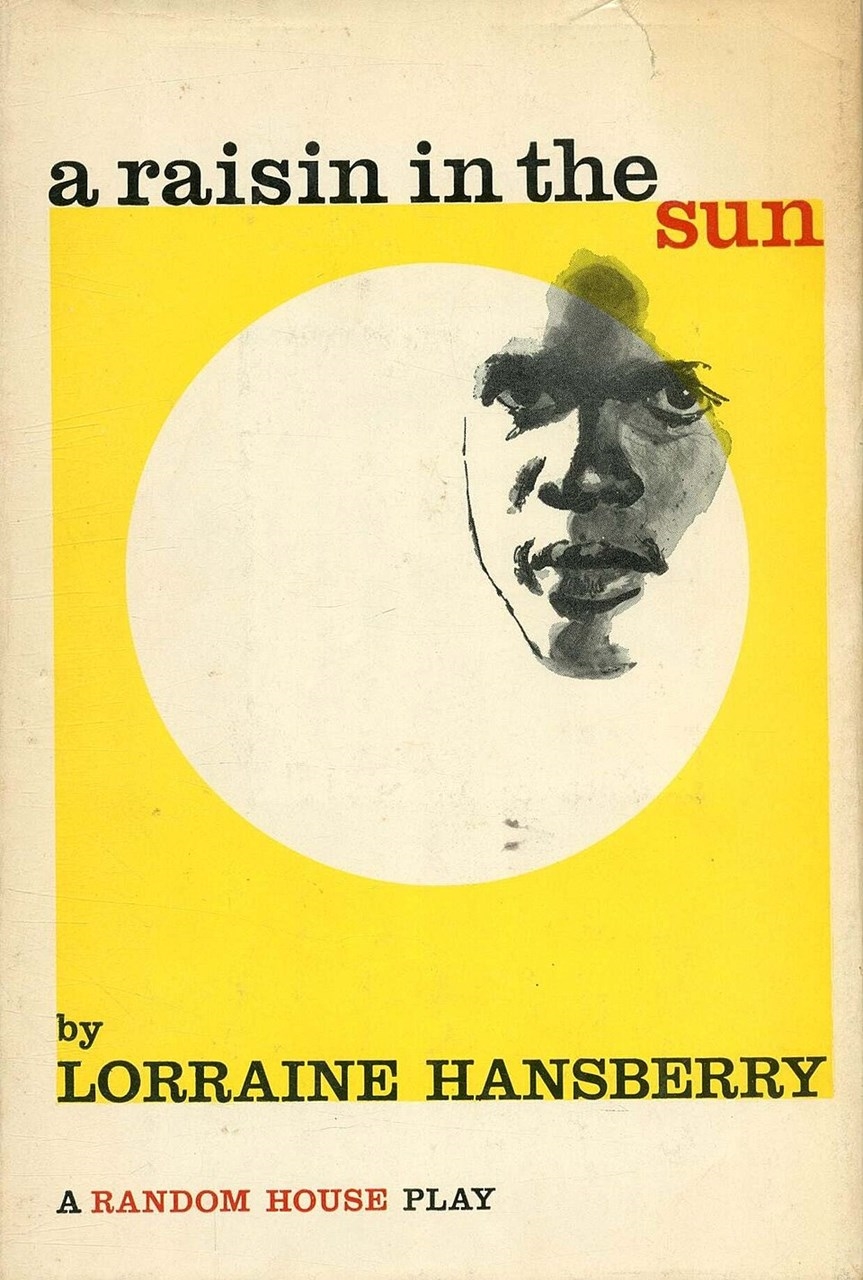 First-edition cover of "A Raisin in the Sun" (1959)Jacket design by Stan Phillips and Mel Williamson, Public domain, via Wikimedia CommonsHansberry finished her first play in 1957. Two years later it opened at the Ethel Barrymore Theatre, making it the first Broadway play produced by a Black woman. Drawing heavily on her own life — particularly the Hansberry v. Lee case, in which her family’s move into a white neighborhood in Chicago sparked a legal battle — the play centered on a working-class Black family navigating dreams deferred by a society indifferent to them. “What I wanted to do,” Hansberry said in a 1959 interview — published in the book Conversations with Lorraine Hansberry by Mollie Godfrey — “[was] take a group of Negroes and successfully involve them in life, [so] I could get the audience to accept them as people with whom they share a common ground.” The play won popular and critical acclaim, and Hansberry became the youngest American and first Black playwright to win the New York Drama Critics’ Circle Award. The play has been adapted and reran several times since it first debuted.
Tragically, Hansberry’s life was cut short on January 12, 1965, after a nearly two-year battle with pancreatic cancer. She was 34. But her work had already done what she believed art was capable of — carrying the “energy to change things.” She had turned a lifetime of exclusion into a lens, and through it let the audience see what she saw: a world that owed its most marginalized people something better. As Langston Hughes wrote, in the words that gave her play its name: “What happens to a dream deferred? Does it dry up like a raisin in the sun?” Hansberry spent her whole life insisting the dream didn’t have to be.
Page created on 5/3/2026 5:13:09 AM
Last edited 5/8/2026 8:26:30 AM
Knutson, Käri. UW Women at 150: Looking for — and finding — Lorraine Hansberry. [Online] Available https://news.wisc.edu/uw-women-at-150-looking-for-and-finding-lorraine-hansberry/.2018.
Cheney, Anne. Lorraine Hansberry.Boston: Twayne Publishers, 1984.
Godfrey, Mollie. Conversations with Lorraine Hansberry.University Press of Mississippi, 2021.
Hansberry, Lorraine. To Be Young, Gifted, and Black.New York City: The New American Library, Inc., 1970.
Tensley, Brandon. Lorraine Hansberry Was More Radical Than You Remember. [Online] Available https://psmag.com/social-justice/lorraine-hansberry-the-radical/.2018.