The Beautiful Struggle
“Nothing is given to man on earth - struggle is built into the nature of life, and conflict is possible - the hero is the man who lets no obstacle prevent him from pursuing the values he has chosen” - Andrew Bernstein. Heroes are crafted upon struggle; they all begin their journeys at the bottom of a mountain. Their climb to the top, even through various obstacles, is what defines them. We look up to heroes to reflect our ideal character traits, the reflection we long to see in the mirror. Heroism is the courage to fight through until the very end, the audacity to risk life to save others, and the integrity to never abandon core values. Additionally, for me, heroes are not people who do good deeds only once in a while; they endure numerous difficult situations and demonstrate a persistence rooted in bravery. They constantly push to find ways to better society and ensure their voice is heard no matter what the cost. Genuine heroes stay true to their convictions and believe in their morals so much that they sacrifice themselves for the greater benefit of the world around them.
Few people in history have come close to the iconic level of heroism exemplified by Martin Luther King, Jr. Like all human beings, King had flaws, but no one could have predicted that such an ordinary boy would become such an extraordinary icon. Born on January 15, 1929, Martin Luther King, Jr. was a civil rights leader and prominent activist in the mid-1900s. King grew up in a middle-class family of Baptist ministers in Atlanta, Georgia and witnessed racism as part of his daily life. It was the cruel discrimination and his father’s powerful influence that inspired King to lead many protests for equal rights and fair treatment. In constant pursuit of advancement, he founded the Southern Christian Leadership Conference (SCLC), a group designated to achieving equal rights for all. He was well known for maintaining peaceful ways throughout his entire career and always encouraged nonviolent resistance over brutal force. Even through the hardest of times and the worst of disadvantages, King constantly strived for equality, something in which he strongly believed. Valuing the quest for civil rights more than himself, he was the first to break the silence that stemmed from fear and took a stand against a corrupt American standard. As a result of his loyalty to the pursuit of justice, his popularity spread nationwide. It is not the acquired fame that made Martin Luther King, Jr. heroic, but how he courageously persevered through times of adversity with good intention, and sacrificed himself for the well-being of humankind.
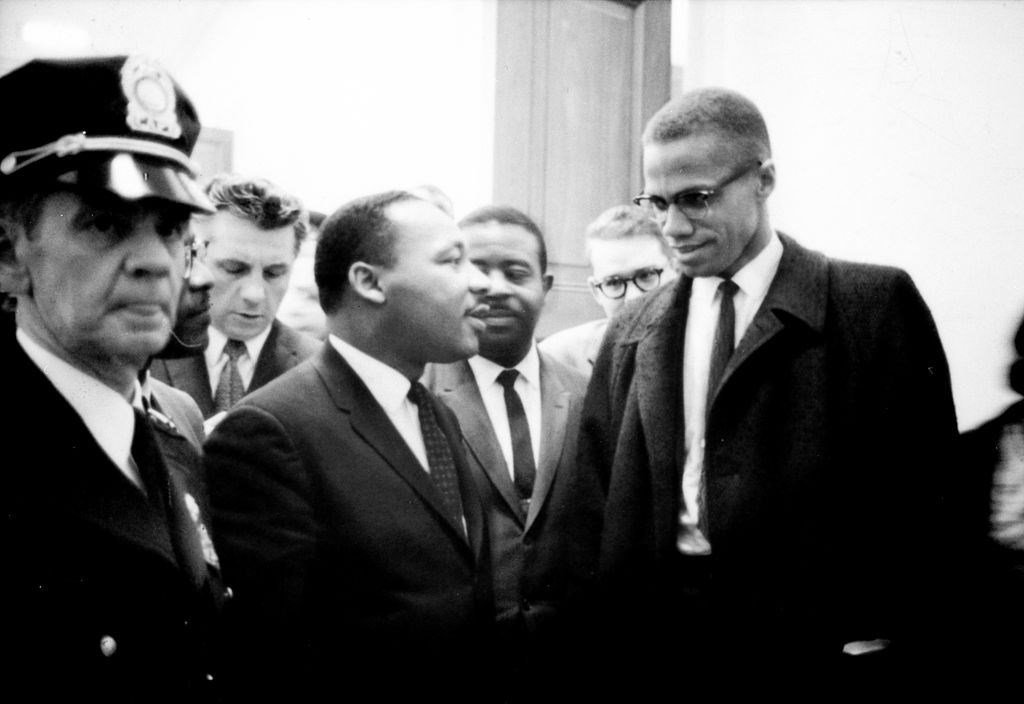 King side by side human rights activist Malcolm Xhttps://commons.wikimedia.org/wiki/Martin_Luther_King,_Jr.#/media/File:MartinLutherKingMalcolmX.jpgKing’s ability to overcome hardships and his firm allegiance to his morals were what made him the driving force of the civil rights movement. While speaking at a recognition dinner for the Nobel Peace Prize in Atlanta, he admitted that he had to return to places where segregation was at its peak:
"Something tells me that the ultimate test of a man is not where he stands in moments of comfort and moments of convenience, but where he stands in moments of challenge and moments of controversy. So I must return to the valley - a valley filled with misguided bloodthirsty mobs, but a valley filled at the same time with little Negro boys and girls who grow up with ominous clouds of inferiority forming in their little mental skies; a valley filled with millions of people who, because of economic deprivation and social isolation, have lost hope, and see life as a long and desolate corridor with no exit sign" (Carson 263-264).
Avoiding danger is human nature, yet King returned to combat the “bloodthirsty mobs” head-on, which represented his fearless spirit and strength during harsh circumstances. Without the strong-hearted dedication he demonstrated in actions such as this, discrimination would be much more prevalent than it is today. King was one of the few activists who went above and beyond to address racism where it was most rampant, and it was this heroic bravery that helped save the movement over and over again. At the time, white men were known for commonly using violence to assert their dominance over the minorities contesting their power. Aware of this unfortunate reality, King still remained faithful to his principles:
"I cannot make myself believe that God wanted me to hate. I’m tired of violence, I’ve seen too much of it. I’ve seen such hate on the faces of too many sheriffs in the South. And I’m not going to let my oppressor dictate to me what method I must use. Our oppressors have used violence. Our oppressors have used hatred. Our oppressors have used rifles and guns. I’m not going to stoop down to their level. I want to rise to a higher level. We have a power that can’t be found in Molotov cocktails" (Carson 331).
King did not want to hate, or use hate as a means to an end; it was important to him to rise above and conquer the hate peacefully and honorably. Even with the option of fighting fire with fire at a time of inconvenience, his decision to be the “bigger man” in the fight proved an unbreakable bond with his own character. Although he was bold, King always maintained a close connection to his core values, which garnered respect and admiration from people all over the world. He possessed an integrity that was so influential it kept the movement from spiraling out of control, and instead paved the road for future advancements in racial justice.
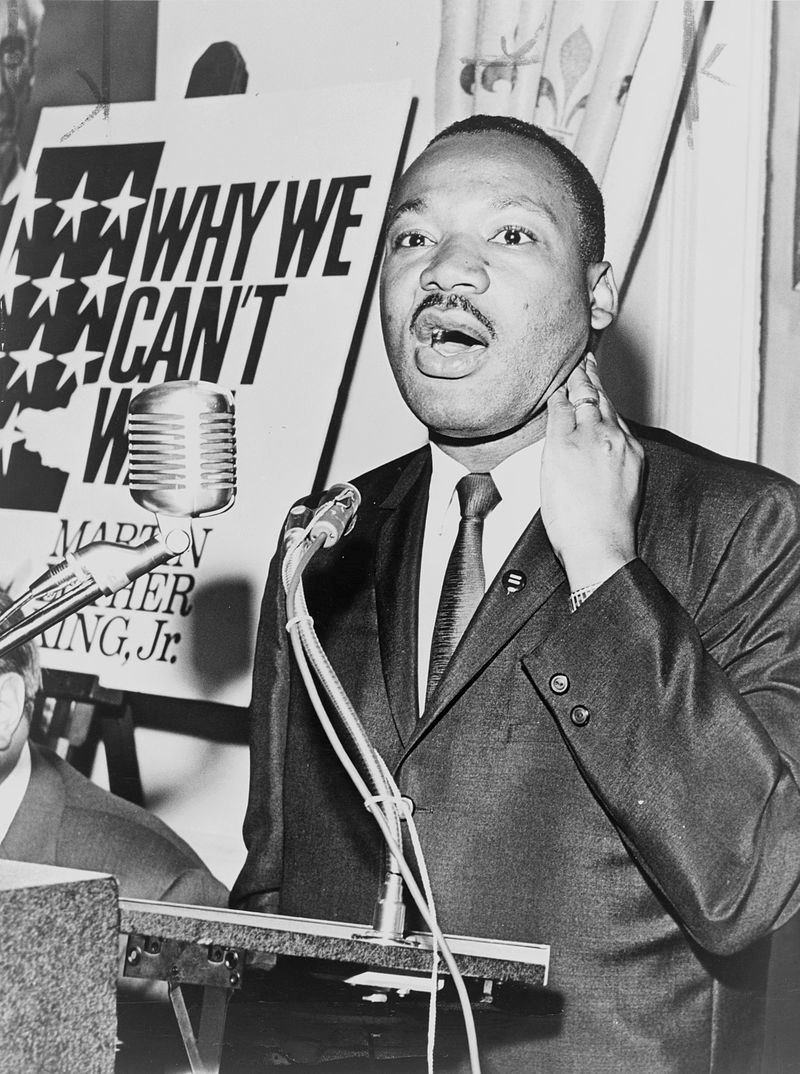 Martin Luther King, Jr. advocating for nonviolence at a press conferencehttps://commons.wikimedia.org/wiki/Martin_Luther_King,_Jr.#/media/File:Martin_Luther_King_Jr_NYWTS_4.jpgKing cared more about the movement than himself, and was selfless as he continually sacrificed for the well-being of all people. When King was awarded the Nobel Peace Prize in 1964 for his efforts toward fairness, he chose to return the prize back to his people: “At the age of thirty-five, Martin Luther King, Jr., was the youngest man to have received the Nobel Peace Prize. When notified of his selection, he announced that he would turn over the prize money of $54,123 to the furtherance of the civil rights movement” (“The Nobel Peace Prize 1964”). King was not a wealthy man, and could have greatly benefited from the money for himself and his family. His decision to donate the prize money back to the pursuit of racial justice was a selfless act, and further confirmed his solid commitment to the cause. The giving of thousands of dollars and countless hours went far beyond what was ever asked of King, and as a result, significantly boosted the overall progression and success of the campaign. In addition, his dedication to the movement forced him to sacrifice some of his personal enjoyments, one of which was time with his own family:
"One of the frustrating aspects of my life has been the great demands that come as a result of my involvement in the civil rights movement and the struggle for justice and peace. I have to be away from home a great deal and that takes me away from the family so much. It’s just impossible to carry out the responsibilities of a father and husband when you have these kinds of demands" (Carson 38).
As a middle-aged man with young children, one of his greatest joys was being with his family. For King to choose serving as a director over spending time with his wife and children shows his immense dedication to the fight for equality. His constant commitment and drive is what, at times, single-handedly saved the campaign from falling apart at points of disaster. King’s selflessness and devotion to the civil rights movement motivated a nation, and transformed the American dream of a fair country into an upcoming reality.
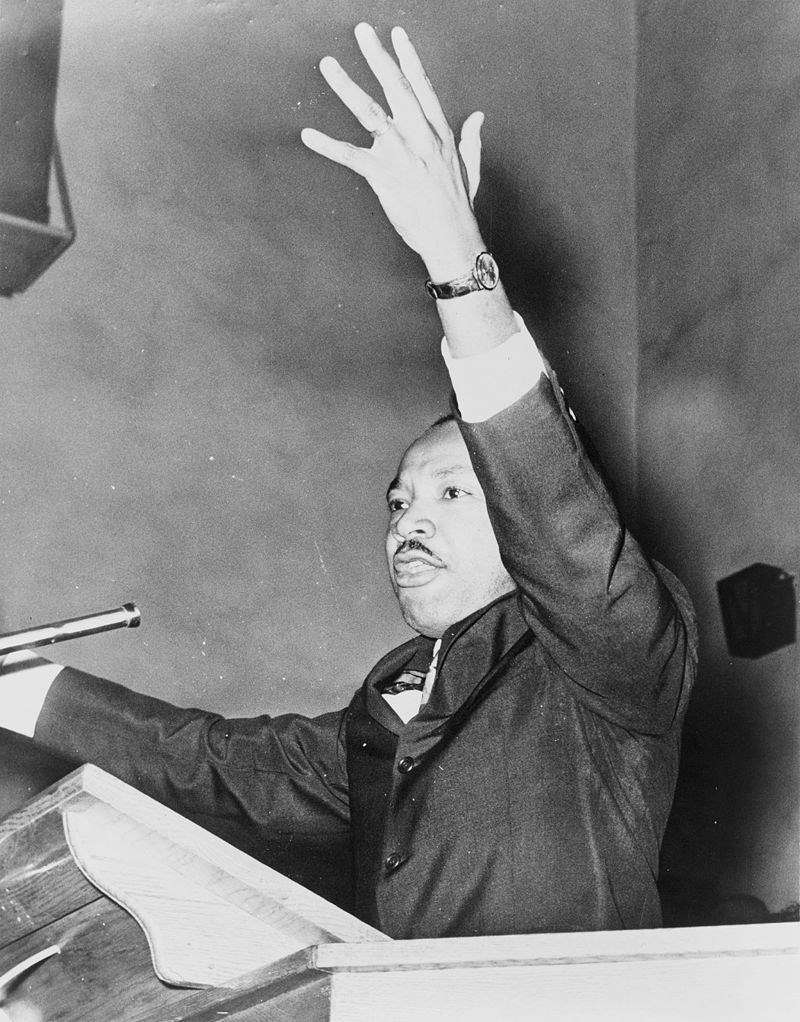 Martin Luther King, Jr. speaking at a freedom rally at Washington Temple Churchhttps://commons.wikimedia.org/wiki/Martin_Luther_King,_Jr.#/media/File:Martin_Luther_King_Jr_NYWTS_3.jpgWith the overwhelming obstacles that he faced, Martin Luther King, Jr.’s countless sacrifices and courageous leadership showed others what it takes to be a true hero. By building a reputation around peaceful, yet resilient resistance, he became one of the greatest political activists in history. He maintained his strong morals and only wanted the best for everyone, including the hateful white people who gave him an infinite number of reasons to hold a grudge against them. Because King remained so calm and sincere during the movement, he was able to make monumental strides toward a more tolerant country.
Throughout his life, he had his high points and low points: “He was arrested upwards of twenty times and assaulted at least four times; he was awarded five honorary degrees; was named Man of the Year by Time magazine in 1963; and became not only the symbolic leader of American blacks but also a world figure” (“The Nobel Peace Prize 1964”). Obstacles are what made King relatable, and overcoming them, is what inspired people worldwide. Personally, learning that such a famous icon, who was born into the disadvantage of being a black man, led the victory over the everlasting issue of segregation, tells me that I can truly do anything. Also, coming from an Asian race, I am forever grateful for the commitment and sacrifice he made into bettering my own life, and all of the ethnic minorities living in America. Without him, chances are that I, and millions of other people in America, would be living in misery today. As Andrew Bernstein originally said, struggle comes naturally, but it is the ones who pursue their values, no matter what, that are true heroes. King faced criticism, hardships, and even death threats, but never curbed his quest for equality. He built a trust so strong that people put their faith in him to be the one driving force that would never end. He set the bar for the potential change of future generations. I realize now that King was not born a hero; he was an ordinary boy with an extraordinary drive and passion to make things right for the people around him. For me, Martin Luther King, Jr. reflected my ideal character traits, such as bravery and the ability to overcome adversity. One day, I hope to look in the mirror with the same pride King had when he saw the tremendous influence of his efforts. Even though my life is relatively ordinary right now, it’s encouraging to know that heroism can be achieved by anyone and there is no reason for me not to obtain a similar level of greatness.
Page created on 2/14/2019 4:01:37 AM
Last edited 12/31/2020 8:47:40 PM
Carson, Clayborne. The Autobiography of Martin Luther King, Jr..Grand Central Publishing, 2001.
Haberman, Frederick W.. "The Nobel Peace Prize 1964.". [Online] Available https://www.nobelprize.org/prizes/peace/1964/king/biographical/.1972.