REPRINTED WITH PERMISSION FROM THE CHRISTIAN SCIENCE MONITOR
The group Plogging Nigeria has helped collect more than 50 metric tons of recyclables in the country, which its founder acknowledges is a small figure compared with the scale of the problem. But he is hopeful that one day there will be no need for “Ploggas,” as the group’s volunteers are known.
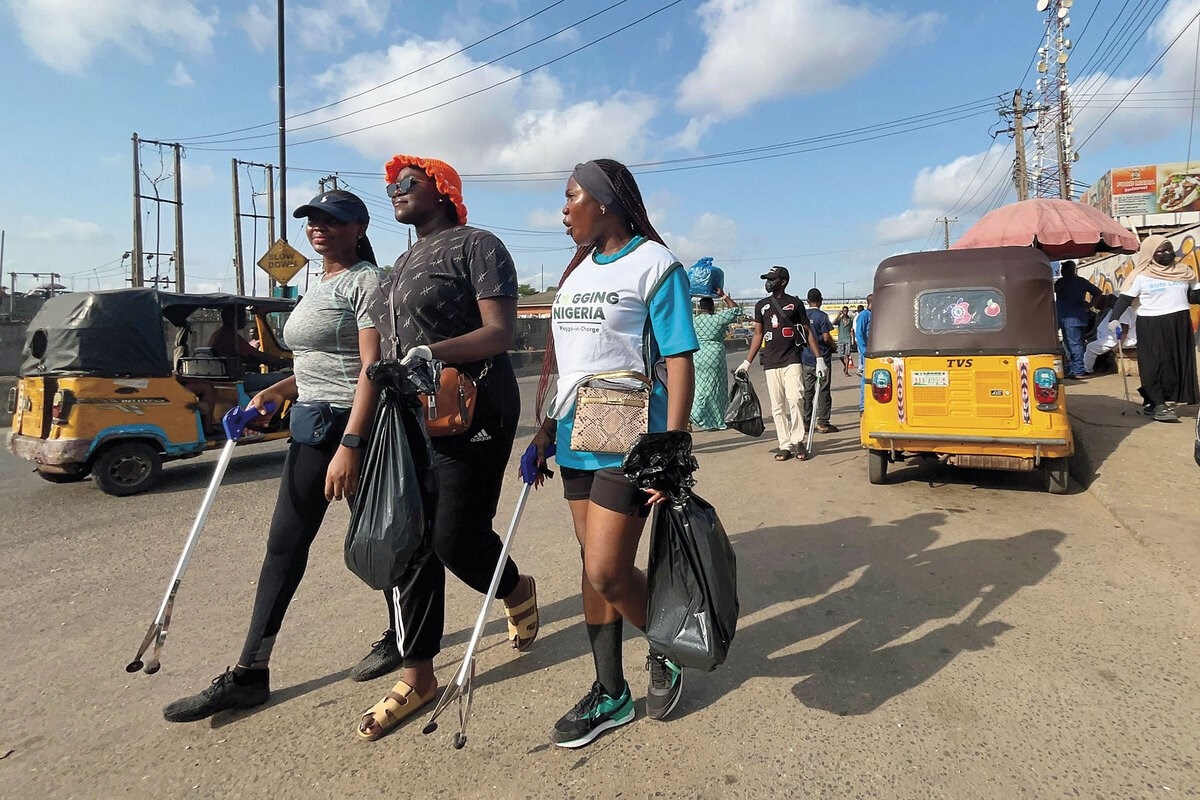 Volunteers from Plogging Nigeria and other helpers clear litter during a Saturday cleanup around a busy bus terminal in Lagos. Kate Okorie
| Lagos, Nigeria
At just past 8 a.m. on a Saturday, several dozen young people in athletic wear are moving briskly through a crowded outdoor bus terminal in Lagos, Nigeria. They stop every so often to peer around and pick up what the city has forgotten: A discarded shoe. Plastic bottles. So many crushed pouches of drinking water lying among weeds or wedged inside concrete gutters.
An hour and a half later, the young people – volunteers with the environmental group Plogging Nigeria – gather at a central point to get their trash bags weighed one by one on an orange hanging scale. In addition to collecting trash from the bus terminal, the volunteers, toting 12 black bags, had picked up all the garbage along the surrounding streets. A few more bags, including a tall mesh sack of plastic bottles, came in from locals who received cash in return. That brings today’s haul to nearly 153 kilograms (337 pounds).
A local recycling company later took away 56 kilograms of recyclables – plastic, paper, and nylon – the volunteers had sorted out. The remaining waste went to a municipal dump.
Plogging – picking up litter while jogging – started in Sweden but has flourished in Nigeria since 2018, when Mayokun Iyaomolere created an informal network there of volunteers known as Ploggas.
“When [Plogging Nigeria] started, we were just picking plastics, but we understood that we could not leave any waste behind,” says Mr. Iyaomolere, who now runs the nationwide volunteer network from his home base in Ibadan in southwestern Oyo state.
His ultimate ambition is for the Ploggas to become redundant. He wants Nigeria to be so clean that there is no waste left to pick up. “If we’re still plogging,” he says, “it should only be for the fitness part.”
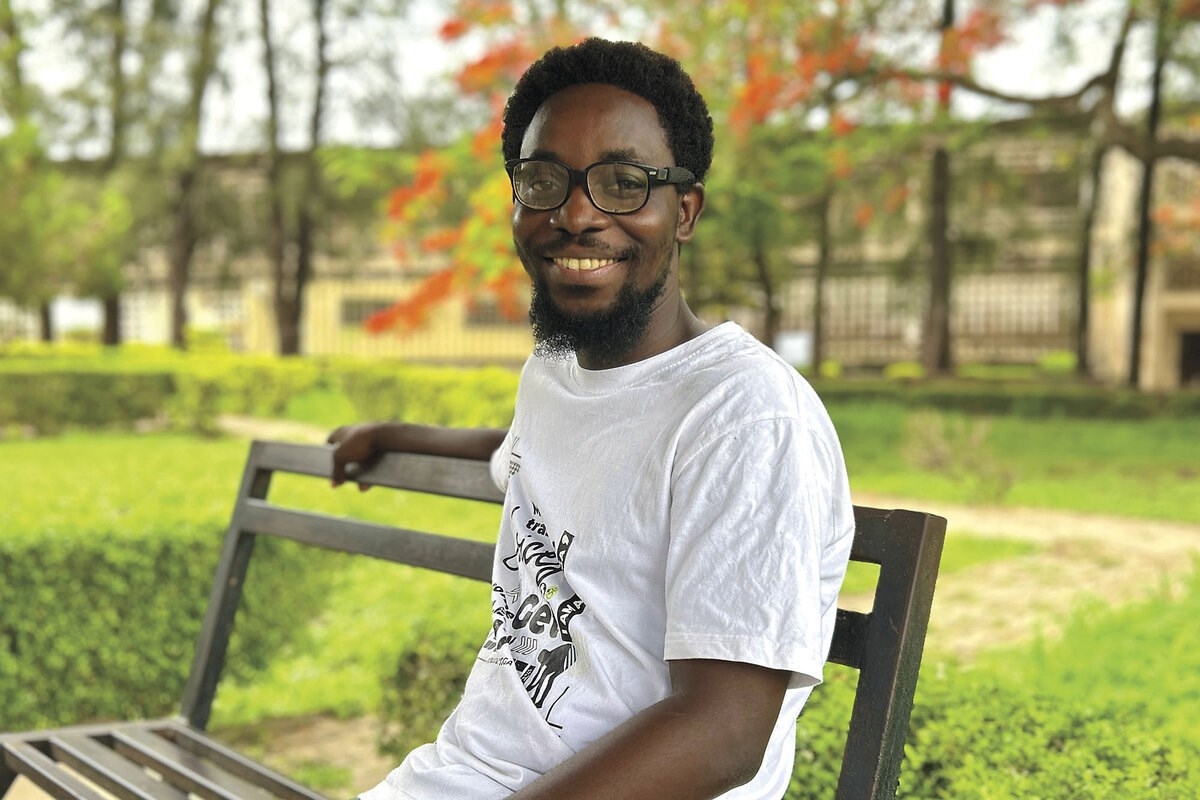 Kate OkorieMayokun Iyaomolere sits on the campus of the University of Ibadan, the site of one of Plogging Nigeria’s oldest campus communities, in Ibadan, Nigeria.
Mr. Iyaomolere grew up in Igbokoda, a town in the riverine region of southwestern Ondo state, where the rainy season brings flooding that routinely swallows the dirt roads. As a boy walking home from school, he once slipped off the planks laid across a flooded pathway and landed in the water with his books. But shoreline communities bordering Igbokoda had it worse.
“I always heard stories of these other communities that were getting attacked by the ocean,” he says.
As he grew older, little changed for these residents. Many lost significant stretches of land to the sea as government promises of shoreline protection came to nothing. “I felt their pain, and it’s what led me to become an environmentalist,” he says.
Mr. Iyaomolere earned a bachelor’s degree in biology education from the University of Benin in southwestern Edo state in 2009. Seven years later, he went to study environmental management for a master’s degree program at Obafemi Awolowo University in neighboring Osun state. In his first class, the lecturer spoke about studying not only for a certificate, but also to solve society’s problems. “It was like he was waiting for me,” Mr. Iyaomolere says.
Within six months, Mr. Iyaomolere was volunteering on environmental projects across campus and was so vocal about it that friends nicknamed him “Mr. Green.” It was around then that he understood flooding was a problem shared by many coastal communities.
In early 2018, a friend tagged him in a Facebook post about plogging, a concept that was new to Mr. Iyaomolere. But as World Environment Day approached, with the theme of “Beat Plastic Pollution,” Mr. Iyaomolere decided to mark the day with a plogging activity. He bought cleanup supplies himself and sent invitations around his university; 17 people turned up.
“To my surprise, people really enjoyed it,” he says. They wanted to do it every week, but he settled on every two weeks and set up a WhatsApp group to keep everyone connected. That was the birth of Plogging Nigeria.
Nigeria generates an estimated 44.5 million metric tons of solid waste a year, but only up to 30% is properly collected and disposed of. The rest is typically dumped on open land or burned. Informal networks such as Plogging Nigeria have stepped up to handle much of the growing pile.
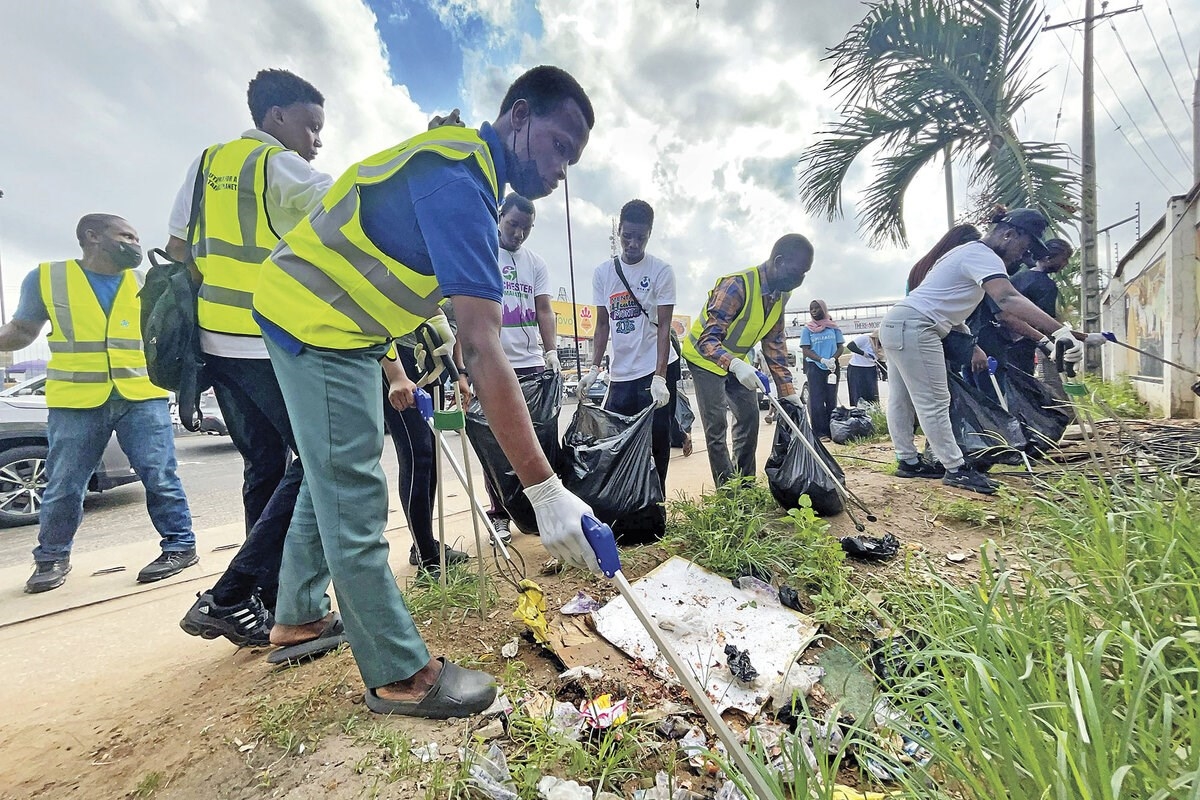 Kate OkorieA Saturday cleanup is underway around a bus terminal in Lagos.
Running on an open model that allowed anyone to start a plogging community anywhere, the network grew fast in its first five years. Last year, Mr. Iyaomolere says, he had to stop registering new plogging communities. “We want to deepen the work where we already exist,” he says. There are now 26 plogging communities spread across 16 states, in five of Nigeria’s six administrative regions.
As the network expanded, Mr. Iyaomolere set up a national council of about eight people to oversee the organization. Among them is a plogging director, to whom the community leaders report. Information travels along that chain.
Mr. Iyaomolere notes that the network’s WhatsApp groups and social media platforms have played a big part in keeping members in the loop on plogging events.
Priscilla Folayemi, who heads the Lagos plogging community, one of the largest off-campus groups, says, “Even when things are falling apart, [Mr. Iyaomolere] knows how to bring them under control.”
Mr. Iyaomolere is always reminding Ploggas whose movement it is. “If there are no Ploggas,” he says, “there is no Plogging Nigeria.”
Plogging Nigeria has helped collect more than 50 metric tons of recyclables in the country, which Mr. Iyaomolere acknowledges is a small figure compared with the scale of the problem. Nigeria generates an estimated 2.5 million metric tons per year of plastic waste alone.
“The worth of such grassroots work is in the aggregated efforts of all the players in the sector,” says Victor Oyejide, co-founder of a recycling company, Recycledge, in Ibadan. It receives about 70% of its recyclables from efforts such as the Ploggas’.
Grassroots communities “are the ones doing the [largest] volume of the work,” he says. Government, he adds, mostly stays at the edges, partnering with these communities doing the picking.
Mr. Iyaomolere often gets messages asking how to manage waste better. So, he built a national directory of verified waste collectors; it now lists 220.
To scale up the Ploggas’ efforts, he is interested in building environmental policies that support responsible waste disposal, infrastructure that drives behavioral changes, and direct access to waste collectors for every home. “People are starting to listen,” he says, his voice lifting.
Picking litter off the street was only ever the beginning.
Page created on 7/21/2026 7:42:13 PM
Last edited 10/21/2026 7:00:31 PM