REPRINTED WITH PERMISSION FROM THE CHRISTIAN SCIENCE MONITOR
The fashion designer known as Pathé’O never thought he’d end up owning his own clothing brand or making custom clothing for celebrities and African heads of state. Growing up in a village in colonial Burkina Faso in the 1950s, he didn’t dare to dream that big. Now, he has own shop in the working-class Abidjan neighborhood of Treichville.
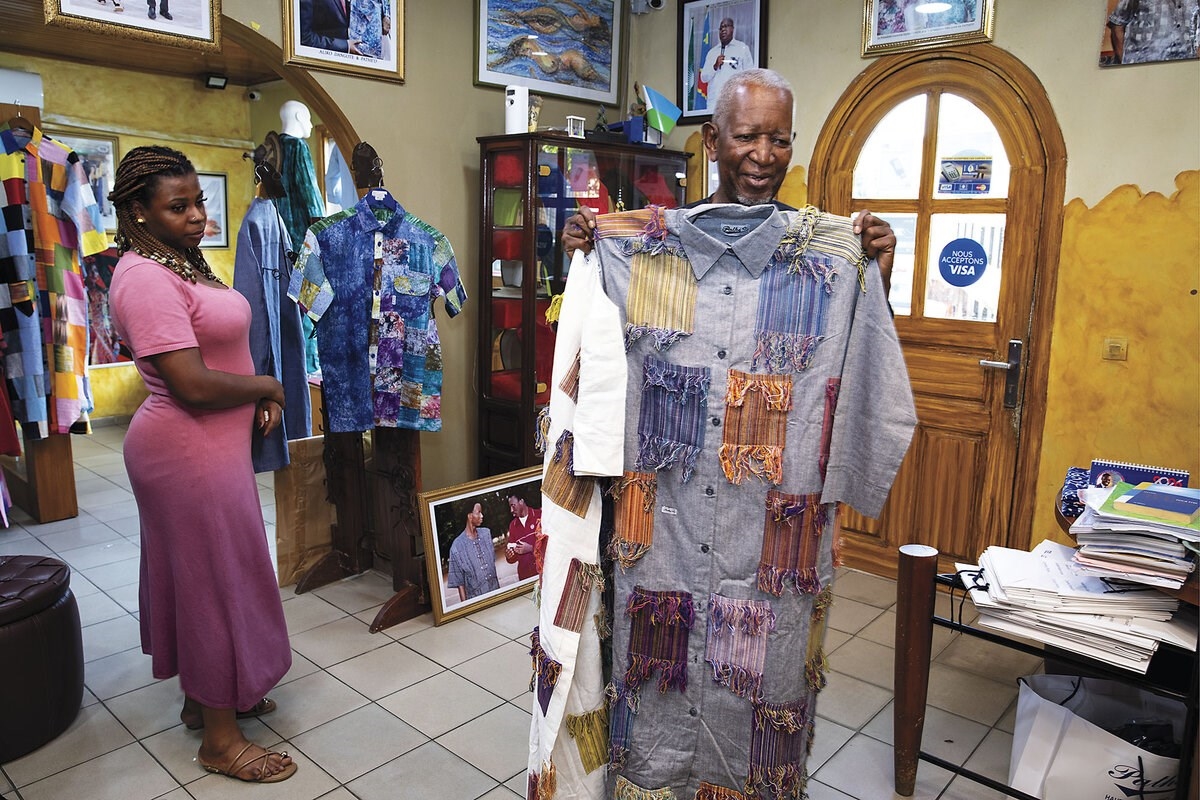 A DRESS TO IMPRESS: Ainé Pathé Ouédraogo, known widely as Pathé’O, displays an outfit he made for a client in Abidjan, Côte d’Ivoire. The tailor came from humble beginnings in Burkina Faso.Melanie Stetson Freeman
Abidjan, Côte d’Ivoire | | 2 min read
As the rhythmic clicking of a dozen sewing machines echoes through his small workshop, Ainé Pathé Ouédraogo weaves through the room, checking seams and hems. He holds a piece of multicolored tie-dye fabric up to the light, checking each stitch.
When you’re dressing the likes of Nelson Mandela, everything must be perfect.
The designer, known widely as Pathé’O, never thought he’d end up here – owning his own clothing brand or making custom clothing for celebrities and African heads of state. Growing up in a village in colonial Burkina Faso in the 1950s, he didn’t dare to dream big. “You’re just trying to survive one day to the next,” he recalls.
He credits his success to hard work. As a child, he picked wheat on Burkinabé plantations to scrape money together for his family, before following an older brother to Côte d’Ivoire. Once in the capital, Abidjan, Pathé’O took an apprenticeship with a Senegalese designer, learning how to tailor clothing while teaching himself new techniques.
Although he still hadn’t earned any money from his own work, Pathé’O was beginning to realize he had a special talent. “I remember making a piece of clothing, and the client looked down at me, this kid, and said, ‘You made this?’” says Pathé’O. “He couldn’t believe it.”
He eventually opened his own shop in the working-class Abidjan neighborhood of Treichville, but says he had to “fight to prove himself” as a tailor every day.
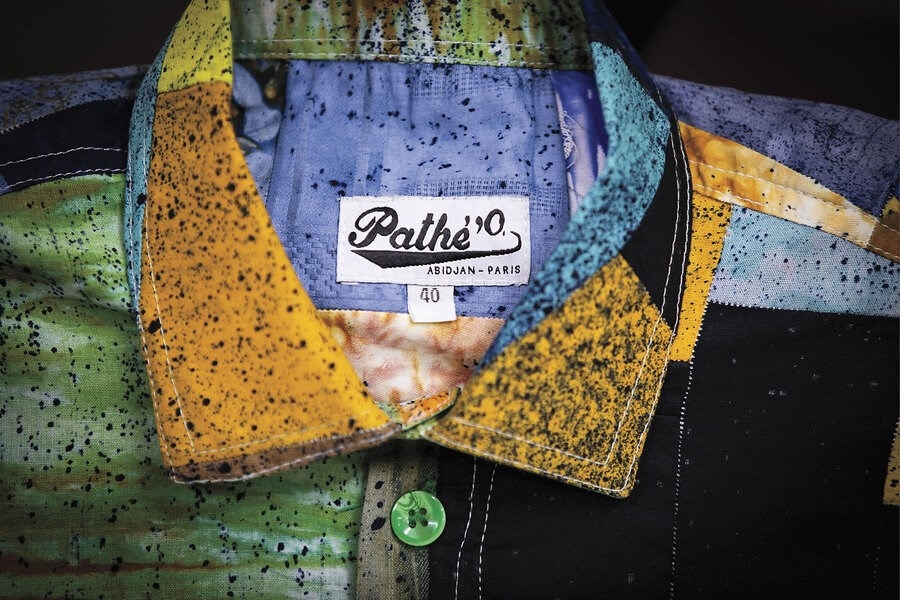 Melanie Stetson FreemanDEFYING LABELS: A men’s shirt designed by Pathé’O bears one of his tags. Each piece of cotton used in his designs is dyed individually, by hand, to produce the mottled pattern that is his calling card.
In 1987, Pathé’O won Cote d’Ivoire’s first Ciseaux d’Or – Golden Scissors – competition. But he didn’t get his big break until 1994, when Mandela was seen wearing one of his shirts – a gift from South African singer Miriam Makeba. He has since dressed African dignitaries, from Morocco’s King Mohammed VI to Nigerian businessman Aliko Dangote, Africa’s wealthiest man. In 2019, Pathé’O offered Pope Francis a piece of his fabric during an interreligious peace delegation at the Vatican.
“It’s an honor and a privilege to wear his clothes,” says Djeny Diarra, a fashion blogger who recently visited Pathé’O’s shop, across the street from his atelier.
Selecting an outfit from Pathé’O’s many colors and styles is a formidable task. Each piece of cotton used in his designs is dyed individually, by hand, to produce the mottled pattern that has become his calling card. Instead of discarding leftover fabric, he turns the scraps into swaths of patchwork. Pathé’O estimates that his employees have produced 300 unique motifs.
Unlike many brand designers, Pathé’O has kept his prices reasonable, allowing him to share his creations with the wider public. Promoting African designers is, he says, part of his wider mission – starting with himself.
“I wear my clothes every day,” he says. “Of course.”
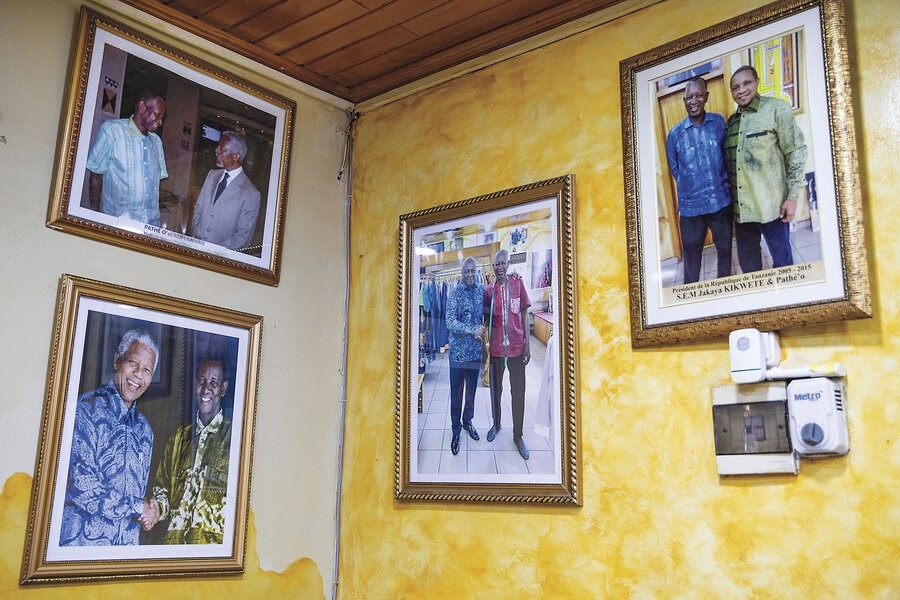 Melanie Stetson FreemanCLOTHES MAKE THE MEN: Photos of Pathé’O with his dignitary clients, including Nelson Mandela, hang on the wall of his shop.
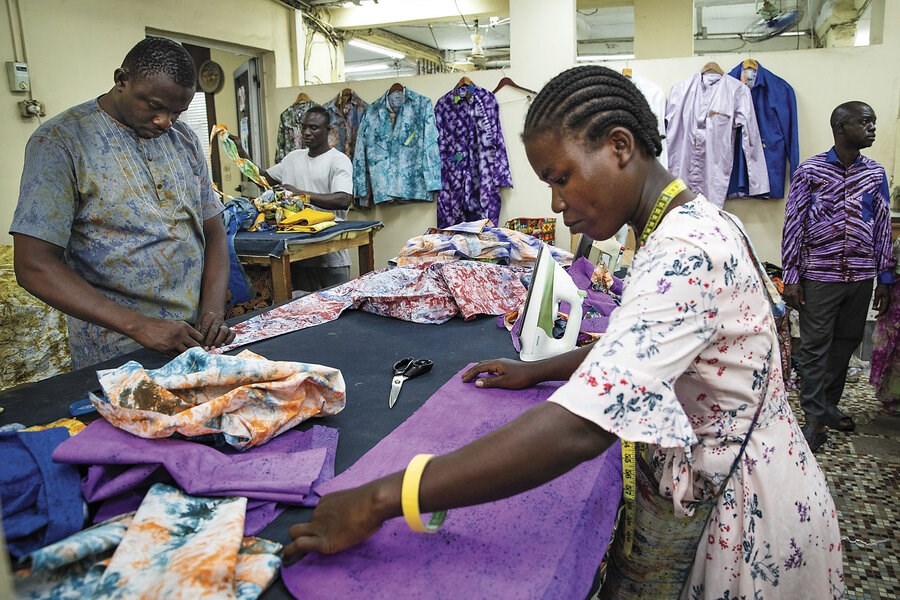 Melanie Stetson FreemanSHEAR TALENT: Workers cut out patterns in Pathé’O’s atelier, which is full of employees sewing, ironing, and packaging his designs.
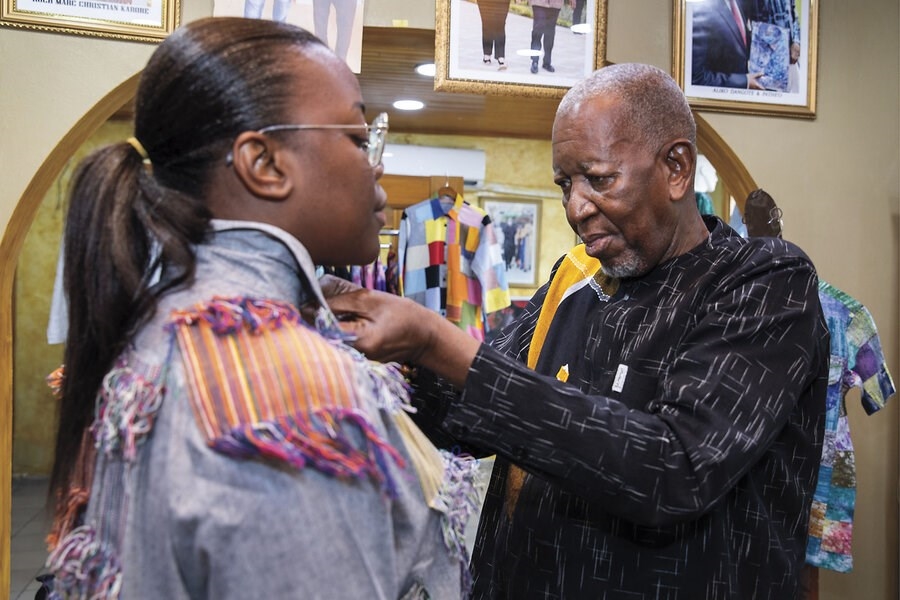 Melanie Stetson FreemanHAUTE OFF THE PRESS: Pathé’O works with client Djeny Diarra. He designed two possible outfits for the fashion blogger’s upcoming event.
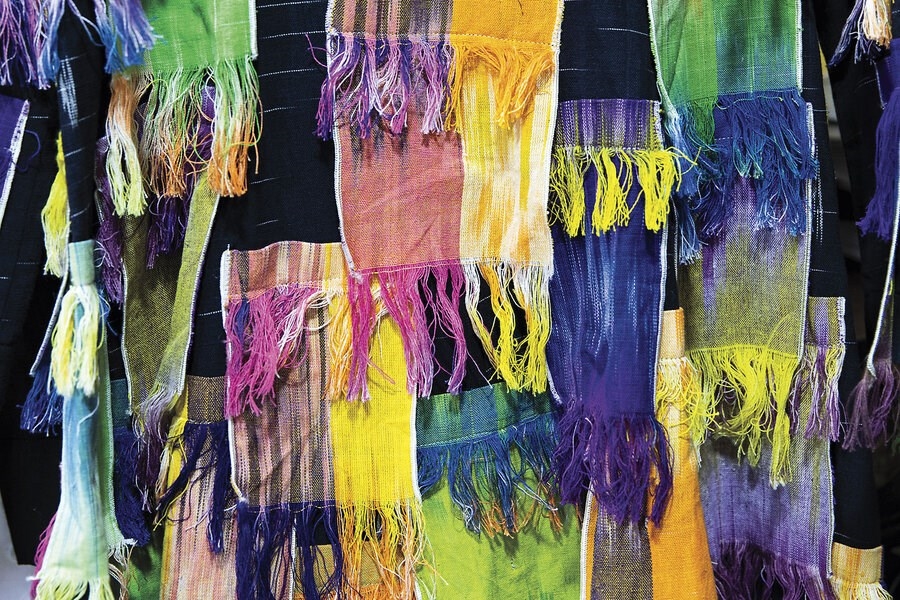 Melanie Stetson FreemanIN LIVING COLORS: Pathé’O is known for his uniquely hued fabrics and patterns. He estimates his employees have produced 300 unique motifs.
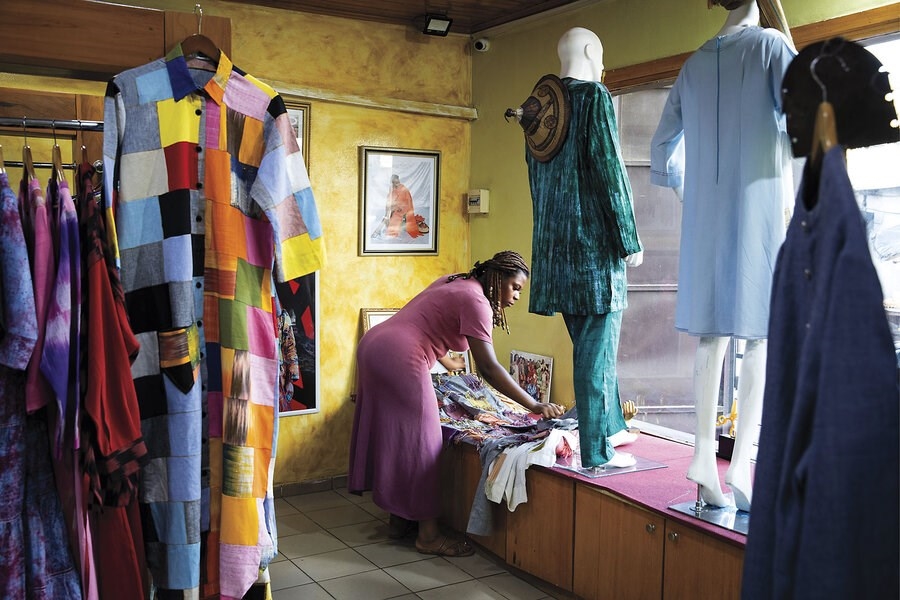 Melanie Stetson FreemanSTYLE GUIDE: A woman in Pathé’O’s shop folds a dress he designed.
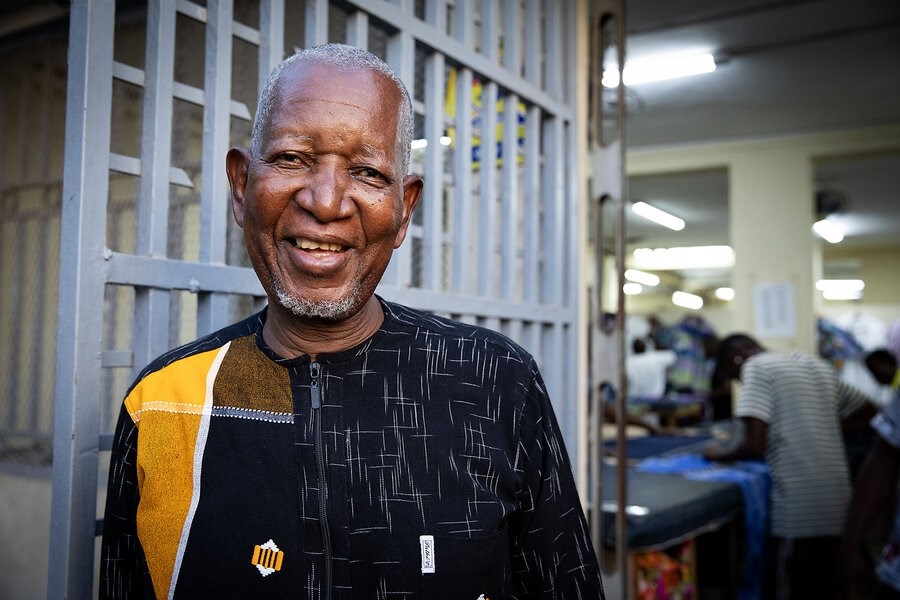 Melanie Stetson Freeman/StaffHE'S AN ORIGINAL: Pathé’O stands outside his atelier.
Page created on 9/18/2026 5:58:43 PM
Last edited 9/18/2026 6:11:08 PM