REPRINTED WITH PERMISSION FROM THE CHRISTIAN SCIENCE MONITOR
A brutal conflict is forcing many young Sudanese to starve, fight as soldiers, or toil in mines. At Our Father’s Cleft, they are instead provided refuge and education in hopes they will become change-makers who bring peace to the country.
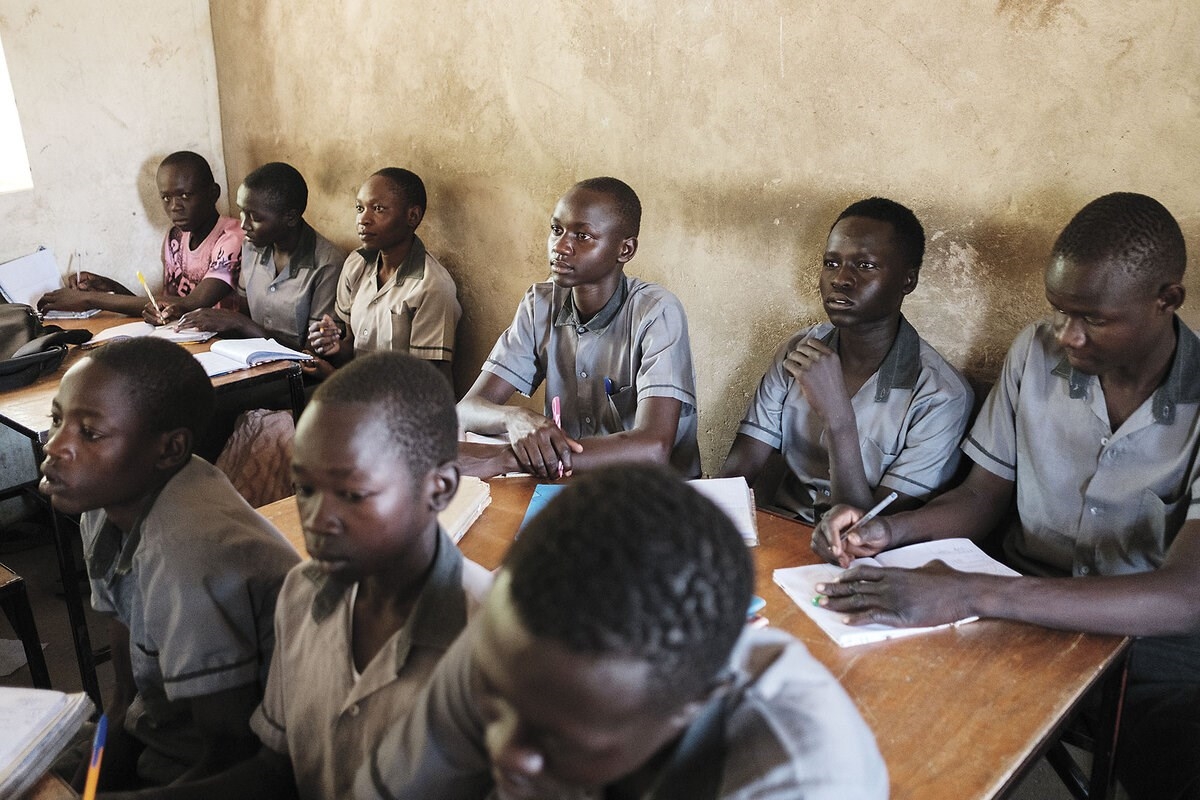 Students learn at Our Father’s Cleft, which cares for young people from about age 5 to 23. Guy Peterson/Special to The Christian Science Monitor
| South Kordofan, Sudan
In a dusty courtyard between sepia-colored mountain slopes, bright-eyed children in gray uniforms sing about respecting God and their elders. Their voices are high and clear, but the littlest struggle to clap along in time.
This is Our Father’s Cleft, a school and children’s home in the Nuba Mountains, a vast range spanning some 30,000 square miles in the borderland area between the conflict-racked countries of Sudan and South Sudan. Large numbers of children began arriving at Our Father’s Cleft after Sudan’s third civil war erupted in April 2023 – a testament to how many families have been torn apart as the fighting has spawned the worst humanitarian crisis in the world.
Director Ezekiel Ayub, who applauds the singers on this hot February day, works with his staff to provide shelter, education, and care to the children. Operating for more than a decade, Our Father’s Cleft is the only official orphanage in these mountains.
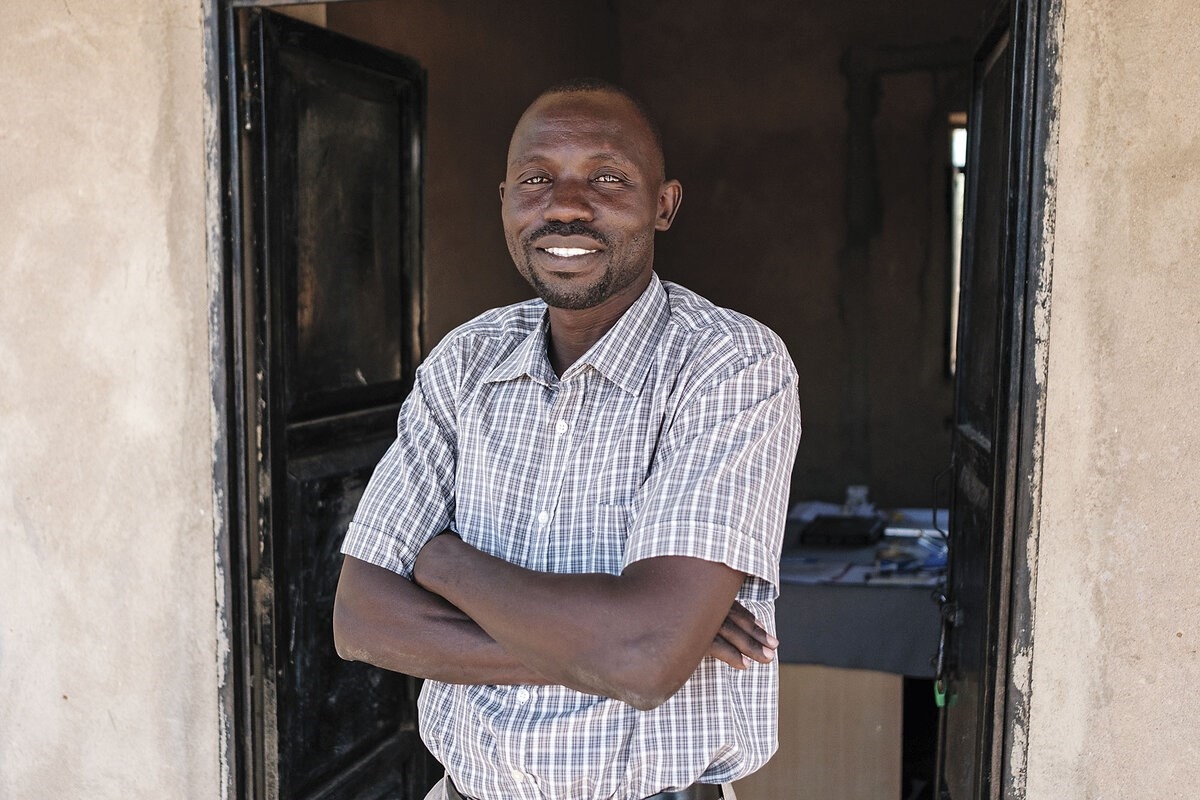 Guy Peterson/Special to The Christian Science MonitorEzekiel Ayub is director of Our Father’s Cleft, an orphanage in the Nuba Mountains in South Kordofan state, Sudan.
“They are missing the love of their parents,” Mr. Ayub says of his charges, some as young as about age 5. But, after time at Our Father’s Cleft, “they feel like they are part of the community.”
Our Father’s Cleft is home to 180 children and young adults and is educating some 300 more. Mr. Ayub knows firsthand what these children have endured. He spent his boyhood hiding in the caves of the Nuba Mountains during Sudan’s second civil war, which ran from 1983 to 2005. His family rarely had enough food to eat, and Mr. Ayub watched as other children around him grew sick and died.
He eventually escaped to Port Sudan, where he went to school, then returned to the Nuba Mountains and found the area devastated by conflict. He began working as a teacher in informal classrooms. “I wasn’t a good teacher,” he says modestly, “but at least I tried.”
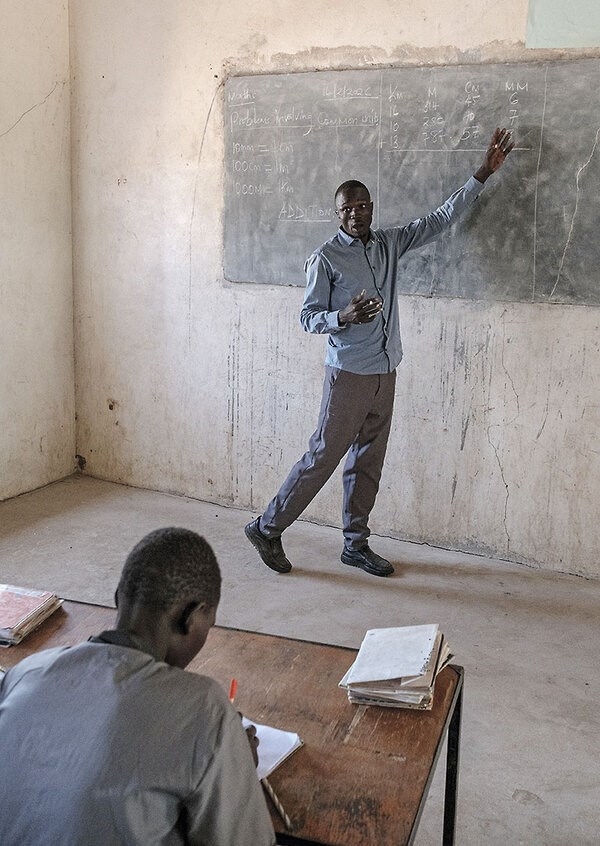 Guy Peterson/Special to The Christian Science MonitorA teacher explains how to measure distance during a math lesson.
Neighboring South Sudan won its independence in 2011, causing new conflict to erupt in the Nuba Mountains. Nuba communities sympathetic to the southern cause found themselves marooned in the north. The Sudanese Armed Forces rained bombs on the territory in an effort to stamp out another rebellion.
Mr. Ayub continued working. Drawing on his childhood experiences helped him to empathize with his pupils. The name Our Father’s Cleft comes from the mountain caves where he and his family used to hide.
Filmmaker Wil Davies has seen the impact of Mr. Ayub’s work firsthand. On a trip to Sudan last year, Mr. Davies sought out positive stories amid reports of violence and death. Everyone kept mentioning Mr. Ayub.
“There’s this man that just exudes calmness, that welcomes [children] into his school,” Mr. Davies says of the orphanage director. “He just offers something that so many children haven’t had over their short lifetimes.”
The war in Sudan is staggering in its scale. While estimates vary, the former U.S. envoy for Sudan suggested last summer that more than 400,000 have died. According to the International Rescue Committee, some 8.8 million people have been internally displaced.
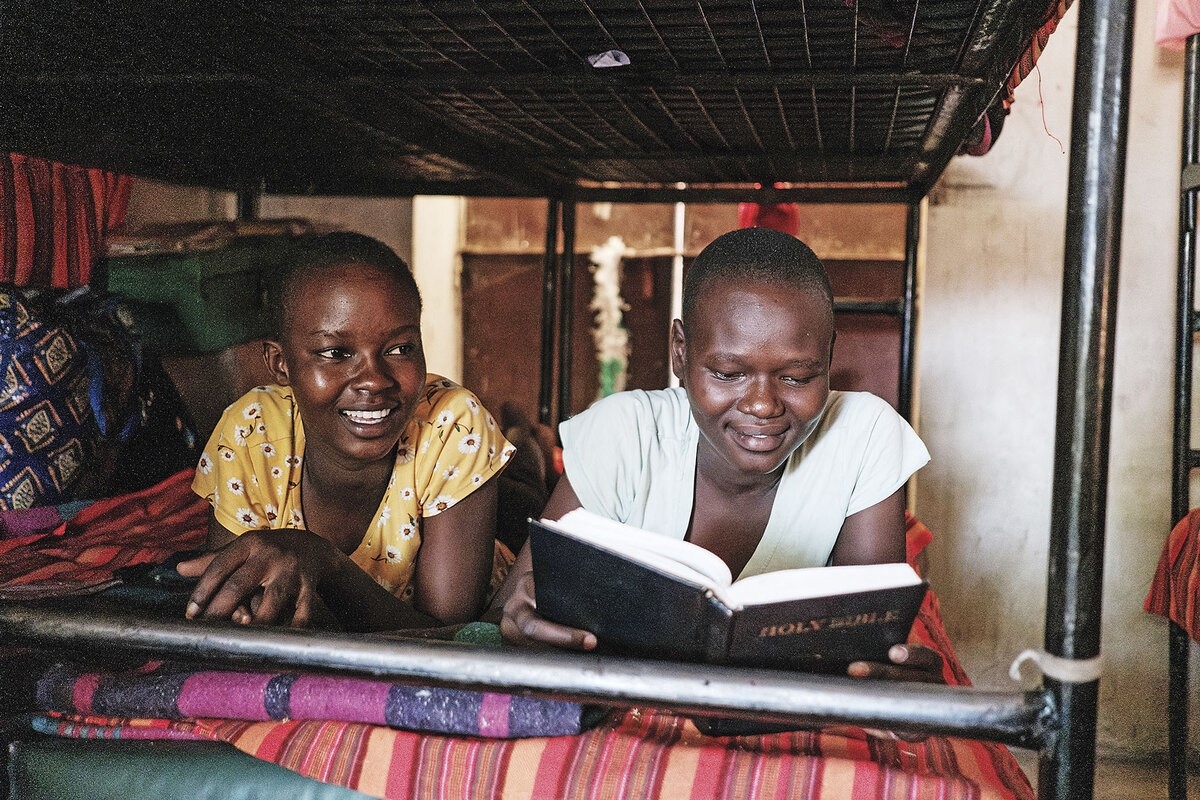 Guy Peterson/Special to The Christian Science MonitorGirls read the Bible and talk with each other in their dormitory.
Sometimes, Mr. Ayub travels to crowded displacement camps in the Nuba Mountains, where he picks up vulnerable children and takes them to Our Father’s Cleft. Other times, relatives bring children to Mr. Ayub, or young people walk there alone from as far as Darfur, some 300 miles away.
Among the children is 15-year-old Ahmed, identified by only his first name for his safety. The boy was injured in the town of Al Hadra in March 2024, when the Sudanese Armed Forces bombed his school.
The attack killed about a dozen people and injured some 45 others. Ahmed lost an arm in the assault, and shrapnel is still embedded in his stomach.
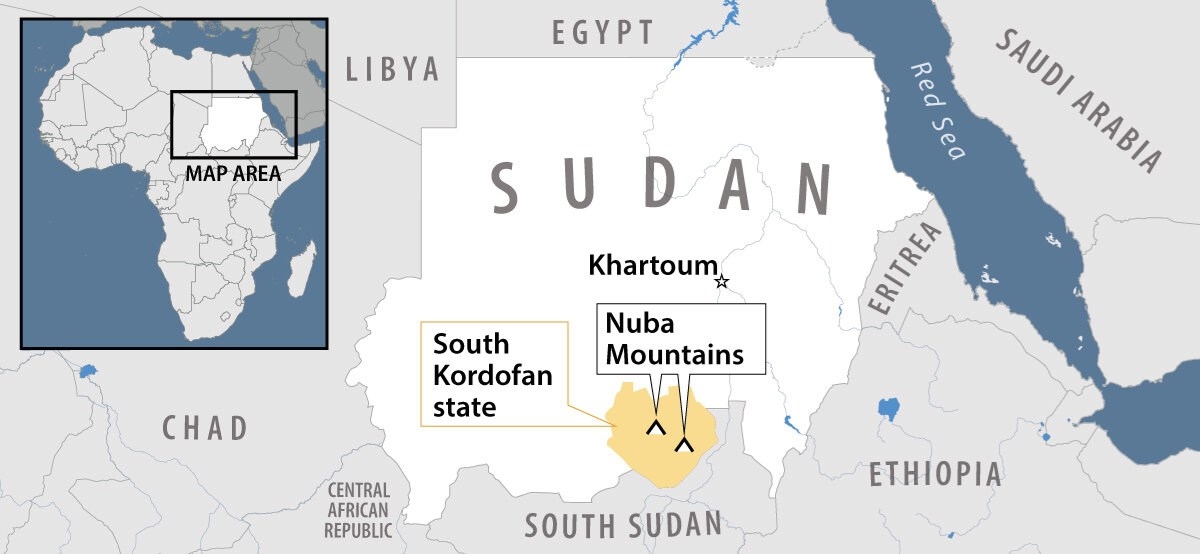 Karen Norris/StaffMap of Sudan
His mother had died in a separate bombing in Khartoum, Sudan’s capital, earlier that year. At home with his father, there was never enough for Ahmed to eat, and health care services were limited.
Almost a year after the bombing, Ahmed’s father brought him to Our Father’s Cleft. Now, Ahmed is a keen mathematics student and hopes to become a doctor. “I want to treat people – to help people as they have already helped me,” he says.
Young people aided by Our Father’s Cleft often pay it forward. Mujaiah Yusef used to live and study here after her parents died. Now, she looks after the children in the girls dormitory at the orphanage.
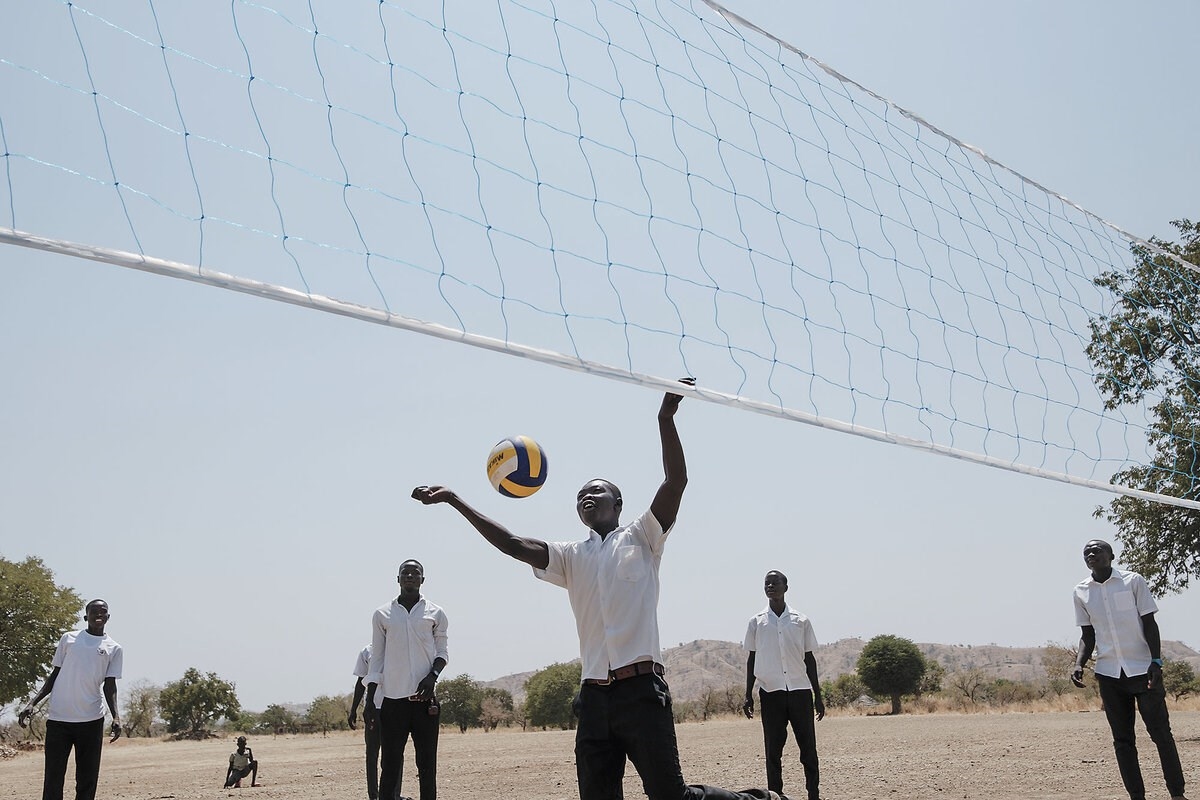 Guy Peterson/Special to The Christian Science MonitorYouths play volleyball at Our Father’s Cleft.
Under the watchful eyes of Ms. Yusef, the girls study, sitting together on bunk beds with red and yellow sheets, while other children play volleyball on a sandy field outside.
“They give me joy and hope,” Ms. Yusef says.
Mr. Ayub walks by a garden where the children sometimes work, past concrete classrooms and dorms. He gestures to an empty bit of shrubland where he would like to construct more buildings so that greater numbers of children can come to learn and live.
Our Father’s Cleft can help only a fraction of the children in need in the Nuba Mountains. “There are many others who are suffering,” Mr. Ayub says.
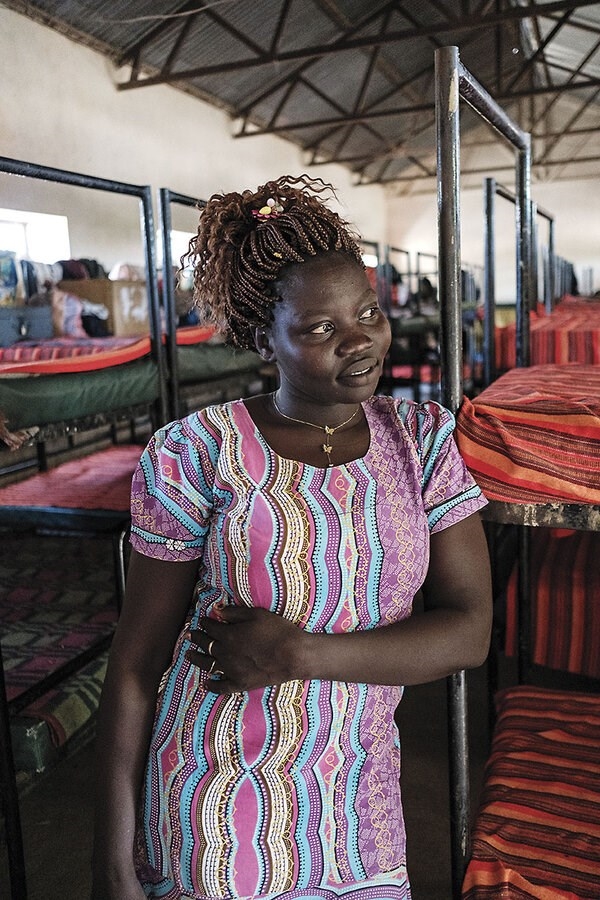 Guy Peterson/Special to The Christian Science MonitorMujaiah Yusef went to live at Our Father’s Cleft after her parents died. Now, she looks after girls in one of the dormitories.
Lift Up the Vulnerable, a Christian anti-trafficking organization, financially supports the school and the children’s home.
“It’s either starvation or slavery,” Audrey Moore, CEO of Lift Up the Vulnerable, says of children left without help in Sudan.
Both the Sudanese Armed Forces and its rivals, the paramilitary Rapid Support Forces, are accused of recruiting child soldiers, while other young people are forced to work in the gold mines that help fund the war. Some 8 million children are out of school as a result of the conflict, according to Save the Children. In addition, 3 million children under age 5 are malnourished, UNICEF says.
But just as Ahmed plans to one day become a doctor, and Ms. Yusef returned to Our Father’s Cleft to help care for the girls there, Mr. Ayub hopes that the children at the orphanage will help all of Sudan someday.
“If they can study, they will transform their communities; they will be change-makers,” he says. “They will bring peace. They will end the war.”
Reporting for this article was supported by the Pulitzer Center.
Page created on 4/20/2026 2:03:51 PM
Last edited 4/20/2026 2:22:27 PM