Who is La Monster? La Monster is Eugenia Martínez Vallejo, who became a jester at the Spanish court at just six years old.
Born in 1674 in a church in the village of Merindad de Montija, Burgos, she was a gift to her parents, Antonia de la Bodega and José Martínez Vallejo. They were poor farmers who lived off what they could gather each week because of poor harvests, and her family struggled to survive.
From a young age, Eugenia developed quite a large appetite. Her parents saw it as a gift, but because of their poverty, they could not feed her properly. When little Eugenia was just six years old, she weighed 70 kg. Unfortunately, her size attracted the wrong kind of attention.
At that time, the King of Spain, Charles II, heard about her size and was fascinated. He ordered her to come to his court. He was mesmerised by her size, but not in the way you might think. Eugenia was not seen as a child who needed help or had a medical condition; she was treated as another jester, an exotic curiosity for the royal court.
The King told her parents not to worry, saying that she would be fed and clothed, but he did not tell them what kind of life she would have there. Thinking it was best for their daughter, her parents sent her to the Spanish court.
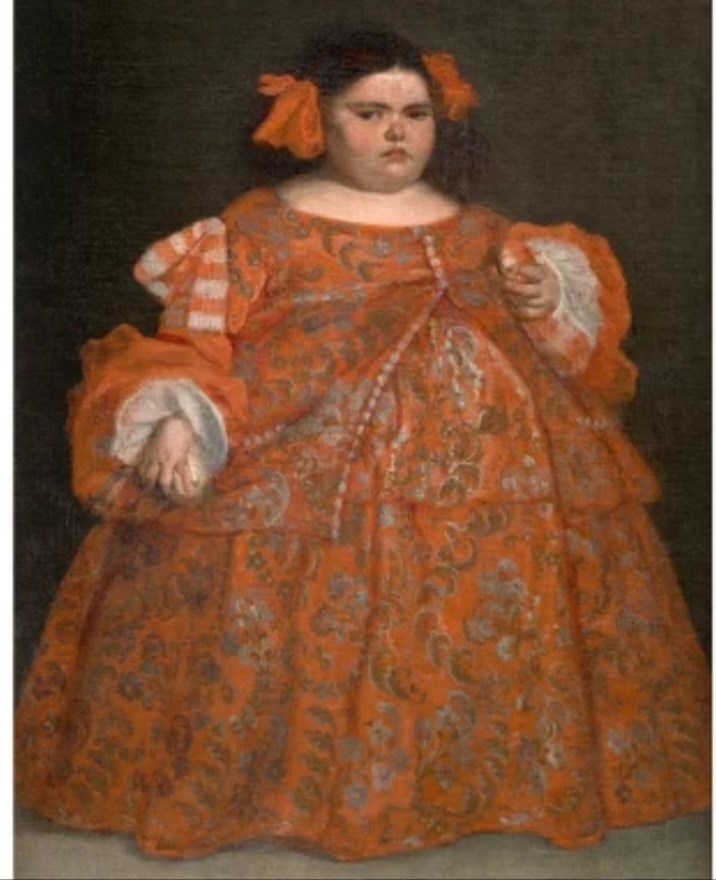
She was painted in only two portraits by the painter Juan Carreño de Miranda. One was La Monstrua Vestida, where she was dressed in velvet clothes and holding cake and apples in her hands, cruelly drawing attention to her size. In the second portrait, La Monstrua Desnuda, you can see her sadness as her dignity is stripped away. She was posed to resemble the god Bacchus. At that time, it was forbidden to paint nude portraits, and this portrait was created to show her true size.
 La Monstrua Desnudaupload.wikimedia.orgFrom then until the day she died, Eugenia remained a jester. She was confined to the room she was given at the Royal Court and rarely went anywhere else. She was only brought out for events where people would laugh at her, compare their bodies to hers and say cruel things to her face.
During the 17th century, it was common for people with unusual appearances or medical conditions to be exhibited and treated as curiosities or entertainers. Those who worked at the Royal Court described Eugenia as quiet and dazed, as though she had already died inside.
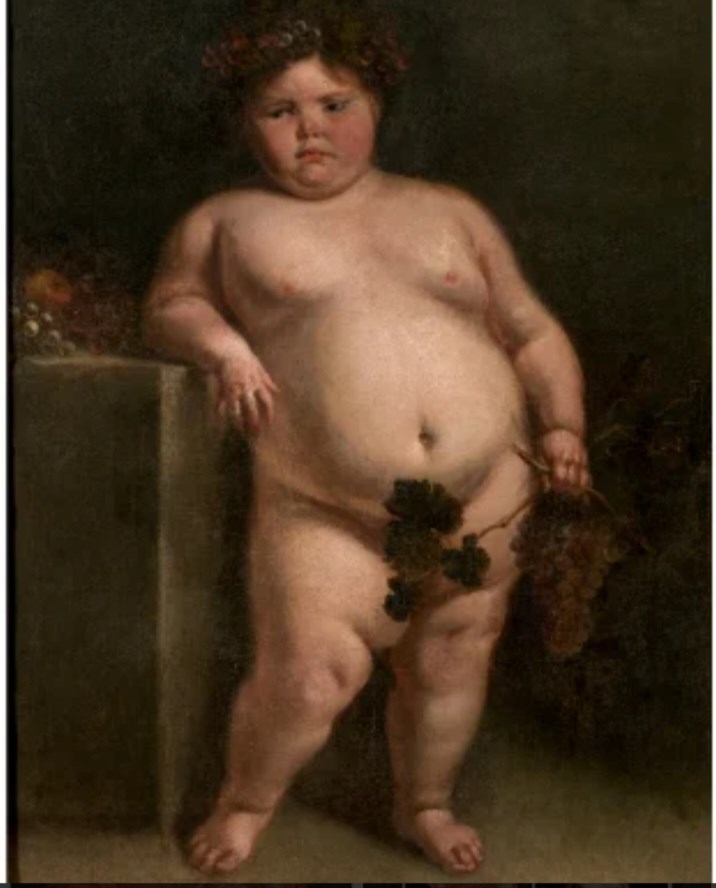 Image Desnudato GoogleShe was never given money or freedom. She was simply treated like a toy, locked away and displayed for the amusement of others. Eugenia died at the age of 25 in 1699.
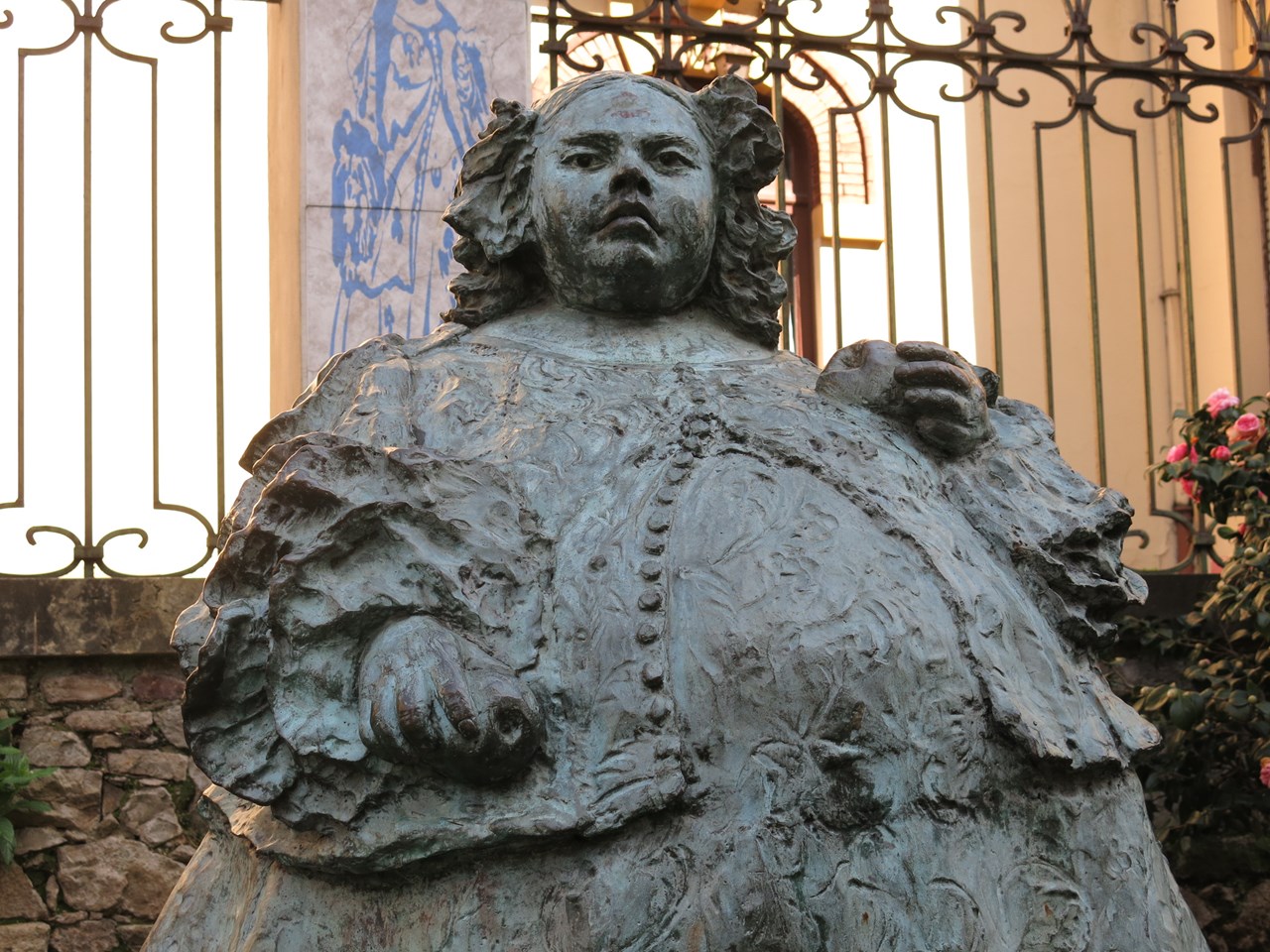
Today, there are works of art and statues that honour her, and her two paintings are displayed in the Museo del Prado. They stand as reminders of what she endured.
Modern medicine has concluded that she may have had Prader-Willi syndrome, a rare genetic disorder caused by the loss of function of specific genes on a chromosome. One symptom of the disorder is constant hunger, which can lead a person to consume significantly more calories than the average person.
 IMG_20260730_204544GoogleAlthough she lived a short life, Eugenia will always be honoured as one of the bravest and strongest women to have lived in Spain.
Why is she my young hero? In my eyes, she endured countless humiliating experiences throughout her life. She was mocked by nobles at royal parties, denied freedom and money, and trapped within the Royal Court. Despite all of this, she lived through unimaginable hardship with strength and resilience. Because she endured so much, Eugenia Martínez Vallejo is my young hero.
Page created on 7/30/2026 2:44:35 PM
Last edited 8/5/2026 4:26:55 PM