To be interested in food but not in food production is clearly absurd.
What would you do if you disagreed with the way the world was being run? Would you keep quiet, or would you try to do things differently?
For American writer and farmer Wendell Berry, the answer was to question the way people treated the land, the food they ate, and the communities they lived in. He believed that the choices we make every day can have consequences far beyond our own lives.
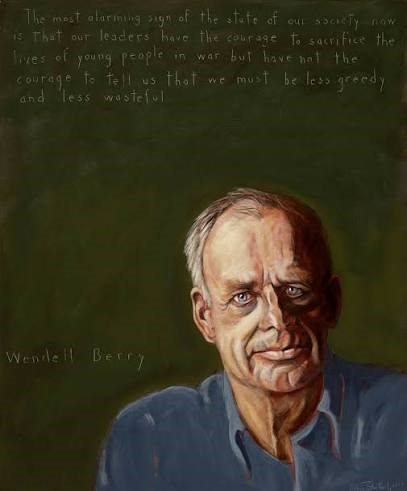 Wendell BerryRobert ShetterlyGrowing Up in Kentucky
Wendell Berry was born in Kentucky, USA, in 1934. His family had farmed there for generations, and he grew up with a strong connection to the countryside.
He studied English at the University of Kentucky and later studied creative writing at Stanford University in California. He went on to teach and write in New York and Europe, but eventually decided to return to Kentucky.
In 1965, Berry and his wife, Tanya, moved to a farm near Port Royal with their children. He began growing crops and writing about rural life. Berry wanted to be close to the land he wrote about. He wanted to understand farming by actually doing it.
Questioning Progress
Berry became increasingly concerned about the direction of modern agriculture. As farms became larger and more industrialised, he believed that the pressure to produce more food, more quickly, could damage the soil and harm the communities that depended on farming.
He questioned whether bigger and more efficient was always better. In his book The Unsettling of America: Culture and Agriculture, published in 1977, he explored the effects of industrial farming and the way modern society treated the land.
Berry argued that farming should be about more than making money. It should also be about caring for the soil, producing good food and maintaining a healthy community.
“The care of the Earth is our most ancient and most worthy and, after all, our most pleasing responsibility.”
— Wendell Berry, The Art of the Commonplace: The Agrarian Essays
These ideas might sound obvious now, when people talk about climate change, sustainable farming and where our food comes from. But we must remember that Berry was writing about many of these issues decades ago.
Living What He Believed
Berry did not simply write about farming from a comfortable distance. He worked his own farm and used horses rather than relying entirely on modern machinery. He chose a way of life that was slower and more physically demanding than many people would have wanted.
“Do unto those downstream as you would have those upstream do unto you.”
— Wendell Berry, The Gift of Good Land: Further Essays Cultural and Agricultural
He also continued to write. His novels, poetry and essays often explored the relationship between people and the places they lived.
His fictional community of Port William is based on the rural Kentucky communities he knew. The stories are about families, friendships, work, love and loss. They show how much people depend on one another, even when they don't always agree.
Berry's writing asks readers to consider something that is easy to forget: the things we do every day affect other people and the natural world.
Speaking Up
Berry has never been afraid to criticise powerful organisations or popular ideas. He has spoken out against environmental destruction, war and economic systems that he believes damage rural communities.
He was particularly concerned about mountaintop removal coal mining in Kentucky, which involves removing the tops of mountains to reach coal underneath. In 2011, he joined a sit-in at the Kentucky governor's office to protest against strip mining.
He was not a politician or a campaign leader with a large organisation behind him. He was a writer and farmer who believed strongly enough in his ideas to take action.
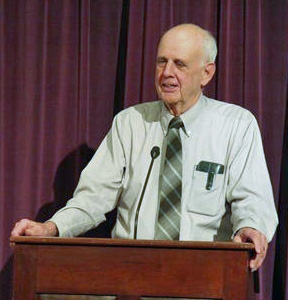 Wendell BerryWikiWhy Is He a Hero?
Wendell Berry believed that the choices we make about food and farming matter. As he wrote in The Pleasures of Eating, “To be interested in food but not in food production is clearly absurd.”
He has encouraged generations of readers to think about where their food comes from, how we use the Earth's resources and what makes a community worth living in.
His life also raises some interesting questions: Do we always need the newest technology? Does economic growth automatically mean progress? What do we owe the people who will live on Earth after us?
Page created on 9/15/2026 10:47:29 AM
Last edited 9/16/2026 10:30:47 AM