The score was 2–2.
It was the eighth inning of Game 1 of the 1954 World Series. More than 50,000 fans at the Polo Grounds stadium watched as Cleveland Indians batter Vic Wertz sent a ball flying 420 feet deep into center field. It looked certain to score — if it wasn’t for New York Giants center fielder Willie Mays. In an instant he sprints back, catching the ball over his shoulder before whipping around at lightning speed to hurl the ball back infield. The play simply became known simply as “The Catch,” one of the most iconic moments in baseball history. For many Americans, it would be the first they heard of Willie Mays. It would not be their last. By the end of his monumental career, Mays would become one of the greatest African American baseball players to ever live.
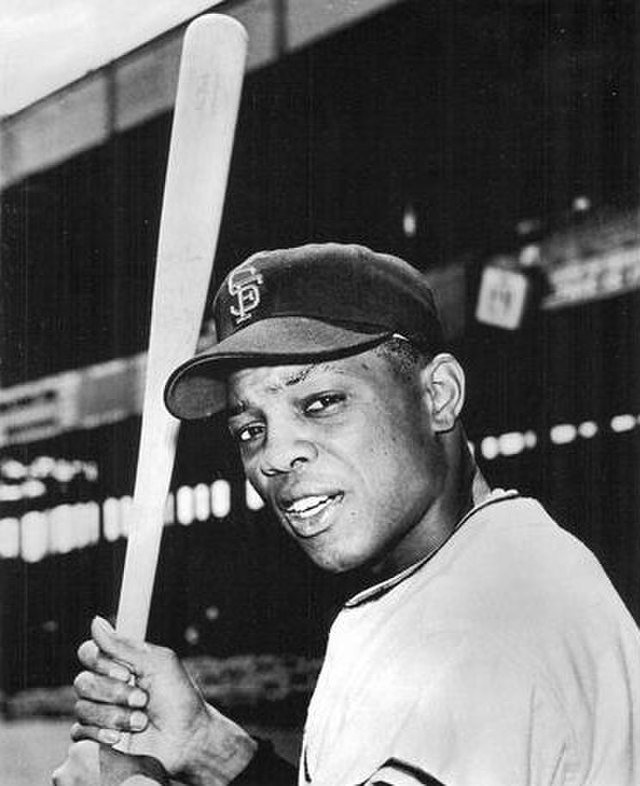 Professional baseball player Willie MaysManny's Baseball Land via tradingcarddb.com, Public domain, via Wikimedia CommonsLong before The Catch, Mays had already shown signs of greatness. Born May 6, 1931, in Westfield, Alabama, Willie Howard Mays Jr. grew up as the son of two gifted athletes. Sports — especially baseball — were present in his life from a young age. In 1948, only 17, and still in high school, he was playing professionally for the Birmingham Black Barons of the Negro American League. That same year he played a pivotal role in the playoffs, ultimately landing the Barons in the ‘48 Negro World Series. Though they lost, Mays’s talent drew the attention of Major League scouts, with teams like the Boston Braves and Brooklyn Dodgers vying for him. Yet, in the end, he signed with the New York Giants, being called to play with them on May 24, 1951.
The path to the MLB had been opened to Mays by one of his contemporaries, Jackie Robinson — regarded as the best Black baseball player. Robinson’s talent broke down barriers, gradually seeing the integration of Black players that had previously been resigned to the various Negro leagues. With the Giants, Mays was stepping through a door only recently opened, and one still littered with racial epithets and segregated conditions common to the Jim Crow era. Unlike many of his peers, Mays rarely spoke publicly on racial issues. His philosophy was simple: “I'm a ballplayer. I am not a politician or a writer or a historian. I can do best for my people by doing what I do best.” In Mays’s eyes, leading by example was the best way to make a statement.
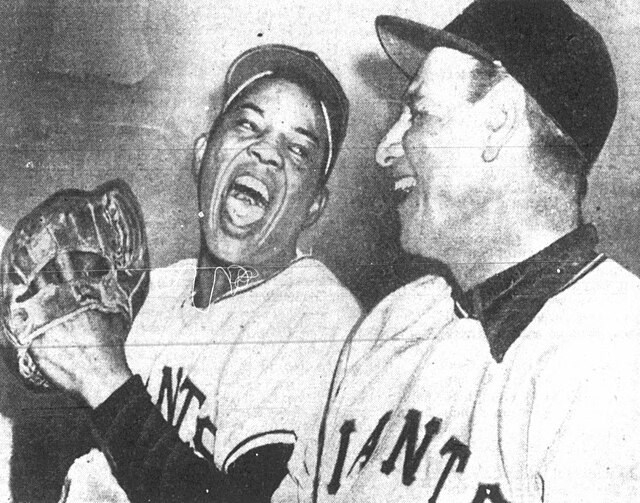 Mays with his manager, Leo Durocher (1954)Los Angeles Daily News, Public domain, via Wikimedia CommonsWhich he certainly did. After a slow start, his first hit in MLB was a homerun. We might have gotten rid of Willie forever if I'd only struck him out,” joked Hall of Famer Warren Spahn, who pitched the ball to Mays. Though his first year was one of his worst, the “Say Hey Kid” — his newly-acquired, life-long nickname — won Rookie of the Year in 1951. After leading the Giants to a World Series title, during which there was Mays’s iconic catch, he won the National League MVP in 1954. Mays proved popular off the field, too; he built strong ties in Harlem after moving to NYC. It’s said he often played stickball with kids on the street, and even bought ice cream for an entire city block once. At a time where Black athletes were still fighting for acceptance, Mays’s charisma and accessibility helped reshape how America saw its sport heroes.
In 1958, the Giants relocated to San Francisco. For Mays, the move was rough. Despite his success, he encountered discrimination when trying to buy a home in a white neighborhood. The controversy became a public embarrassment for the city, and later contributed to the 1964 Rumford Fair Housing Act, which outlawed housing discrimination all across California. His first four seasons out West were filled with San Franciscans jeering at him during games, with Mays later saying they only accepted him after his performance at the ‘62 World Series against the New York Yankees.
Despite the rocky start, the latter half of Mays’s career was very successful. For the 1963 season he signed an (at the time) record-setting contract, and a year later he became the first Black captain of a MLB team. In 1965, Mays — 34 years old, and suffering from a torn shoulder muscle he kept secret — played his best season, ending with 52 home runs and scoring 118 points. He won his second MVP that year. In January 1970, The Sporting News named him Player of the Decade for the 1960s. While his reputation certainly grew — being nothing less than a superstar by the end of it — his physical abilities declined. Mays was, after all, entering his forties. He announced his retirement on September 20, 1973, after a brief stint with the New York Mets. Five days later at the Shea Stadium, he addressed the people, concluding his speech with the following: “I look at the kids over here and they are playing and they are fighting for themselves tells me one thing: Willie, say good-bye to America.”
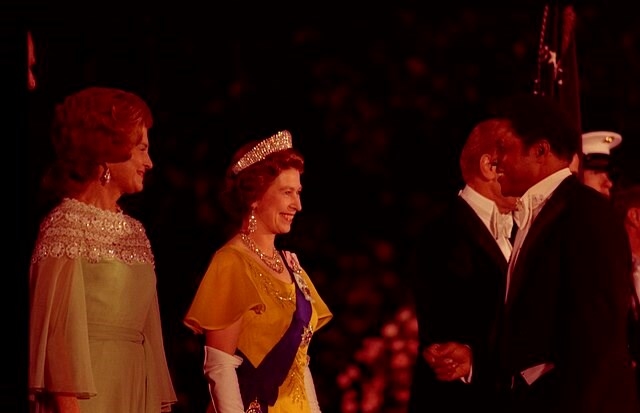 Mays greets Queen Elizabeth II on July 7, 1976See page for author, Public domain, via Wikimedia Commons“Say good-bye to America” was a bit of an exaggeration. America couldn’t get enough of Mays, and this continued well into his retirement. Mays had long transcended the athlete title, and was truly a cultural icon, appearing in all corners of American entertainment. Charles Schulz, creator of Peanuts, said Mays was a personal hero of his, and referenced him in the comic strip many times. Entire songs were made about Mays — see The Treniers’ Say Hey (The Willie Mays Song) — or just referenced him, such as Bob Dylan’s I Shall Be Free. Multiple U.S. presidents met with Mays, and, in 2009, President Barack Obama awarded him the Presidential Medal of Freedom. "It's because of giants like Willie that someone like me could even think about running for president," Obama said.
Willie Mays died on June 18, 2024, at the age of 93. In the days that followed, fans gathered at his statue outside Oracle Park in San Francisco, leaving flowers, jerseys, and handwritten notes. Tributes came from politicians and ordinary people alike. Mays redefined what a sports star could look like in America, growing to be more than his achievements on the field. He crossed racial boundaries, proving a Black athlete could be accepted and celebrated across a divided society, and built bridges between communities wherever he went. Mays is more than a baseball player: he is a shining example for all.
Page created on 4/20/2026 12:53:32 AM
Last edited 4/20/2026 1:04:12 AM