 |
| (http://www.irenasendler.org/) |
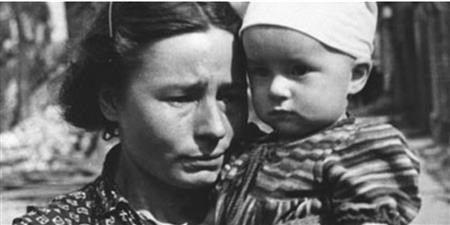
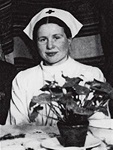
In the Oxford dictionary, the word hero is defined as "a person who is admired or idealized for courage, outstanding achievements, or noble qualities." A hero could be well-known to the world or maybe only known to their native country. Other heroes may not be known to the public at all. Some people may have heard of a hero who saved 2,500 children's lives during World War II. Irena risked her life daily for the children trapped inside the Warsaw Ghetto. She was born in Warsaw, Poland on February 15, 1910. She was inspired by her father; who had died from typhus, contracted as a doctor when he helped the poor Jews. Irena began work in the field of social work. She was 29 years old when World War II started in the summer of 1939. Her work eventually led her to the underground organization called Zegota where she was put in charge of the Children's Division. The Nazis had sealed off the 16-block area, about the size of New York's Central Park, and 500,000 Jews were imprisoned behind the walls of the Ghetto, trapped inside with starvation and disease. Irena was appalled by their condition and brought them food, medicine, and clothing. Five thousand Jews died each month because of the poor conditions. Irena decided that she would help the children escape. She posed as a nurse and issued false papers to get into the sealed Ghetto. She smuggled them out by various means, one time using an ambulance and taking a child out that was hidden underneath the stretcher. Children were removed through underground passages and even sewer pipes. One time, a small baby was hidden in a mechanic's toolbox and other children were hidden in potato sacks or coffins. If she had not rescued them, they would have certainly died. Irena was a hero because she was courageous, selfless, humble, and her actions were inspiring.
Irena had absolute courage that she showed day after day. Irena defied the army of Germany. She followed her heart by doing what she believed was right. She remained resilient through the war. She stood up for what was right. She suffered when the Nazis tortured her and did it with dignity. Irena told Norman Conard in NEA Today, "If you see a person drowning, you must jump into the water to save them, whether you can swim or not." She remembered this was a proverb that her father often told her. She claimed that it had inspired her own actions. She wasn't afraid for herself; she was worried for the families that she saw in grave danger. Her sacrifice was the quintessence of courage. Irena didn't know if she would be caught and punished by death, but she didn't care as much as she did about giving the children a chance to live. She came back to the Ghetto everyday despite the known consequences. She still smuggled children out through various means. She still kept going by following her heart and even in the face of adversity, she still had courage to spare. Irena was brave by walking into the enemy territory day after day, but her courage wasn't as apparent as the day she was caught. During the golden autumn of Poland, Irena Sendler was arrested by the Gestapo on October 20th, 1943. She was taken to a place called the Pawiak prison: a place that only a few survive. There she was tortured by the Gestapo for information. While she was being interrogated, she was beaten and her legs and feet were fractured. She was the only one who knew the names and addresses of the Jewish children she saved. They tortured her and tormented her, but she refused to betray the rest of the workers of Zegota or the children. Her name was on the list of those who would be shot. Unaware that Zegota had bribed the German executioner, who helped her escape, she did not back down. The next day, she read the posters that were all over town that claimed she was shot. Irena believed that she was going to die. She believed that it was the end. Irena was willing to die for what she believed in and willing to die for those she had worked alongside. Her courage ended up saving even more people. She was bruised and broken, but she refused to let her friends down--even if it meant death. She gave the Nazis her last act of defiance and give the information they wanted. She did what was right, and she was going to die with dignity. She would not, nor could not let the Nazis kill others. She had her courage until the very end. Her courage was a part of her. She couldn't possibly ignore it.
 |
| http://www.irenasendler.org/ () |
Irena demonstrated selflessness regularly. Many people have many ideas of what a hero is, but a real hero is a person who can look outside of themselves long enough to realize others are out there as well. She was a person who didn't do things for the camera, but she did things because they are caring and sincere. Irena went to the Ghetto everyday, with forged papers as that was the only way to get into the Warsaw Ghetto. She sacrificed her time, her job, even her life. One mistake, one miscalculation, one misjudgment could be the end of her and the people she was helping. She knew the consequences, but she also knew that if she succeeded, she would be saving lives and that was all that counted. Irena was selfless, thinking of ways to help the Jews. She told the Times of London, "And those in the most difficult position were the Jews. And among them those most vulnerable were the children. So I had to help."They were outcasts and many people looked down on them or they were too scared to help. Irena Sendler devoted most of her time helping them in ways other people didn't. Irena didn't have to help the Jews. It wasn't her job and out of the 500,000 Jews that were confined within the walls of the Warsaw Ghetto, most of them were most likely strangers. She did it out of the heartfelt compassion she had. Even after the war, she continued to help and work with the Jews. She still gave more of herself when she had already given so much. Irena showed the meaning of being selfless when she continued her work after the war. Her name had never left the list of the people who were shot that day. Posters were all over town announcing her death and she read them herself. From then on, she had to remain underground for the duration of the war. Even when she was in hiding, she found a way to continue her work. Finally, World War II came to an end in the year of 1945. Then, Irena hoped to help the 2,500 children to find their parents. She was a great example of someone who is selfless and self-forgetting because she still found ways to help. She didn't give up when she had to remain in hiding. She found ways around it and still continued to go on with her work. She had offered all of herself to rescue a child or an infant whose death was guaranteed.
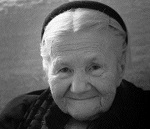
Irena was humble and never wanted to take credit for herself. She didn't help others for money, or for fame, or because others would like her better for it. Irena saved thousands of children from death during World War II because she believed that it was the right thing to do. When she saw that children were starving and were sick, she was horrified and knew she had to help somehow. In her modesty, she told Kate Conolly in the London Guardian, "The term 'hero' irritates me greatly. The opposite is true. I continue to have pangs of conscience that I did so little." She didn't believe that she was hero because regretted not helping more. The word, hero, itself makes her sad because it reminds her of something she thinks that she did not do, thus displaying her humility. Not many people would save 2,500 children and would say that they didn't do enough. Some girls in Kansas found out about Irena Sendler and in the fall of 1999, started to write play titled, "Life In a Jar," for the 2000 Kansas state National History Day. Her story was unknown to the majority of the population, but these girls brought her to the world's attention. When Irena Sendler first found out about these girls and their project, she said, "I was very stunned and fascinated; very, very surprised; interested." In one of her first letters to the group of girls, she said, "My emotion is being shadowed by the fact that no one from my circle of my faithful coworkers, who constantly risked their lives, could live long enough to enjoy all the honors that are now falling upon me. I can't find words enough to thank you, my dear girls. Before the day you have written the play "Life in a Jar"-- nobody in my own country and in the whole world cared about my person and my work during the war." No one had known what Irena Sendler had done during the war, and she was content with that. She thought about her co-workers and was sad that none of them were alive to receive all the honors that she was now receiving. She thought her co-workers deserved the honors also. Her humility shows people her true character.
 |
| (http://www.irenasendler.org/ ()) |
Irena is an inspiration because of all the incredible work she had did for her country and the world. Irena Sendler was a person who others can look up to and become more and more selfless. The world is full of situations that threaten kindness and compassion, but she chose to avoid those problems and become a better person instead. Irena Sendler wore a star-armband, the same armband the Jews were forced to wear, as a symbol of her support and loyalty to them. It was a symbol of unity between her and the people she was trying so hard to save. She wore this while she smuggled their children out of the Warsaw Ghetto in an ambulance. She didn't think that she was helping a lot, but wearing the star of David was a small act of her love and succor. In World War II, it wasn't safe to be associated with the Jews, but that is exactly what Irena Sendler did. Even though it was dangerous, she wanted Jews to know that she was doing her best to help them in their time of need. Not only did she find ways to show her support, but she was the reason, she was the person to be held responsible for much of the Jews received in the Warsaw Ghetto. When things were looking hard or even hopeless, Irena Sendler would take matters into her own hands and find a way around the problem. She was smart and clever, but she was also very thoughtful. She wouldn't give in until she found a solution and then she stuck with it. Irena Sendler is an inspiration because she worked through her problems and she would never give up. She was strong and determined. She wouldn't have been able to save as many lives as she did, if she didn't persevere.
Irena Sendler is an inspiration because she was willing to help others, and save innocent children, in spite of her own personal danger. She did not give up easily and would find a solution to problems. She is an inspiration, because she did so much, when not a lot of people did anything at all. She is a hero because of the courage she showed, the selfless attitude she demonstrated, the humility in her words and actions, and the awe inspiring feat of saving two thousand children from a horrible death.
Page created on 5/21/2016 12:00:00 AM
Last edited 5/21/2016 12:00:00 AM