REPRINTED WITH PERMISSION FROM THE CHRISTIAN SCIENCE MONITOR
A lone volunteer's effort to save monarch butterflies creates a caring community, one rock and seed packet at a time.
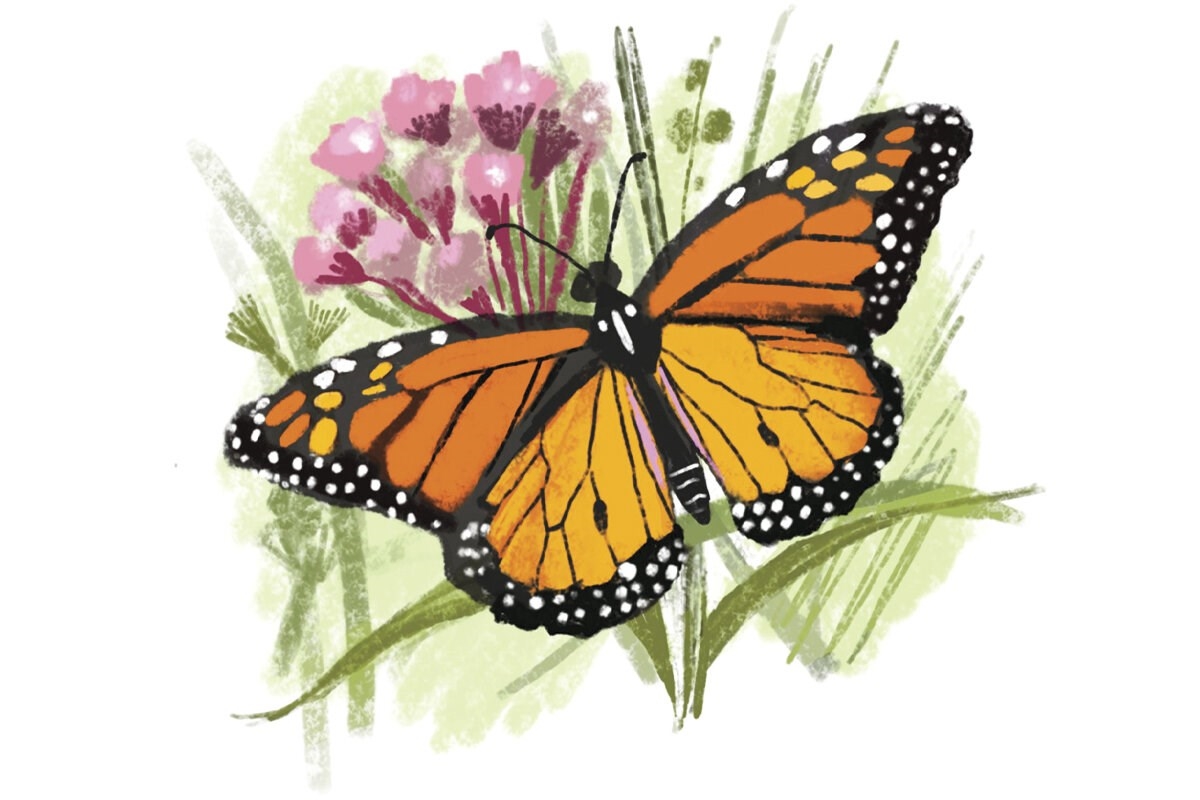 Monarch ButterflyIllustrations by Linda Bleck
April 17, 2026, 3:28 p.m. ET
Down the street a ways, there is a parking strip by a soccer field. A half-block long and about 2 feet wide, a wedge of life bounded by concrete, it’s meticulously planted in Things Monarch Butterflies Like. You could be forgiven for not recognizing the theme if it were not for the numerous educational signs. The smooth rocks carefully painted with genus and species names. The poster about the plight of monarch butterflies, and what can be done for them. And, the crowning touch, a mounted box, like a Little Free Library, hung with packets of milkweed seeds instead of books.
This is the skinny rectangular work of someone who cares.
I certainly appreciated the effort. I figured it was mainly educational. There’s a grade school right there, and I visualized a sweet teacher trying to get her students involved. Also, I understood the fundamentals: Monarch butterflies, which are in some trouble these days like other species, are very specific about where they like to lay their eggs – on milkweed, pretty much to exclusion. But we’ve lost vast acreages of milkweed to profitable crops such as corn and soybeans, and the monarchs appear on the verge of crashing.
The idea of planting milkweed in parking strips and alleyways and front yards and tucked here and there in our gardens is meant to address this devastation in the heartland and elsewhere.
Stretches of milkweed in the Midwest might be easier for an army of monarchs to find, but the monarchs will find it where it exists. Milkweed is their field of dreams. And here someone, clearly, is building it. Will they come?
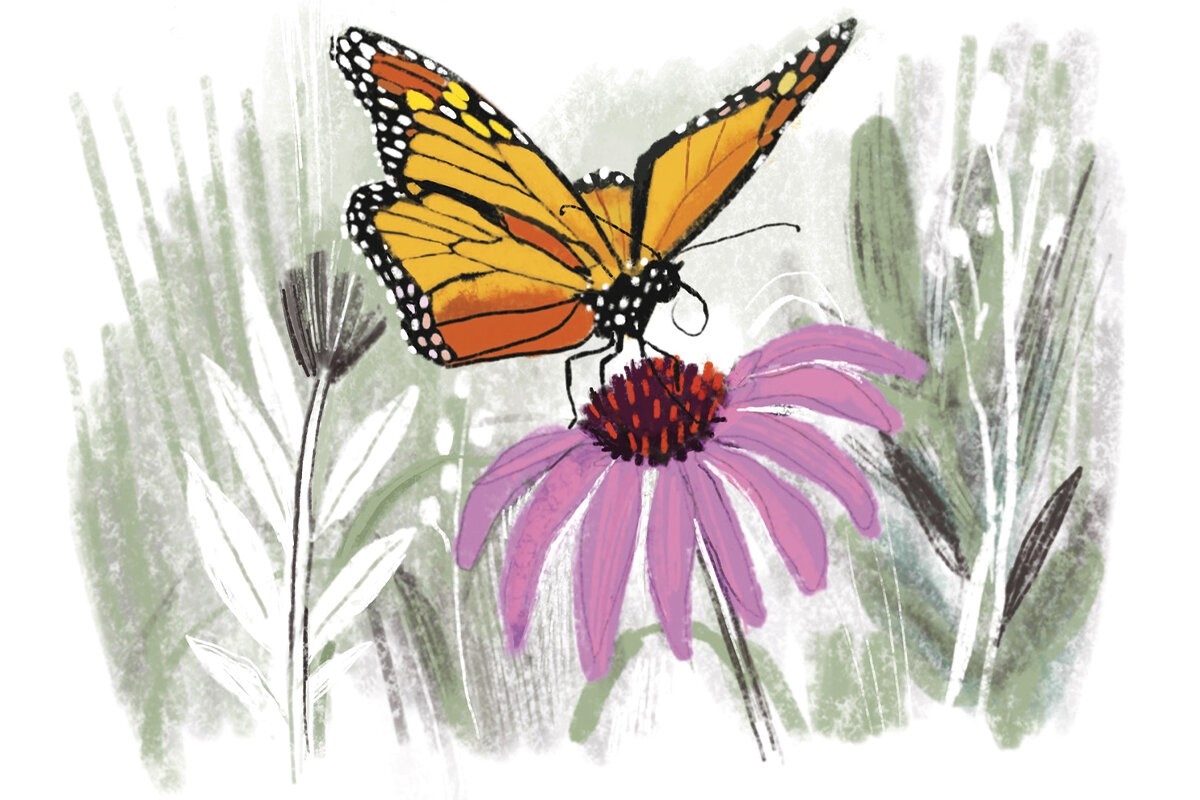 Illustrations by Linda BleckMonarch Butterfly
If I ever doubted that, I did no longer after I planted my first asparagus bed. Forty years ago, it might have been the only stand of asparagus for miles around. Still, within weeks of the emergence of the first spears, a fraternity of asparagus beetles was partying away on the crop.
Somehow, the chemical signature of our 4-inch-high asparagus spears was telegraphed to the greater asparagus beetle community, whose entire local population came by for spring break. Asparagus beetles are asparagus savants. Insects, in general, are savants, and that includes the monarchs.
Still, I had my doubts about this little patch of milkweed next to the soccer field. Our valley is not a major monarch flyway. The likelihood of some gorgeous little orange flapper finding its way to a milkweed plant here, no matter the sincerity of the gardener, seemed low.
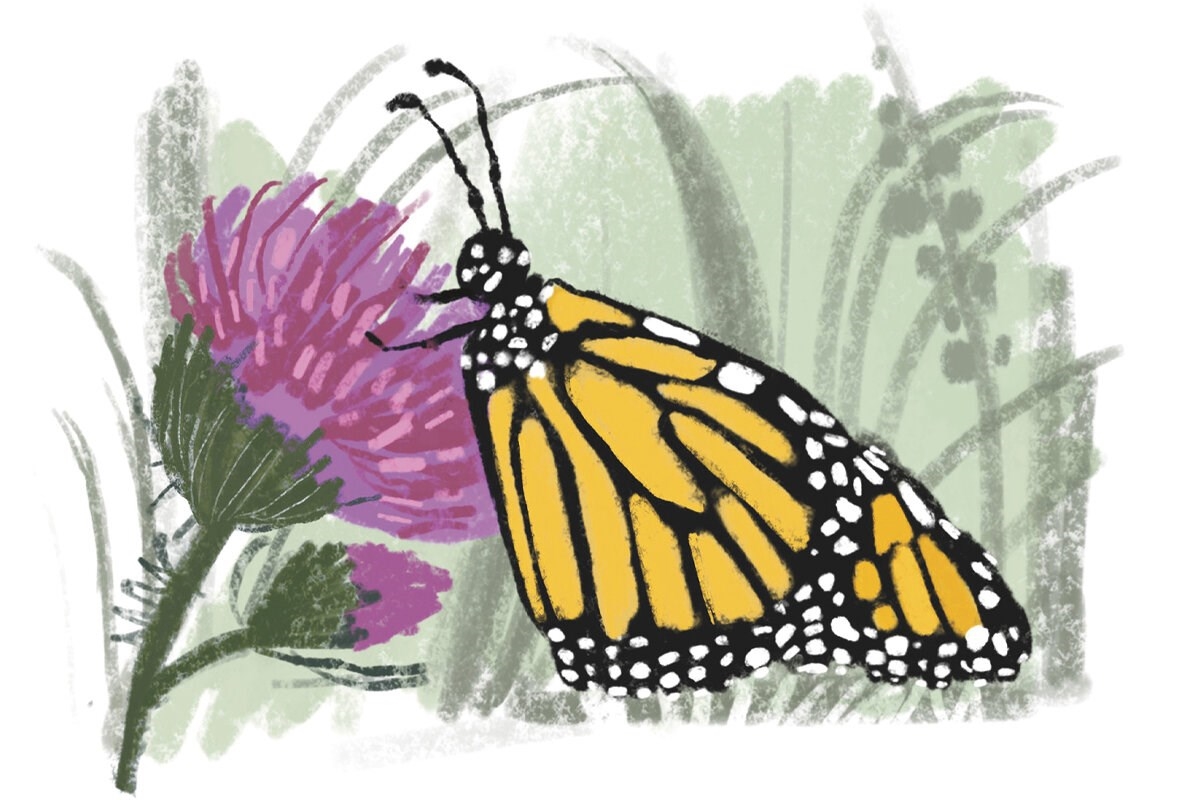 Illustrations by Linda BleckMonarch Butterfly
Then one day, I met the gardener. I caught Ida in the act of replenishing the little free seed library. As it turns out, she had indeed taught art, and her children had attended that school. She’d gotten permission to plant that strip with native plants years ago, but only more recently discovered there had been some success attracting the odd monarch to local patches. And that tilted the whole little landscape toward the butterflies. But if, as one of the painted stones laments, there’s been a 99% reduction in monarchs in the past 30 years, it would be pretty easy to assume there’s not much one person can do about it. It’s pretty easy to mourn, and move on.
Unless you’re Ida.
This one person hand-harvested 17 pounds of milkweed seeds last year, from a farm down south. She founded a second butterfly oasis on city property across town and tends both patches. She gives talks to schools and interested groups, fosters caterpillars, and paints butterflies on stones to give away or sell. It’s an actual seed fund: She purchases nectar flower seed in bulk. And almost every day, she rises well before dawn to fill and label tiny seed packets. This is a full-time job. Clearly, the woman is not normal. Three hours a day just on seed packets to replenish two little libraries?
“I can barely keep up,” she says. Word’s getting around, and so are those seeds. In the process of creating habitat, she is fostering a community of people who care. Maybe there’s not much we can do, but we can always do something. I can’t help but smile when I see Ida’s rollicking streetside ribbon of milkweed, scabiosas, coneflowers, blazing stars, and more.
This is art. This is a shrine. This is hope in the soil and stones.
It’s a lot of work for a volunteer, but Ida is paid in butterflies. Not many, not yet, but some, and more on the way. Around here, that’s one fine currency.
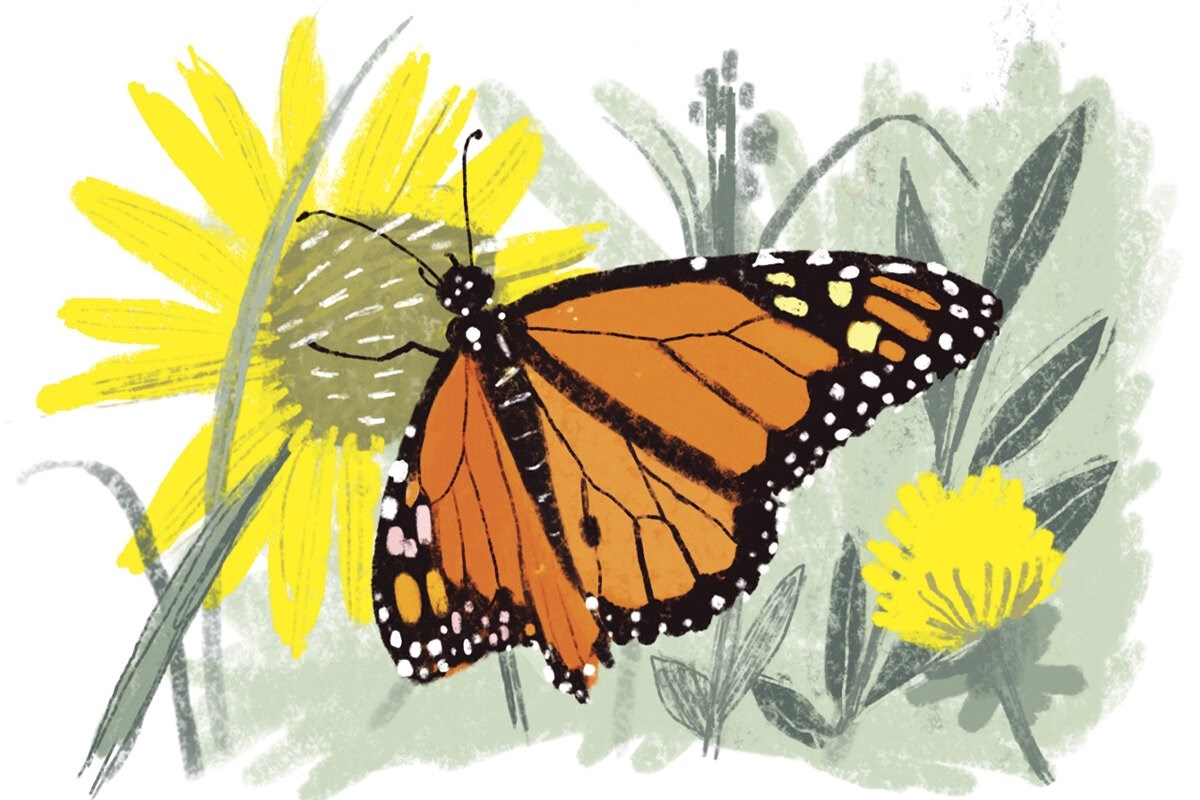 Illustrations by Linda BleckMonarch Butterfly
Gardening Tips to Support Monarchs
PLANT
Milkweed: Native to your area (avoid tropical milkweed) to support breeding.
Fall nectar: Native to your area (goldenrod, aster, joe-pye weed, and sunflower are a few) to provide energy for the flight to Mexico.
AVOID
Pesticides and herbicides.
Butterfly bush (buddleia): It attracts adult monarchs but doesn’t supply the right nutrients, causing a decline in future generations.
Swallowwort (Cynanchum): Avoid black and pale varieties. Dig up the entire root crown; broken roots can resprout. Do not compost.
Page created on 4/20/2026 2:23:23 PM
Last edited 4/20/2026 2:32:20 PM