REPRINTED WITH PERMISSION FROM THE CHRISTIAN SCIENCE MONITOR
From reworn bridal dresses to recycled wedding favors, New Delhi-based groups help couples honor both tradition and the environment on their big day.
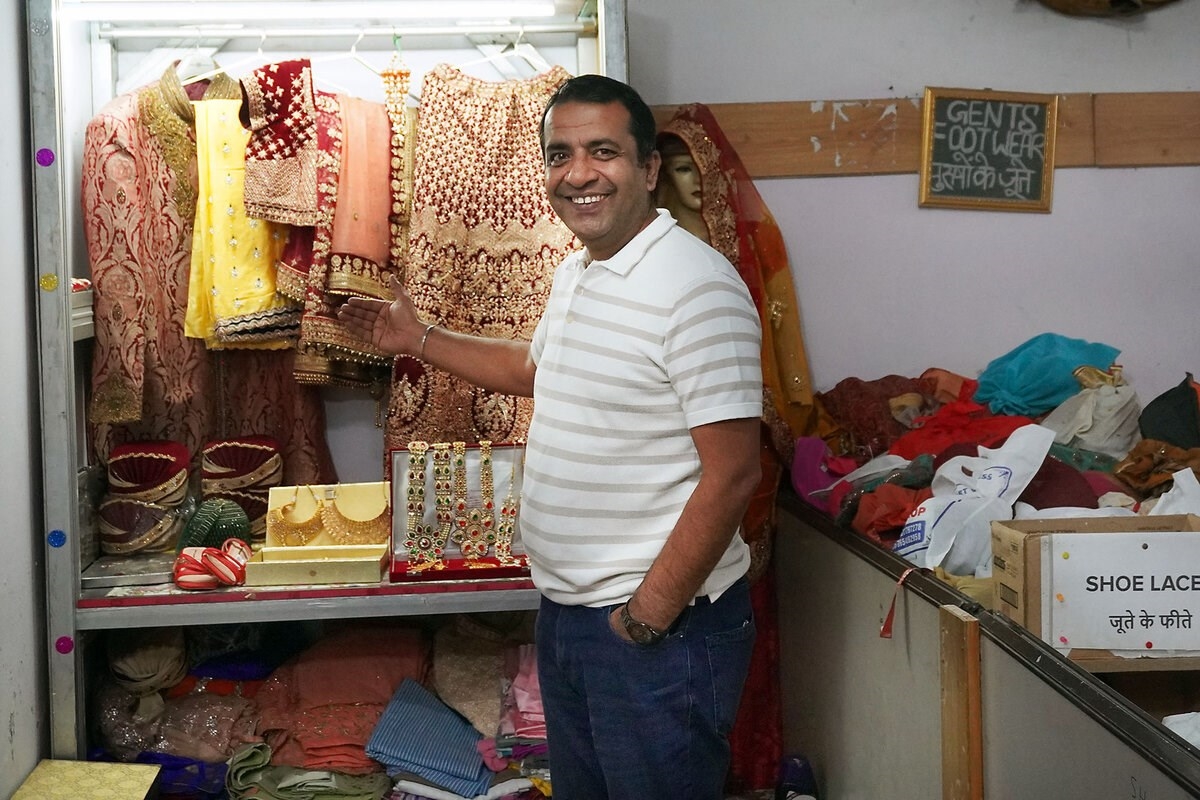 Anshu Gupta, founder of nonprofit Goonj, shows one of the wedding kits.Safina Nabi
| New Delhi
Anu Priya Kumari always dreamed of wearing a wedding dress like the bright, ornately embroidered ones she saw on social media. But she knew that buying such a dress would stretch the limited savings of her farming family in India’s eastern Bihar state.
Then, a local volunteer for the New Delhi-based nonprofit Goonj reached out to the family about its free wedding kits, which provide garments and other wedding items assembled from donated materials. Instead of buying new clothes that would likely be worn only once, Ms. Kumari decided to use one of Goonj’s kits for her wedding last November. It had nearly everything needed for a bride’s big day, including an elaborate red dress, several saris, a pair of sandals, cosmetics, and jewelry.
“I was very happy when I saw the dress,” Ms. Kumari says, speaking over the phone from her village, Jhamatia. “We would never have been able to afford something so beautiful.”
Goonj is one of at least two nonprofits based in the Indian capital aimed at helping couples rethink extravagant weddings with single-use items. Founded in 1999 by Anshu Gupta, Goonj collects wedding clothes used mainly in urban centers and redistributes them through community-led programs, mostly across rural India. Local volunteers identify engaged couples and discuss options for lower-cost and more environmentally friendly weddings that still honor tradition.
“In India, there are three things people often make larger than life and spend their entire earnings or savings on: weddings, rituals after a death in the family, and building a house,” says Mr. Gupta. “With the wedding kits, we aimed to promote sustainability and help families avoid falling into debt. Over time, we also saw a change of heart as people began making more conscious choices.”
 Courtesy of GoonjA bride wears a dress distributed through a wedding-kit initiative run by the nonprofit Goonj.
More than 10 million weddings take place each year in India, the most in the world.
“Natural fiber textiles behave like organic waste and can generate methane in landfills under anaerobic conditions,” says Shobha Vijender, the founder of Sampurna, a New Delhi-based nongovernmental organization. “Large-scale disposal events like weddings may significantly add to this burden.”
India accounts for about 8.5% of global textile waste, generating an estimated 7.8 million metric tons annually. About half comes from discarded clothing and household textiles.
Sampurna collects wedding fabrics and textiles used in religious rituals and repurposes them into handcrafted items, including tablecloths, jackets, wall hangings, and seat-cushion covers. The group also uses the collected material to make potlis – elegant, reusable bags that can contain wedding favors to distribute to guests or even serve as wedding gifts.
Ms. Vijender says the potlis have been popular. Most of the proceeds from the modest cost that Sampurna charges – from 50 cents to $1 per bag – go to women from marginalized Indian communities who create and stitch the bags.
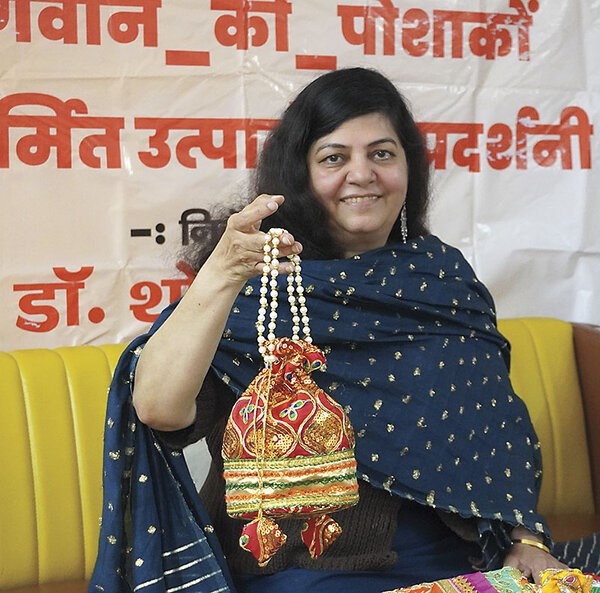 Safina NabiShobha Vijender founded the nonprofit Sampurna, which collects wedding fabrics and textiles used in religious rituals and repurposes them.
Both Goonj and Sampurna have evolved over the years. Goonj began primarily as a clothing redistribution effort. As volunteers encountered families struggling with the financial and social expectations for marriage ceremonies, the organization gradually expanded its work to include the wedding kits. Sampurna’s gift bag initiative emerged more recently with a similar concern about the environmental costs of modern weddings.
Goonj says it has repurposed more than 72 million kilograms (72,000 metric tons) of donated material since 2014. Since 2023 alone, the organization has distributed more than 800 wedding kits for brides from low-income families. Those who received the kits initially kept them, but Goonj’s local volunteers now work to recirculate them.
Meanwhile, Sampurna has produced more than 6,000 items since 2023 that give once-worn bridal and ceremonial textiles a second life. Together, the efforts suggest a small but growing shift toward weddings supported by reuse rather than new consumption, according to Anita Patil, who manages a nationwide network of partner NGOs for Goonj.
Karthik Natarajan, an architect and textile product designer who has worked for more than two decades on sustainability initiatives in India and Germany, says Goonj’s and Sampurna’s initiatives send a message to younger generations.
“In many parts of India and South Asia, wedding garments and household items were traditionally passed down through families from mothers to daughters and granddaughters,” he notes.
“Fast fashion gradually pushed that culture aside, but efforts like these are helping revive that legacy of sharing and reuse.”
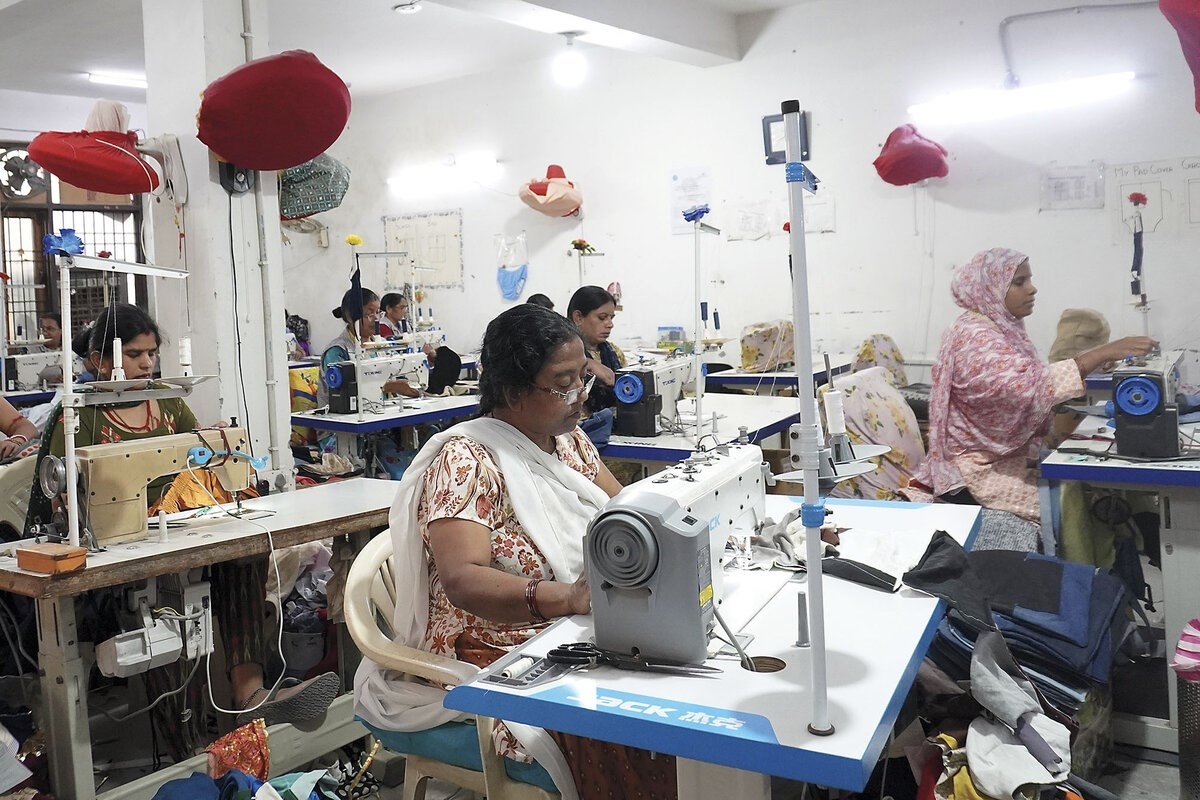 Safina NabiGoonj’s staff members make alterations to wedding clothes in New Delhi.
Arvind Charpota, a farmer in northwestern Rajasthan state, had imagined a grand wedding, including an embroidered outfit for himself with well-made shoes and headwear. But after a local Goonj volunteer pointed out that spending his savings on a single day could leave him and his bride struggling, Mr. Charpota requested a wedding kit.
“To my surprise, the kit ... was beautiful,” he says, speaking by phone from the city of Banswara. “I am glad I changed my decision. It helped me save money, and I still got to wear something even better than I had imagined.”
Wedding photographs show Mr. Charpota in a fine yellow suit with pink-and-yellow headwear and black shoes. His hands are adorned with henna.
“I have encouraged two more grooms to use my attire, and I will continue doing so,” he says. “It’s not only conscious spending but also good for the planet.”
Page created on 4/24/2026 2:53:59 PM
Last edited 4/24/2026 3:02:37 PM