The MY HERO Project is proud to announce that Natascha Donhauser and Justine Wiedemann have been named student finalists for the 2026 Sylvia Earle Ocean Conservation Award for their short documentary “Hidden Forests.” The film focuses on kelp forests and seagrass meadows — an often forgotten fixture of the ocean — and their ecological importance to marine ecosystems.
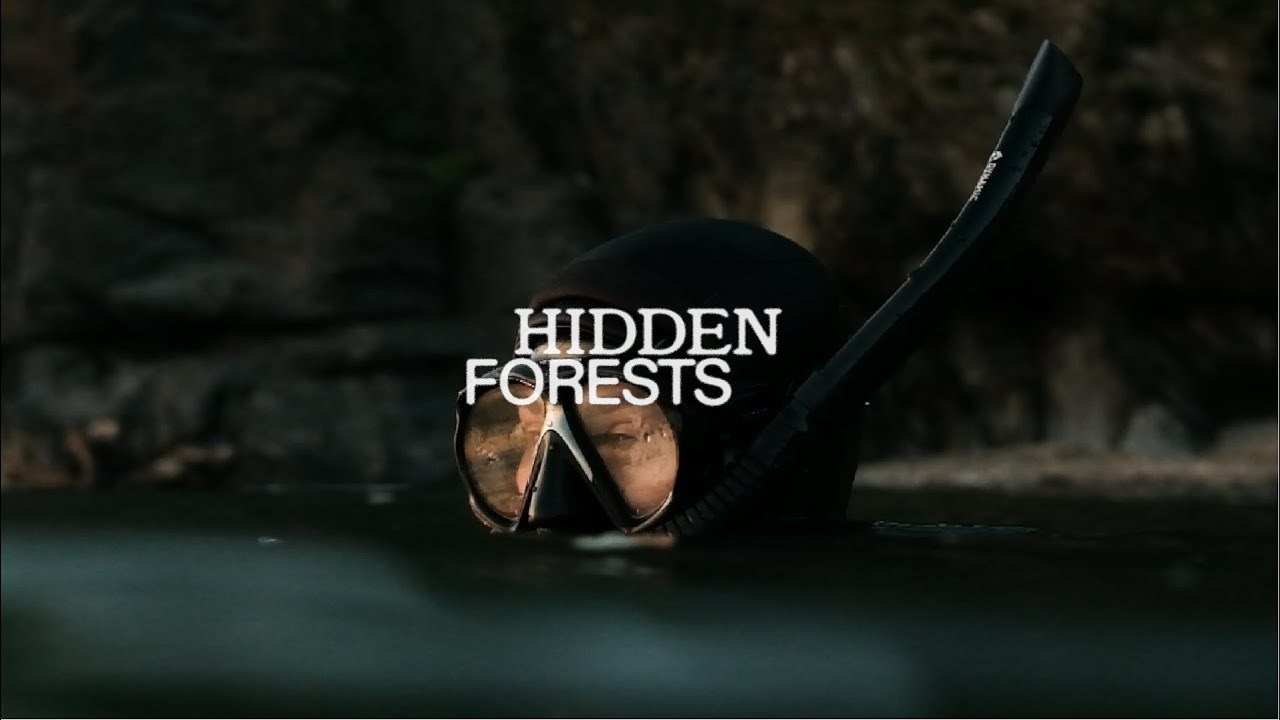 Image from "Hidden Forests"Courtesy of Natascha Donhauser, Justine Wiedemann
Donhauser and Wiedemann met during their first semester studying visual design at university. Over the next four years, the pair collaborated on numerous projects and encouraged one another’s artistic growth, blossoming into a creative partnership and deep friendship. “Hidden Forests” was the final project of their university careers.
“For our final project, we really wanted to pour all of our love and passion into something meaningful to us and the planet,” Donhauser said in a statement to MY HERO.
The genesis of the short documentary was just how elusive any knowledge or research regarding kelp forests actually are. Donhauser, despite having spent much time around the ocean through surfing, only learned about them when she was 23 years old.
“I was honestly shocked that these ecosystems had completely passed me by,” she said. “As I researched further and discovered how important they are — and how rapidly they are disappearing — I felt an urge in me to bring this hidden world to a screen.”
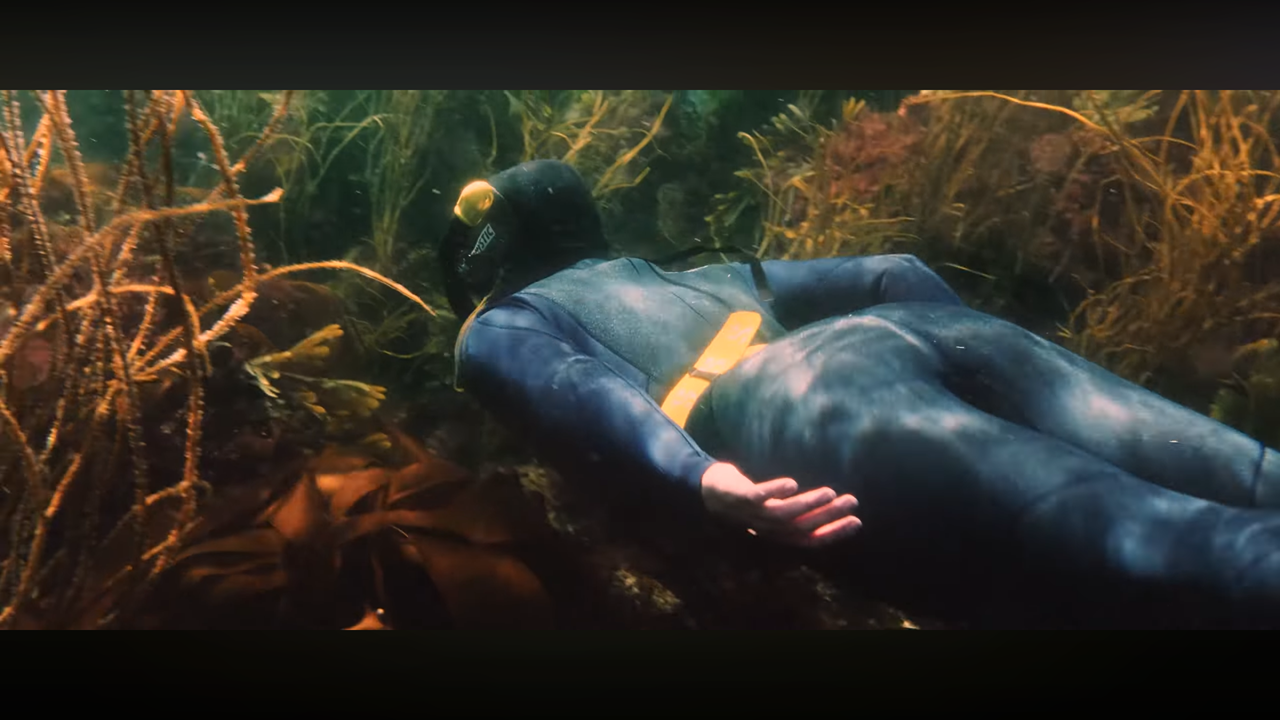 Image from "Hidden Forests"Courtesy of Natascha Donhauser, Justine WiedemannWhat followed was an ambitious six-month effort to try to bring these hidden forests to light. As both filmmakers were still in university, they found themselves torn between working on “Hidden Forests” and on other classwork or their jobs, all while running against a deadline.
“To be honest, the whole process was a challenge. We were both still university students and very broke,” Donhauser explained. “I shot that whole thing on one lens. We drove to England in a day and a half without really knowing if any of it would work out… A lot of people honestly thought we were a bit crazy for attempting it.”
After both Donhauser and Wiedemann completed their diving licenses specifically for their film, the duo spent two and a half weeks in Southern England — primarily Cornwall — capturing footage. With money hard to come by, the two camped out of Wiedemann’s tiny hatchback and subsisted off “crappy camping meals.” For the last week of their trip, a local family even took them in.
“We’re both grateful for this crazy adventure we had together as best friends,” Donhauser said of the whole filming process.
The end result was a short documentary with beautiful, almost dreamlike cinematography that documents the flora and fauna of underwater forests. Drawing on Donhauser's background in photography, the film emphasizes emotional storytelling over statistics, aiming to foster a personal connection between viewers and these little-known ecosystems.
“We believe you cannot protect something you don’t even know exists,” the filmmakers explained. “Rather than focusing on facts and figures, we wanted to introduce these ecosystems through emotion and visual storytelling.”
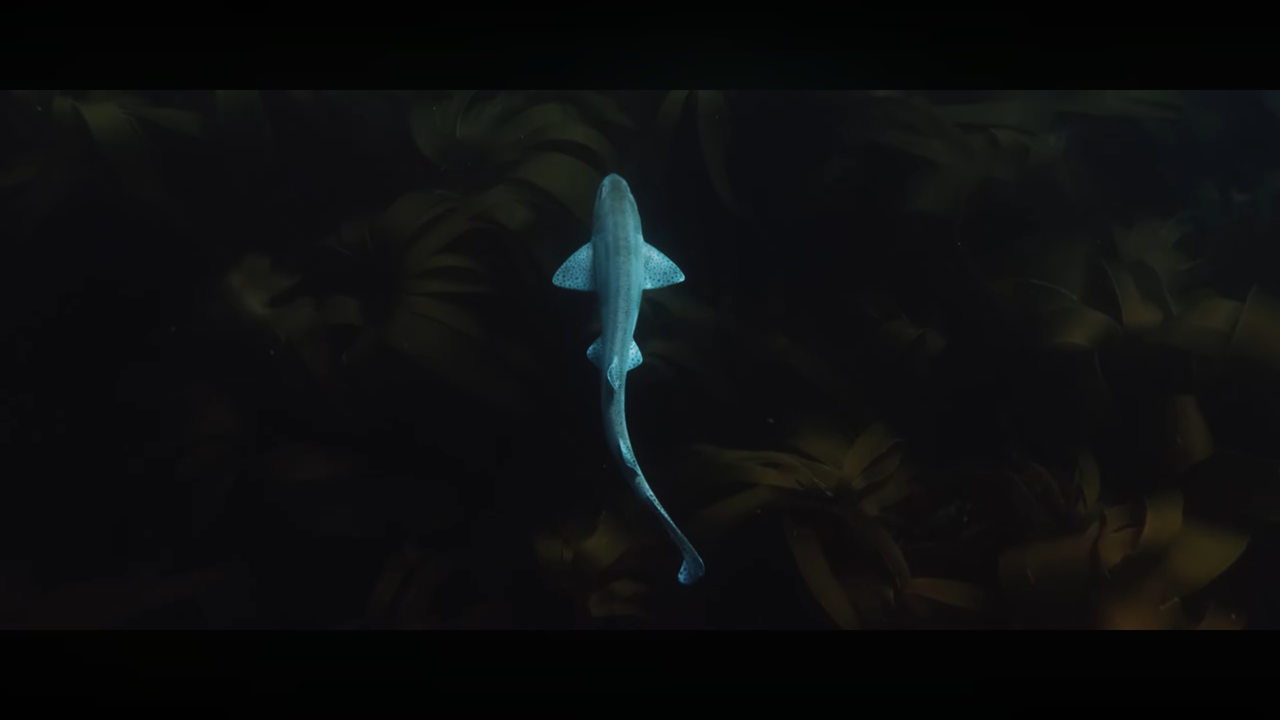 Image from "Hidden Forests"Courtesy of Natascha Donhauser, Justine Wiedemann
The project extended beyond the documentary itself. Wiedemann designed an accompanying exhibition that featured interviews with marine biologists, divers, researchers, and conservationists whose insights could not be included in the final cut.
“The documentary contains a lot of our personal story, thoughts, and feelings, which hopefully makes it feel honest and human,” Donhauser said. “We hoped to turn something unknown into something known — and hopefully into something people care about.”
Since graduating, Wiedemann has gone on to work full-time in visual design with a focus on print and exhibitions. Donhauser is a full-time surf photographer. As for future filmmaking projects, both seem eager to continue telling stories.
“We would both love to continue telling stories in the future. Right now, we’re simply waiting for the next one to find us.”
Watch “Hidden Forests” HERE.
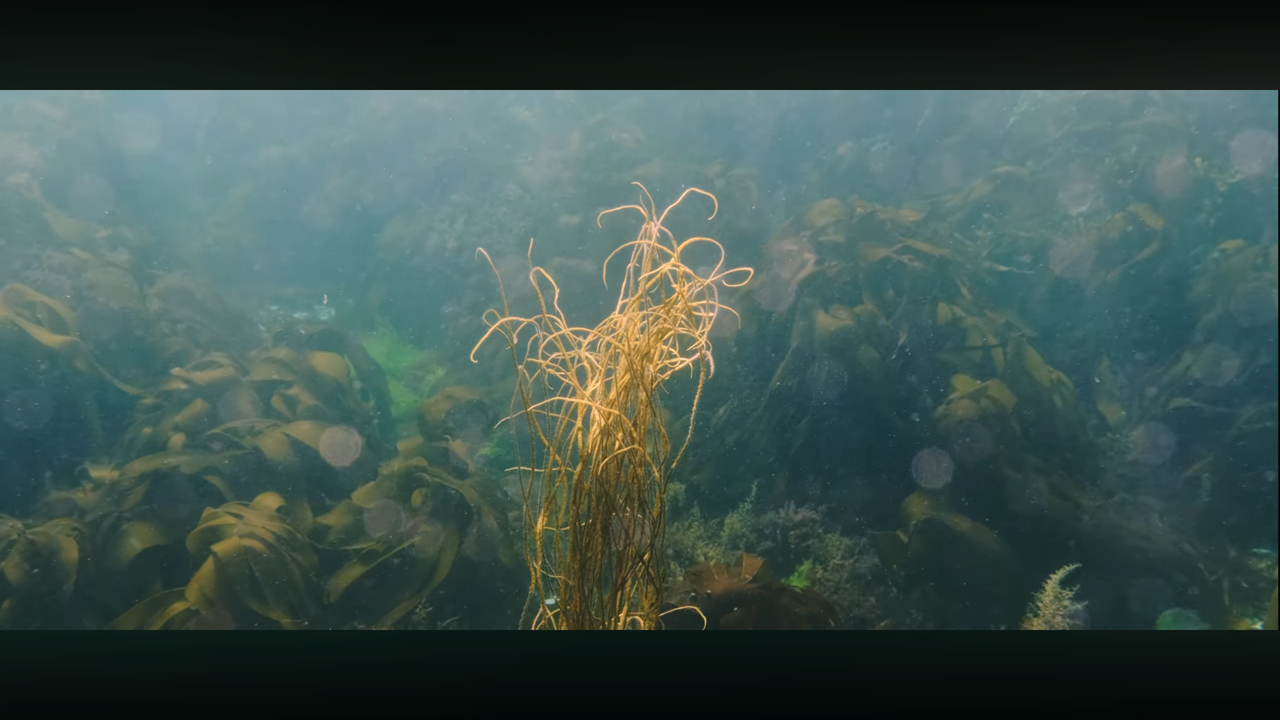 Image from "Hidden Forests"Courtesy of Natascha Donhauser, Justine Wiedemann
Below are selected quotes from the statement the filmmakers provided to MY HERO:
Do you have a mentor or personal hero that has inspired you?
DONHAUSER: For me, something really clicked during a film event in Australia when I met Alice Wesley-Smith. I was mesmerized by her work and her passion. It was the first time I saw a woman working in underwater videography and it suddenly made me feel like maybe I could do it too. I remember my friends waving her over and making me talk to her because I was too shy to talk to her, haha. Aside from that it’s definitely my parents that have always believed in my crazy ideas, encouraged me to go for my dreams and lifted me up when I was questioning it all.
WIEDEMANN: I’ve never really had one personal hero. I’ve always worked hard with a lot of passion simply because I enjoy creating. But meeting Tash definitely changed my perspective creatively. We started studying together, and from the very beginning, I learned a lot from her about photography and filmmaking, which made me want to explore that field more deeply myself. What impressed me most was her mindset and the passion she brings into everything she does. She approaches ideas without immediately thinking about limitations, and being around that opened my mind a lot. She made me realize that many things I thought were unrealistic are actually possible if you truly go for them.
DONHAUSER: I am crying about this now.
In your opinion, what is the importance of film, and what are its strengths?
DONHAUSER: For us, the goal was always to make a difference — not by overwhelming people with despair, but by giving them hope. We don’t really believe in presenting environmental issues in a way that only leaves people feeling helpless. When we first proposed this project to people around us, we were surprised by how little awareness there was about kelp forests and seagrass meadows. That realization became our starting point. We believe you cannot protect something you don’t even know exists. So rather than focusing on statistics and scientific facts, we wanted to introduce these ecosystems through emotion and visual storytelling — to make people feel a connection first.
As a two-person project, what was the production process like? What was the budget? How long did it take to shoot, and where?
DONHAUSER: We worked on the project every single day for almost six months, since we were on a deadline from university. It involved a huge amount of learning by doing and combining all the skills we had.
Before and once we were in England, we spoke to as many people as possible — marine associations, divers, seaweed farmers, researchers, and even random pedestrians. Since we’re not scientists ourselves, it was incredibly important to us to fact-check everything and learn directly from people deeply involved with these ecosystems.
The budget really was “save everywhere we can” if it doesn’t take away quality. I shot everything with one camera, one lens, no backup gear. Car-camping and crappy camping meals most days and a lot of snorkeling to limit the amount of actual dives we had to do. Since there wasn’t a lot of money, things like music licensing was tricky, so I actually ended up producing half of the music myself with the knowledge I had from music school.
I think this movie, even if not directly, also tells our trip to England along the lines. Towards the end a local family and her daughter adopted us for our last week and it turned into a beautiful friendship.
We filmed the entire project over roughly two and a half weeks, in the south coast of England, mostly in Cornwall. We’re both grateful for this crazy adventure we had together as best friends.
Much of the film consists of beautiful, almost dream-like shots of these underwater forests. What inspired the visual style of this film?
DONHAUSER: The visual style is very closely connected to my photography. It’s something that naturally developed over the years and is deeply tied to my early experiences with film photography that my grandfather and father taught me. Underwater environments already feel surreal and dreamlike, so I wanted the film to reflect the feeling of being immersed in another world.
Is there anything you would’ve liked to include in the documentary but couldn’t for whatever reason?
DONHAUSER: We would have loved to include footage of fully grown kelp forests during summer, when the kelp becomes much larger and denser. However, because we were working under university deadlines, we had to stop filming and move into editing earlier than we would have liked.
We also recorded hours of interviews with marine biologists, divers, and researchers that never made it into the final film. In the end, we had to decide what kind of story we wanted to tell, and we chose to keep the documentary as personal and emotional as possible.
Those interviews later became part of our exhibition work instead. There are so many incredible people dedicating their lives to researching and protecting these ecosystems.
What were you hoping to change with this documentary?
DONHAUSER: We hoped to turn something unknown into something known — and hopefully into something people care about.
About the Sylvia Earle Ocean Conservation Award
MacGillivray-Freeman Films Educational Foundation’s One World One Ocean Campaign sponsors the ‘Sylvia Earle Ocean Conservation Award’ annually at the MY HERO International Film Festival. One World One Ocean is a global non-profit campaign designed to connect people emotionally to the world's ocean. Their mission is to raise awareness of ocean degradation, to inspire audiences through cinematography and to spark a global movement to protect our seas.
Sylvia Earle is a world-renowned oceanographer, explorer, author, lecturer, leader, and research scientist who has led more than 70 expeditions, logging more than 6,500 hours underwater. Formerly chief scientist of NOAA and now a National Geographic explorer-in-residence, she was awarded the 2009 TED Prize for her proposal to establish a global network of marine protected areas, called “hope spots.”
“Sylvia Earle is our ocean hero,” said Greg MacGillivray, Chairman of MacGillivray Freeman Films, “and we hope this award inspires aspiring filmmakers to shine a spotlight on other dedicated people from all walks of life who are working tirelessly on behalf of our oceans."
Read more about the award, and its sponsors, here.
To see previous winners of the MY HERO Sylvia Earle Ocean Conservation Award, or enter for 2027, go to: myhero.com/sylvia-earle-ocean-conservation-award
About the MY HERO International Film Festival:
The MY HERO Film Festival is an annual event dedicated to showcasing films that celebrate the power of the human spirit. The festival provides a platform for filmmakers to share inspirational stories of everyday heroes. Thanks to generous sponsors, prizes are awarded to elementary, middle school, high school, college and professionals in a variety of categories including documentary, narrative, music video, animation, experimental, and more.
The festival aims to inspire audiences to recognize the heroism in their own lives and encourage positive actions in their communities. Learn more.
Page created on 5/20/2026 1:01:20 AM
Last edited 6/4/2026 11:18:47 AM